
Face Verification: A Complete Guide
Discover how face verification works liveness detection, key technologies, industries, accuracy, privacy considerations, best practices, and 10 FAQs.
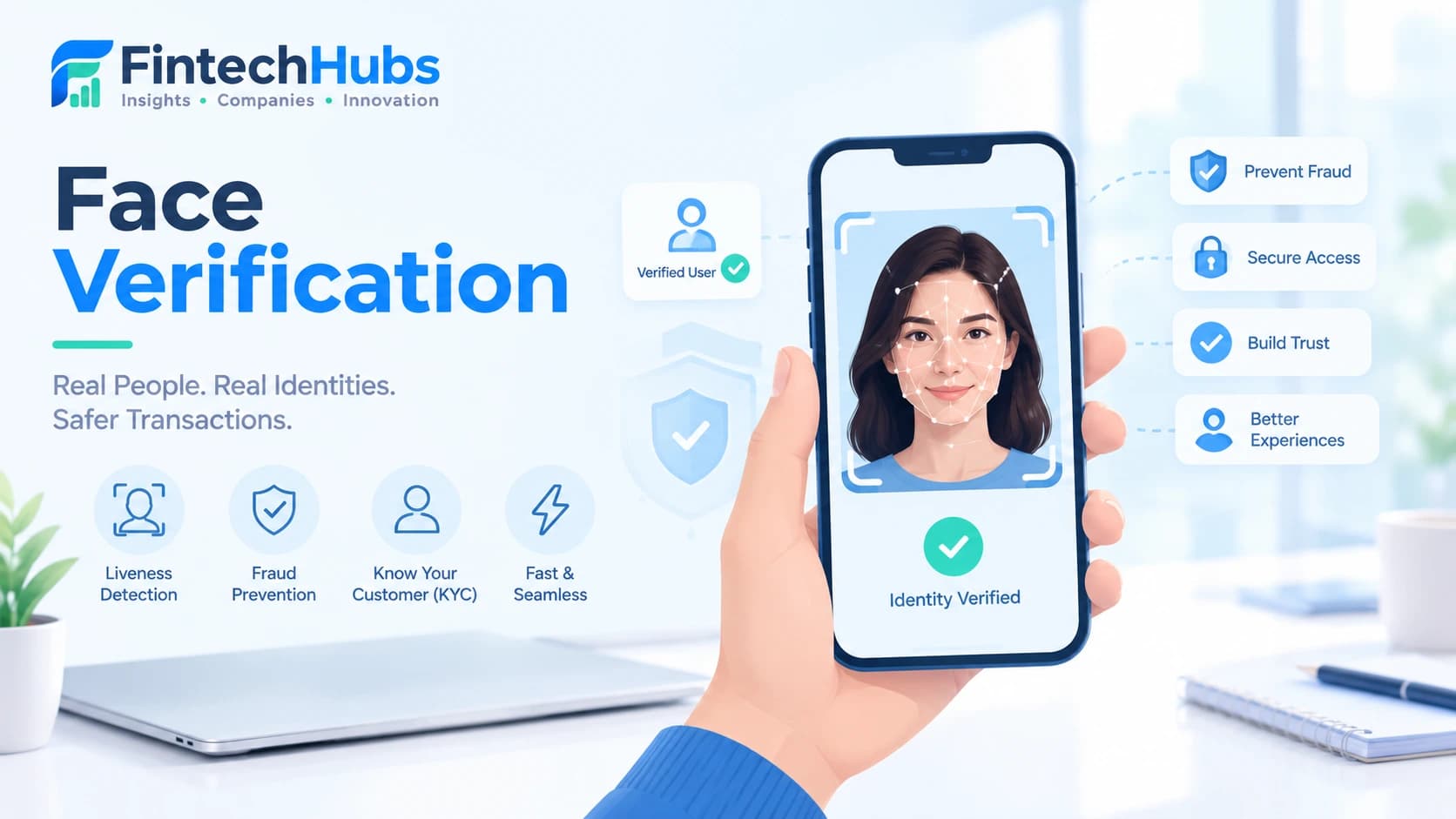
Face Verification: A Complete Guide
Unlocking a phone with a glance, confirming a banking app login with a quick selfie, or verifying a traveler's identity at an airport gate face verification has quietly become one of the most common ways people prove who they are in the digital world. It offers something passwords and even fingerprints can't: a form of identity confirmation that feels almost effortless to the user while relying on some of the most sophisticated pattern-recognition technology available today.
Face verification is a specific, well-defined application of facial recognition technology, distinct from the broader and more controversial practice of identifying unknown faces in a crowd. This guide provides a complete, professional look at face verification: what it is, how it works, its core components and branches, the industries relying on it, the accuracy and fairness considerations involved, and where the technology is heading.
What Is Face Verification?
Face verification is the process of confirming that a live face matches a specific, previously captured or registered face, in order to verify that a person is who they claim to be. It answers a narrow, specific question: "Is this the same person as the one in this reference photo or ID document?"
This is fundamentally a one-to-one comparison. The system isn't searching a database to figure out who someone is; it's checking a single claimed identity against a single reference image, similar to a security guard glancing between a person's face and their ID badge, but performed automatically and in a fraction of a second.
Face Verification vs. Face Identification
These two terms are often confused but describe different tasks:
Face verification (one-to-one matching): Confirms whether a live face matches one specific reference image, such as an ID photo or a previously enrolled selfie. This is the technology used when logging into a banking app or completing an identity check during account opening.
Face identification (one-to-many matching): Searches for a match to a face across a database of many stored faces, attempting to determine who an unknown person is. This is the technology used in some law enforcement and security contexts, and it raises significantly different privacy, accuracy, and civil liberties considerations than verification.
This distinction matters because verification is generally considered lower-risk and more privacy-respecting than identification, since it only compares against a single reference the individual has already provided consent for, rather than searching broadly across a population.
How Face Verification Works
Step 1: Face Capture
The system captures a live image of the user's face, typically through a smartphone camera or webcam, guided by on-screen prompts to ensure proper framing, lighting, and distance.
Step 2: Face Detection
Before any matching occurs, the system must first detect that a face is actually present in the frame and isolate it from the background, hair, accessories, and other visual noise.
Step 3: Liveness Detection
The system checks that the face belongs to a real, live person physically present at the time of capture, rather than a photo, video, mask, or digitally generated image, often using prompts like blinking, head movement, or analyzing subtle depth and texture cues.
Step 4: Feature Extraction
The system analyzes the detected face and converts its unique characteristics — the geometry and relationships between features such as eyes, nose, jawline, and other landmarks — into a mathematical representation, often called a faceprint or embedding.
Step 5: Matching and Comparison
This mathematical representation is compared against the reference faceprint, generated earlier from a document photo or an enrollment selfie, and a similarity score is calculated.
Step 6: Decision and Thresholding
Based on the similarity score and a pre-set confidence threshold, the system determines whether the faces are considered a match, a non-match, or a borderline case requiring additional review.
Step 7: Result and Next Steps
Depending on the use case, a successful match allows the process to continue automatically, while a failed or borderline match may trigger additional verification steps or route the case to a human reviewer.
Core Components of a Face Verification System
Camera and capture interface, guiding users to provide a usable image
Face detection algorithms, locating and isolating the face within an image
Liveness and anti-spoofing detection, confirming the presence of a real, live person
Feature extraction models, converting facial characteristics into a comparable digital representation
Matching engine, calculating similarity and applying decision thresholds
Reference data storage, securely holding enrollment images or faceprints for comparison
Audit logging, recording verification attempts and outcomes for security and compliance purposes
Branches and Applications of Face Verification
A. Document-to-Selfie Verification
Comparing a live selfie against the photo on a government-issued identity document, commonly used during digital account opening and identity verification processes.
B. Enrollment-Based Verification
Comparing a live face against a previously enrolled reference image stored by the service itself, commonly used for repeat logins, such as unlocking a device or authenticating into an app.
C. Liveness Detection and Anti-Spoofing
A specialized sub-field focused specifically on distinguishing a real, live face from photos, videos, masks, and increasingly convincing deepfakes attempting to spoof the system.
D. Continuous and Passive Verification
Verifying identity repeatedly and unobtrusively throughout a session or interaction, rather than only at a single checkpoint, used in some high-security or high-value contexts.
E. Age Estimation via Facial Analysis
A related application that estimates a person's approximate age range from facial characteristics, used to support age-restricted service access, though typically less precise than formal identity verification.
F. Emotion and Attribute Analysis
A more specialized and sometimes controversial branch analyzing facial expressions or attributes for purposes such as customer experience research, though this raises additional accuracy and ethical questions distinct from identity verification itself.
G. Cross-Device and Omnichannel Verification
Allowing a face verification credential established on one device or channel to be recognized consistently across other devices and touchpoints a user interacts with.
Key Technologies Behind Face Verification
Convolutional neural networks (CNNs) and deep learning models: Trained to recognize and encode facial features accurately across variations in lighting, angle, and expression
3D depth sensing and structured light: Used by some devices to capture facial geometry more precisely and resist certain spoofing attempts
Near-infrared imaging: Helping systems work reliably in low-light conditions and adding an additional layer of spoof resistance
Texture and micro-movement analysis: Part of liveness detection, examining subtle cues that distinguish real skin and movement from printed or digital reproductions
Edge computing and on-device processing: Allowing some verification to occur directly on a user's device rather than sending biometric data to external servers, which can improve both speed and privacy
Encryption and secure enclave storage: Protecting stored faceprints and reference images from unauthorized access
Why Face Verification Matters
Strong, Convenient Security
Face verification offers a security method that is difficult to replicate or steal in the way a password can be, while remaining fast and intuitive for users, reducing friction compared to manually entering credentials.
Reducing Identity Fraud
By confirming that the person presenting an ID or attempting to log in genuinely matches the expected identity, face verification helps reduce impersonation, account takeover, and fraudulent account creation.
Supporting Regulatory Compliance
In sectors such as financial services, face verification frequently supports identity verification and know-your-customer obligations, helping institutions confirm customer identity during onboarding.
Enabling Fully Remote Processes
Face verification allows identity confirmation to happen entirely remotely, supporting digital account opening, remote work authentication, and other processes that would otherwise require in-person verification.
Improving User Experience
Compared to typing passwords or answering security questions, a quick face scan is often faster and more convenient, particularly on mobile devices.
Industries Using Face Verification
Banking and financial services: Remote account opening, high-value transaction authorization, and login authentication
Travel and aviation: Passenger identity confirmation at check-in, security checkpoints, and boarding
Telecommunications: Subscriber identity verification for new mobile accounts
Healthcare: Patient identity confirmation for telehealth and prescription access
Government services: Digital ID verification for accessing public services and benefits
Retail and hospitality: Secure checkout and loyalty program authentication in some markets
Workplace security: Physical access control and time and attendance systems
Online gaming and gambling: Age and identity verification for account creation and compliance
Accuracy, Bias, and Fairness Considerations
Face verification accuracy has improved substantially with modern deep learning approaches, but important considerations remain:
Demographic performance differences: Historical research has found that some face recognition systems perform less accurately for certain demographic groups, particularly related to factors such as skin tone, gender, and age, often linked to imbalances in the data used to train earlier models.
Ongoing improvement and testing: Reputable providers now invest heavily in diverse training data and independent accuracy testing across demographic groups to reduce these gaps, and independent benchmarking bodies publish comparative accuracy results.
Environmental and capture-quality factors: Accuracy can also be affected by non-demographic factors such as poor lighting, low-quality cameras, extreme angles, or obstructions like glasses and masks.
Importance of independent evaluation: Organizations selecting a face verification provider should review independent accuracy and fairness testing results rather than relying solely on vendor claims.
Human review as a safeguard: Maintaining a clear path for human review of borderline or failed matches helps reduce the impact of any residual accuracy gaps on real users.
Privacy, Legal, and Ethical Considerations
Because facial data is a sensitive form of biometric information, face verification systems must be designed and operated with care:
Biometric data protection laws: Many jurisdictions have specific legal requirements governing the collection, storage, use, and retention of biometric data, sometimes requiring explicit consent.
Data minimization: Best practice generally favors storing mathematical representations (faceprints) rather than raw images where possible, and retaining data only as long as necessary for the stated purpose.
Clear consent and disclosure: Users should be clearly informed when face verification is used, what data is collected, how it will be used, and how long it will be retained.
Security of stored biometric data: Because biometric data cannot be changed the way a password can, strong encryption and access controls around stored facial data are especially important.
Distinguishing verification from surveillance: Because face verification (one-to-one) is technically and ethically distinct from broader facial identification or surveillance (one-to-many) use cases, organizations should be transparent about which type of system they are deploying and why.
Jurisdictional variation: Rules differ significantly between countries and even between regions within countries, so organizations operating across borders should seek jurisdiction-specific legal guidance.
Challenges and Limitations
Spoofing and deepfake threats: As synthetic media becomes more realistic, liveness detection systems must continually evolve to stay ahead of increasingly sophisticated spoofing attempts.
Environmental variability: Lighting conditions, camera quality, and user positioning can all affect verification accuracy and user experience.
User accessibility: Certain physical conditions, coverings, or camera limitations can create challenges for some users, requiring accessible fallback verification methods.
Privacy concerns and public trust: Even well-designed, consent-based systems can face public skepticism due to broader concerns about facial recognition and surveillance, making clear communication important.
Regulatory fragmentation: Organizations operating internationally must navigate a patchwork of different biometric privacy laws and requirements.
False rejections affecting genuine users: Even accurate systems will occasionally reject legitimate users, making a clear, accessible fallback and appeal process essential.
Best Practices for Implementing Face Verification
Use verification (one-to-one) rather than broader identification approaches unless there is a clear, justified need for the latter
Select technology providers who publish independent accuracy and fairness testing results across demographic groups
Store mathematical representations rather than raw images where feasible, and apply strong encryption to any stored biometric data
Provide clear, plain-language disclosure to users about what is being collected and why
Offer accessible alternative verification methods for users who cannot or prefer not to use face verification
Maintain a clear human review path for failed or borderline verification attempts
Regularly test and update liveness detection to stay ahead of new spoofing techniques
Limit data retention to what is genuinely necessary and clearly communicate retention periods
Stay current with applicable biometric privacy laws in every jurisdiction of operation
The Competitive and Vendor Landscape
The face verification market includes specialized biometric identity verification vendors, broader identity verification and KYC platform providers that include face verification as one component among document checks and database screening, device manufacturers offering built-in on-device face verification for unlocking and payments, and enterprise security vendors integrating face verification into workplace access control systems.
Future Trends to Watch
Improved liveness and anti-deepfake detection: As synthetic media generation improves, expect continued investment in more sophisticated techniques to detect increasingly realistic spoofing attempts.
Greater emphasis on fairness testing and transparency: Expect continued industry and regulatory pressure for providers to publish clear, independently verified accuracy results across demographic groups.
Expansion of on-device and privacy-preserving processing: More verification is expected to happen directly on users' devices, reducing the need to transmit sensitive biometric data to external servers.
Standardization of biometric privacy regulation: As more jurisdictions introduce biometric-specific privacy laws, expect gradual movement toward more consistent baseline expectations, alongside continued regional variation.
Integration with broader digital identity ecosystems: Face verification is increasingly becoming one component of larger, reusable digital identity systems, rather than a standalone check repeated separately by every service.
Multimodal biometric verification: Combining face verification with other biometric or behavioral signals is expected to grow, improving both accuracy and resistance to spoofing.
Frequently Asked Questions
1. What is face verification?
Face verification is the process of confirming that a live face matches a specific, previously captured reference face, such as an ID photo or an enrolled selfie, in order to confirm a person's claimed identity.
2. How is face verification different from facial recognition used for surveillance?
Face verification performs a one-to-one comparison against a single reference image the individual has typically consented to provide, while broader facial recognition for surveillance often involves one-to-many searches across large databases of unknown individuals, raising very different privacy and accuracy considerations.
3. Is face verification secure?
When implemented with strong liveness detection, encryption, and secure data handling, face verification can be a highly secure method of identity confirmation, though like any security technology, its effectiveness depends heavily on the quality of implementation.
4. What is liveness detection, and why is it necessary?
Liveness detection confirms that a live, physically present person is undergoing verification, rather than a photo, video, mask, or deepfake, protecting against spoofing attempts designed to trick the system.
5. Can face verification be fooled by a photo or video?
Basic systems without liveness detection could potentially be fooled, which is why modern, reputable face verification systems incorporate dedicated liveness and anti-spoofing checks specifically designed to detect and reject such attempts.
6. Does face verification work accurately for everyone?
Modern, well-trained systems have significantly improved accuracy across demographic groups compared to earlier technology, though historical research has documented accuracy gaps in some systems. Reviewing independent fairness testing results for a specific provider is recommended before deployment.
7. What happens to my face data after verification?
This varies by provider and jurisdiction. Reputable services typically store a mathematical representation rather than the raw image, apply strong security measures, and retain data only as long as necessary or legally required, subject to applicable biometric privacy laws.
8. Can I opt out of face verification if I'm uncomfortable with it?
Well-designed systems typically offer alternative verification methods, such as document-only verification or manual review, for users who cannot or prefer not to use face verification, particularly where required by applicable law or accessibility considerations.
9. Is face verification used only for security purposes?
While security and identity confirmation are the primary uses, related facial analysis technologies are sometimes used for other purposes, such as age estimation, though these applications involve different accuracy considerations and are generally treated as distinct from identity verification.
10. How accurate is face verification technology today?
Leading modern systems, under good capture conditions and with proper liveness detection, can achieve very high accuracy rates, though results vary by provider, use case, and environmental factors. Independent benchmarking results provide the most reliable way to assess a specific system's accuracy.
Conclusion
Face verification has become one of the most widely used and, when properly implemented, most effective tools for confirming identity in an increasingly digital world. Its branches, spanning document-to-selfie matching, enrollment-based verification, liveness detection, and continuous authentication, all serve a focused purpose distinct from broader facial surveillance: confirming, quickly and reliably, that the person present is genuinely who they claim to be. As the technology continues to mature, alongside growing attention to fairness, transparency, and biometric privacy protections, organizations that implement face verification thoughtfully, with strong safeguards, clear communication, and accessible alternatives, are best positioned to capture its security and convenience benefits responsibly.
This content is for informational and educational purposes only and does not constitute legal, security, or compliance advice. Biometric data regulations vary significantly by jurisdiction and change over time. Organizations should consult qualified legal and technical professionals regarding their specific implementation and compliance obligations.
Share this article
Related Articles
ESG & Sustainability Reporting: Why It Matters for Business
Learn why ESG and sustainability reporting matters for businesses: key frameworks, benefits, challenges, best practices, future trends, and 10 essential FAQs.
Communications Surveillance: Tools, Benefits, and Best Practices
Explore communications surveillance in financial compliance tools, benefits, legal considerations, best practices, future trends, and 10 essential FAQs.
Regulatory Change Management: A Complete Guide
Learn how regulatory change management works horizon scanning, impact assessment, key branches, best practices, future trends, and 10 essential FAQs.