
Communications Surveillance: Tools, Benefits, and Best Practices
Explore communications surveillance in financial compliance tools, benefits, legal considerations, best practices, future trends, and 10 essential FAQs.
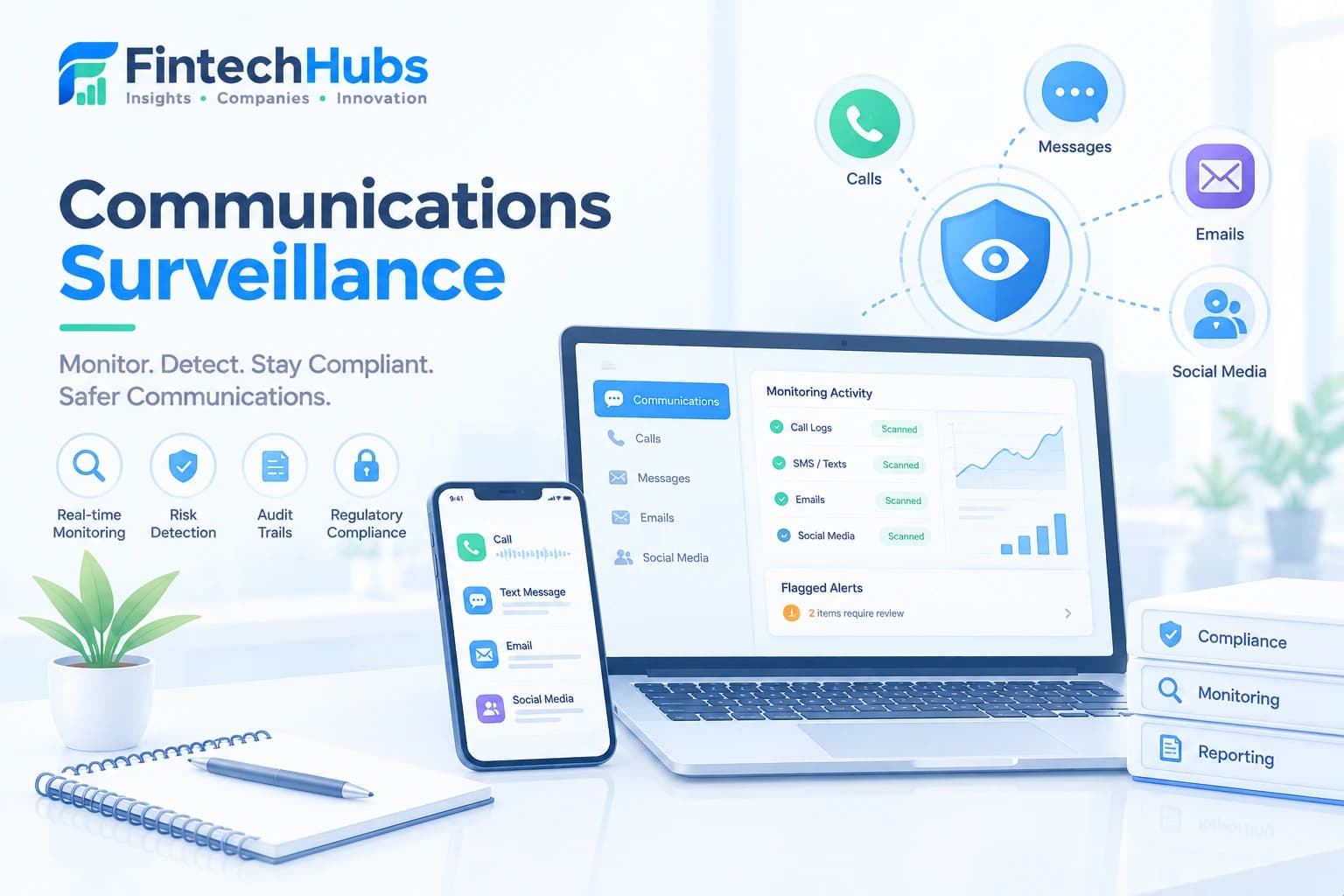
Communications Surveillance: Tools, Benefits, and Best Practices
Financial markets run on conversation. Traders discuss positions over phone lines and chat platforms, advisors email clients about investment recommendations, and dealmakers exchange sensitive information through messaging apps. Most of these conversations are entirely legitimate but a small share may contain evidence of misconduct such as insider trading, market manipulation, collusion, or the mishandling of confidential information. Communications surveillance is the practice of monitoring these channels to detect and prevent such misconduct before it causes serious harm.
Once a largely manual process of sampling recorded calls and reading selected emails, communications surveillance has become a technology-driven discipline using speech recognition, natural language processing, and machine learning to review enormous volumes of communication across many channels. This guide provides a complete look at communications surveillance: what it is, how it works, the tools involved, its benefits, the legal and ethical considerations it raises, and where the field is heading.
What Is Communications Surveillance?
In a financial services and regulatory compliance context, communications surveillance refers to the systematic capture, monitoring, and analysis of employee communications voice calls, emails, chat messages, and other digital channels to detect potential misconduct, regulatory violations, and internal policy breaches.
It is important to distinguish this from government or intelligence-agency surveillance of the public. Communications surveillance in the compliance context is typically conducted by regulated firms on their own employees, within the boundaries of employment terms, disclosed policies, and applicable law. Its purpose is to help firms meet regulatory obligations and protect markets, customers, and the firm itself from misconduct.
Why Communications Surveillance Exists
Several factors have made communications surveillance a standard compliance function in many financial firms:
Regulatory expectations: Financial regulators in many jurisdictions expect certain firms, particularly those engaged in trading and investment activities, to maintain records of relevant communications and to supervise them for signs of misconduct.
Historical enforcement actions: Investigations into market manipulation and collusion across the industry have repeatedly relied on communications evidence, reinforcing how central these records are to detecting wrongdoing.
Growth of communication channel: The spread of mobile messaging, collaboration platforms, and personal devices has multiplied the places where business conversations can occur, widening the scope of what firms need to supervise.
Firm-level risk management: Beyond regulatory obligations, firms have their own interest in detecting misconduct early, since undetected wrongdoing can lead to large fines, litigation, and reputational damage.
How Communications Surveillance Works
Step 1: Capture and Archiving
Communications from approved channels, recorded phone lines, corporate email, chat platforms, collaboration tools are captured and stored in secure, tamper-resistant archives, often with required retention periods set by regulation or internal policy.
Step 2: Data Normalization and Transcription
Content from different sources is converted into a consistent, searchable format. Voice recordings are transcribed using speech-to-text technology, and messages from multiple platforms are standardized so they can be analyzed together.
Step 3: Automated Analysis
Monitoring systems analyze the normalized data using a combination of lexicons (lists of words and phrases associated with risk), rules (for example, flagging communications between certain roles at certain times), and machine learning models that detect contextual or behavioral patterns that simple keyword searches would miss.
Step 4: Alert Generation and Prioritization
When the system detects potentially concerning content, it generates an alert, often assigned a risk score so reviewers can focus first on the most significant items rather than working through alerts in arrival order.
Step 5: Human Review and Investigation
Trained compliance reviewers examine flagged communications in context, deciding whether the alert reflects genuine misconduct, a false alarm, or something requiring further inquiry. Automated tools support the reviewer but do not replace their judgment.
Step 6: Escalation, Reporting, and Remediation
Confirmed or seriously suspected issues are escalated through defined internal processes, which may include further investigation, disciplinary action, or, where legally required, reporting to regulators.
Step 7: Feedback and Tuning
Outcomes from reviewed alerts are used to refine detection rules and models over time, aiming to reduce false positives and improve the detection of genuine risks.
Types of Communications Monitored
Voice communications: including recorded desk phones and, where used for business, mobile calls
Email: one of the most established surveillance channels
Instant messaging and chat platforms: including internal corporate chat tools
Collaboration and workplace platforms, where teams share messages, files, and channel discussions
Video conferencing content: including recordings and transcripts where captured under firm policy
Text messaging and mobile messaging application: particularly when used for business purposes
Social media activity related to business: in cases where firm policy or regulation applies
The growth of informal and mobile channels has made "off-channel communications" business conversations that happen outside approved and monitored systems a significant area of regulatory focus.
Branches and Focus Areas of Communications Surveillance
A. Trade and Market Abuse Surveillance
Monitoring communications for signs of insider trading, market manipulation, front-running, and collusion among market participants, often correlated with trading activity data.
B. Conduct and Sales Practice Surveillance
Reviewing communications between staff and clients for mis-selling, misleading statements, unsuitable recommendations, or failures to make required disclosures.
C. Information Barrier and Confidentiality Monitoring
Checking that sensitive or material non-public information is not improperly shared between departments that are supposed to be separated, such as advisory and trading functions.
D. Off-Channel Communications Detection
Identifying and addressing business communications occurring on unapproved platforms, and ensuring that required business communications are captured in approved, archived systems.
E. Voice and Audio Surveillance
Specialized capture, transcription, and analysis of recorded voice communications, including handling accents, background noise, and industry-specific terminology.
F. Employee Misconduct and Culture Monitoring
Detecting harassment, discrimination, bribery, or other internal policy violations that may appear in communications, helping firms address issues affecting workplace conduct and culture.
G. Behavioral and Contextual Analytics
Going beyond keywords to analyze patterns such as unusual communication timing, changes in communication frequency between certain parties, or sentiment shifts that may signal elevated risk.
H. Recordkeeping and Regulatory Retrieval
The supporting function of storing communications in compliant archives and enabling fast, accurate retrieval when regulators or internal investigators request records.
Key Tools and Technologies
Communications capture and archiving platforms: which collect and securely store messages and calls from many sources
Speech-to-text and voice analytics: converting audio into searchable text and, in some tools, analyzing tone and other vocal features
Natural language processing (NLP): interpreting the meaning and context of language rather than matching keywords alone
Machine learning models: identifying complex patterns and prioritizing alerts by risk level
Lexicon and rules engines: applying defined lists and logic to catch known risk phrases and scenarios
Case management systems: giving reviewers a structured workspace to investigate, document decisions, and track outcomes
Data visualization and analytics dashboards: helping compliance leadership see trends, alert volumes, and program performance
Integration with trade surveillance systems: linking communications with trading data for a more complete picture of potential misconduct
Benefits of Communications Surveillance
Earlier Detection of Misconduct
Reviewing communications can surface warning signs of misconduct before they develop into larger violations, allowing firms to intervene sooner.
Meeting Regulatory Expectations
A well-run surveillance program helps firms demonstrate to regulators that they take supervision seriously and maintain the records and oversight required of them.
Protecting Clients and Markets
By helping detect market abuse and mis-selling, surveillance contributes to fairer markets and better protection for clients and the wider investing public.
Reducing Institutional Risk
Detecting and addressing problems early can reduce the likelihood of large fines, legal action, and reputational harm arising from undetected wrongdoing.
Supporting Investigations
When an issue does arise, comprehensive, well-organized communications records allow firms to investigate efficiently and respond accurately to regulator inquiries.
Reinforcing Ethical Culture
The knowledge that communications are supervised can act as a deterrent and reinforce expectations about professional conduct within the firm.
Improved Efficiency Through Automation
Modern tools reduce the manual burden of reviewing large volumes of communications, allowing compliance teams to focus their time on the highest-risk items.
Legal, Regulatory, and Ethical Considerations
Communications surveillance involves collecting and reviewing personal communications of employees, which makes legal and ethical care essential.
Privacy and data protection laws: Many jurisdictions have strict rules on how employee communications may be monitored, what must be disclosed to staff, how long data may be retained, and how it must be protected. Requirements vary significantly by country and sometimes by region.
Transparency with employees: Firms generally need clear, accessible policies informing staff what is monitored, why, and under what circumstances, ideally acknowledged by employees.
Proportionality and purpose limitation: Monitoring should be proportionate to genuine compliance and risk objectives, and the data collected should be used only for legitimate, defined purposes rather than broad or unrelated scrutiny.
Cross-border data transfer rules: Global firms must consider restrictions on moving communications data between countries, particularly where local rules limit transfers.
Employment and works council considerations: In some jurisdictions, introducing monitoring may require consultation with employee representatives or specific legal justification.
Personal device and "bring your own device" issues: Monitoring communications on personal devices raises additional privacy questions and typically requires clear policy, consent, and technical safeguards.
Data security: Because surveillance archives contain sensitive information, they must be protected with strong access controls, encryption, and audit logging.
Firms should seek advice from qualified legal counsel in each jurisdiction where they operate, as requirements differ and change over time.
Challenges and Limitations
High false positive rates: Keyword-based systems in particular can generate large volumes of alerts that turn out to be harmless, causing review fatigue.
Language complexity: Sarcasm, slang, code words, multiple languages, and industry jargon make accurate automated interpretation difficult.
Channel proliferation: New messaging platforms appear constantly, and capturing communications from all relevant channels is an ongoing technical and policy challenge.
Off-channel behavior: Employees may move sensitive conversations to unmonitored channels, making strong policy, training, and culture as important as technology.
Balancing surveillance and trust: Overly intrusive monitoring can harm morale and trust, so firms need to communicate clearly and apply monitoring proportionately.
Data volume and storage costs: Capturing, storing, and analyzing communications at scale requires significant infrastructure and ongoing investment.
Privacy regulation complexity: Operating across multiple jurisdictions with different rules on monitoring and data handling adds legal and operational complexity.
Best Practices for Implementation
Define a clear risk-based scope identifying which roles, channels, and activities warrant monitoring rather than surveilling indiscriminately
Publish transparent, plain-language monitoring policies and obtain employee acknowledgment where appropriate
Involve legal, privacy, HR, and compliance stakeholders early in program design
Combine lexicons and rules with behavioral analytics and machine learning to improve detection quality
Keep trained human reviewers at the center of decision-making, using automation to support rather than replace judgment
Regularly tune detection models and rules using outcomes from reviewed alerts to reduce false positives
Provide ongoing staff training on approved communication channels and the risks of off-channel messaging
Secure surveillance data with strict access controls, encryption, and audit trails
Test and validate systems periodically, and document the methodology to demonstrate sound governance to regulators
Review the program regularly as new channels, regulations, and risks emerge
Who Is Involved in a Surveillance Program?
Compliance teams: who typically own program design, alert review, and escalation
Legal and privacy officers: who advise on lawfulness, data protection, and employee rights
Human resources: who coordinate on policy, employee communication, and any disciplinary follow-up
Technology and information security teams: who implement, integrate, and secure the underlying systems
Business line management: who support supervision and reinforce expectations of conduct
Senior leadership and boards: who hold ultimate accountability for the effectiveness of the compliance framework
Internal audit: who independently assess whether the program is operating effectively
The Competitive and Vendor Landscape
The communications surveillance market includes specialized surveillance and archiving vendors focused on financial services, broader compliance and RegTech platform providers offering surveillance as one module, collaboration and messaging platform providers that offer built-in compliance and archiving features, voice technology and analytics specialists, and consulting firms that help design, implement, and sometimes operate surveillance programs on behalf of firms.
Future Trends to Watch
More advanced AI and language models: Improved natural language understanding is expected to help systems better interpret context, intent, and nuance, potentially reducing false positives and catching subtler risks.
Convergence of communications and trade surveillance: Firms increasingly link communications data with trading and transaction data to build a more complete picture of potential misconduct.
Growing focus on off-channel communications: Regulatory and industry attention on business conversations occurring outside approved systems is expected to continue, driving investment in capture technology and staff education.
Support for new communication formats: As voice, video, and collaboration tools evolve, surveillance solutions will need to extend coverage and analysis to new formats and platforms.
Privacy-enhancing approaches: Expect continued development of techniques that aim to detect risk while limiting unnecessary exposure of employee personal data, reflecting ongoing tension between compliance and privacy.
Explainability and governance of AI models: As firms rely more on machine learning in surveillance, regulators and firms alike are likely to place greater emphasis on being able to explain and validate how models make decisions.
Frequently Asked Questions
1. What is communications surveillance in financial services?
It is the systematic capture, monitoring, and analysis of employee communications, such as calls, emails, and chat messages, to detect potential misconduct, regulatory breaches, and policy violations within regulated firms.
2. Why do financial firms monitor employee communications?
Firms monitor communications to meet regulatory expectations, detect misconduct such as insider trading or mis-selling early, protect clients and markets, and manage the risk of fines, litigation, and reputational damage.
3. Which types of communications are typically monitored?
Commonly monitored channels include recorded voice calls, email, instant messaging, collaboration platforms, and, where relevant to business, text and mobile messaging applications.
4. Is communications surveillance legal?
It can be lawful when conducted in line with applicable laws, transparent policies, and proportionality principles, but rules differ significantly by country and region. Firms should obtain legal advice specific to each jurisdiction where they operate.
5. How does technology improve communications surveillance? Speech-to-text, natural language processing, and machine learning allow firms to analyze very large volumes of communications more efficiently, prioritize higher-risk alerts, and detect patterns that simple keyword searches would miss.
6. What are "off-channel communications," and why do they matter? Off-channel communications are business-related conversations that take place on unapproved or unmonitored platforms. They matter because they can bypass required recordkeeping and supervision, and regulators have shown significant interest in firms' ability to control them.
7. Can automated systems replace human reviewers in communications surveillance? No. Automated tools help prioritize and analyze large volumes of data, but trained human reviewers are essential for interpreting context, making judgments about genuine risk, and deciding on appropriate follow-up.
8. How do firms reduce false positives in surveillance alerts?
Firms typically refine lexicons and rules, use machine learning and behavioral analytics for better context, and continually tune systems using feedback from reviewed alerts to improve accuracy over time.
9. What privacy protections should employees expect?
Employees should generally expect clear notice of what is monitored and why, data collection limited to legitimate purposes, secure handling and restricted access to the data, and adherence to applicable data protection laws in their jurisdiction.
10. Is communications surveillance only relevant to banks?
No. While it is most established in banking, brokerage, and investment firms, other regulated and risk-sensitive sectors, including insurance, asset management, and increasingly other industries, also use communications monitoring to support compliance and conduct oversight.
16. Conclusion
Communications surveillance has become a standard part of how regulated financial firms manage conduct and compliance risk. Its branches spanning trade and market abuse detection, conduct monitoring, information barrier oversight, off-channel detection, and recordkeeping all work toward the same goal: identifying potential misconduct early while meeting the record-keeping and supervisory expectations placed on regulated firms. At the same time, because it involves reviewing people's communications, it must be carried out transparently, proportionately, and in line with privacy and employment laws. As artificial intelligence improves the ability to understand language and context, and as communication channels continue to multiply, firms that pair capable technology with clear policies, strong governance, and skilled human judgment will be best positioned to run surveillance programs that are both effective and responsible.
This content is for informational and educational purposes only and does not constitute legal, regulatory, or compliance advice. Requirements for monitoring communications vary by jurisdiction, and organizations should consult qualified legal and compliance professionals regarding their specific obligations.
Share this article
Related Articles

ESG & Sustainability Reporting: Why It Matters for Business
Learn why ESG and sustainability reporting matters for businesses: key frameworks, benefits, challenges, best practices, future trends, and 10 essential FAQs.

Regulatory Change Management: A Complete Guide
Learn how regulatory change management works horizon scanning, impact assessment, key branches, best practices, future trends, and 10 essential FAQs.

Identity Verification: How It Works and Why It Matters
A complete guide to identity verification, how it works, key branches, biometrics, liveness detection, digital identity, challenges, and 10 essential FAQs.