
ESG & Sustainability Reporting: Why It Matters for Business
Learn why ESG and sustainability reporting matters for businesses: key frameworks, benefits, challenges, best practices, future trends, and 10 essential FAQs.
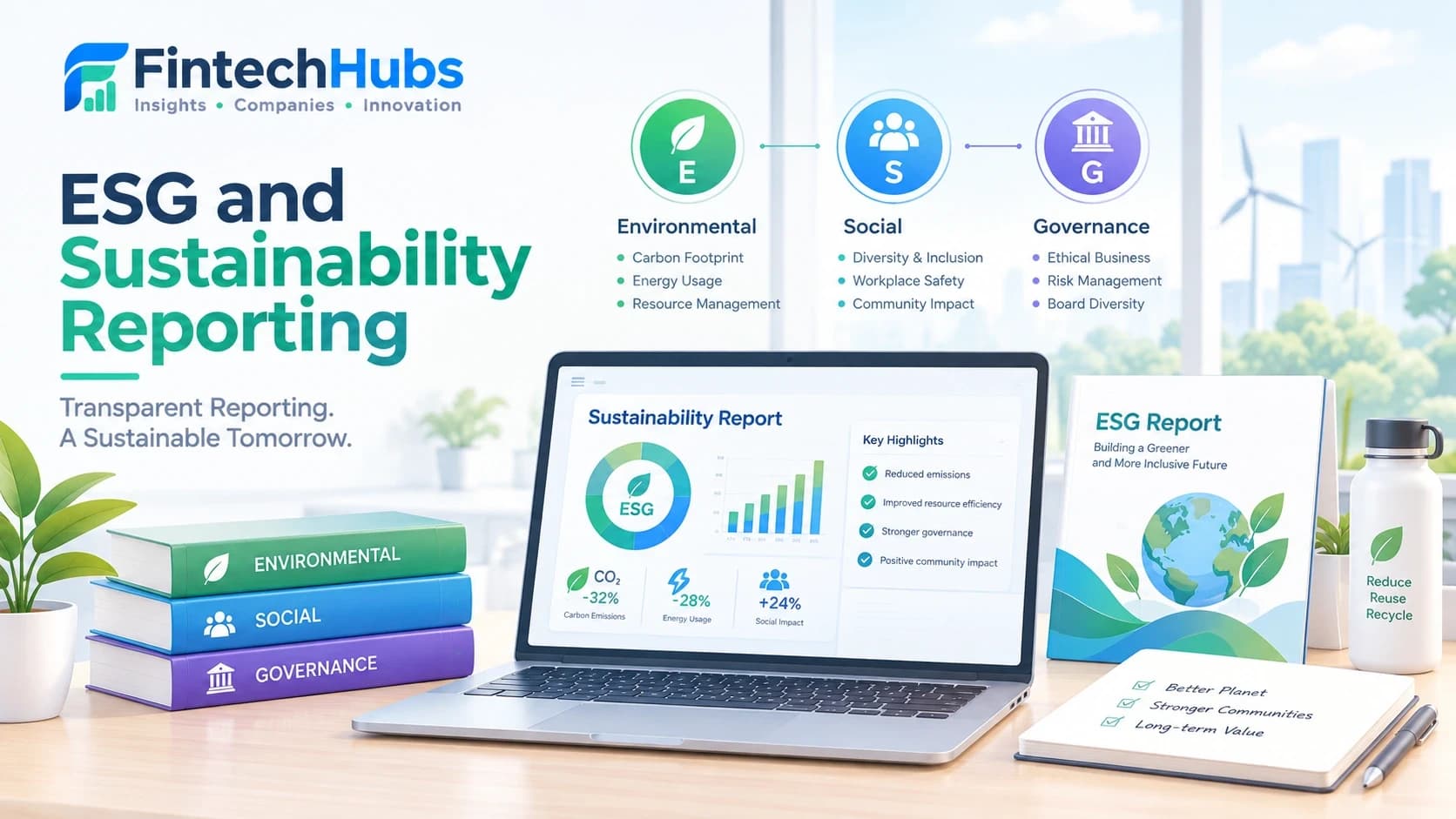
ESG and Sustainability Reporting: Why It Matters for Businesses
For a long time, a company's annual report told investors almost everything they were expected to care about: revenue, profit, debt, and outlook. Today, a growing number of investors, customers, employees, lenders, and regulators want to know more. How much carbon does the business emit? How does it treat its workforce and supply chain? Who sits on its board, and how are they held accountable? ESG and sustainability reporting is the practice of measuring and disclosing this kind of information in a structured, comparable way.
What began as voluntary corporate social responsibility statements has evolved into a formal, increasingly regulated discipline with recognized standards, assurance requirements, and real consequences for capital access and reputation. This guide provides a complete, professional overview of ESG and sustainability reporting: what it is, how it works, the major frameworks, why it matters to businesses, the challenges involved, and where the field is heading.
What Is ESG and Sustainability Reporting?
ESG: Stands for Environmental, Social, and Governance, a set of factors used to assess how a company manages risks and opportunities beyond its traditional financial statements. Sustainability reporting: Is the process by which an organization measures, documents, and publicly discloses its performance and impacts on these factors.
The two terms are closely related and often used interchangeably, though there are nuances. ESG language is more common in investment and finance, where the focus is on how these factors affect risk and value. Sustainability reporting is a broader term that also covers an organization's impacts on the environment and society, regardless of whether those impacts are currently financially material.
The core purpose is transparency: giving stakeholders reliable, comparable information so they can make informed decisions and hold organizations accountable.
The Three Pillars: Environmental, Social, and Governance
Environmental
The environmental pillar covers how an organization interacts with the natural world. Typical topics include:
Greenhouse gas emissions and climate strategy
Energy use and renewable energy adoption
Water use and management
Waste, recycling, and circular economy practices
Pollution and hazardous materials
Biodiversity and land use
Climate-related physical and transition risks
Social
The social pillar covers how an organization treats people, both inside and outside the company. Typical topics include:
Employee health, safety, and wellbeing
Diversity, equity, and inclusion
Labor practices and fair wages
Human rights across operations and supply chains
Training and workforce development
Customer data privacy and product safety
Community engagement and impact
Governance
The governance pillar covers how an organization is directed and controlled. Typical topics include:
Board composition, independence, and oversight
Executive compensation and alignment with performance
Business ethics, anti-bribery, and anti-corruption policies
Risk management and internal controls
Transparency and shareholder rights
Whistleblower protections
Cybersecurity and data governance
Why ESG and Sustainability Reporting Has Grown in Importance
Several forces have pushed ESG reporting from the margins to the mainstream of business practice:
Investor demand: Many institutional and retail investors now consider ESG factors when assessing long-term risk and opportunity, and they expect consistent data to do so.
Regulatory developments: A growing number of jurisdictions have introduced or expanded mandatory sustainability disclosure requirements for companies, particularly larger and listed ones.
Climate and resource risks: Physical climate impacts, resource scarcity, and the transition to lower-carbon economies create real financial risks and opportunities for many industries.
Stakeholder expectations: Customers, employees, and communities increasingly expect businesses to demonstrate responsible practices and to back up claims with evidence.
Supply chain requirements: Large companies increasingly ask suppliers for sustainability data, which pushes reporting expectations down through supply chains, including to smaller businesses.
Concern about misleading claims: Scrutiny of exaggerated or unsupported sustainability claims, often called "greenwashing," has increased the demand for verifiable, standardized reporting.
How ESG Reporting Works: A Step-by-Step Process
Step 1: Define Scope and Governance
The organization decides which entities, operations, and time period the report will cover, and assigns clear ownership, often involving senior management and the board.
Step 2: Conduct a Materiality Assessment
The business identifies which ESG topics matter most, based on their significance to the company's financial performance, to its impacts on people and the environment, and to stakeholders. Some frameworks call this "double materiality," considering both how ESG issues affect the business and how the business affects the world.
Step 3: Select Frameworks and Standards
The organization chooses which reporting frameworks or standards to follow, guided by regulatory requirements, investor expectations, and industry norms.
Step 4: Collect and Validate Data
Data is gathered from across the business, such as energy use, emissions, workforce statistics, safety records, and governance information, then checked for accuracy and consistency.
Step 5: Set Metrics, Targets, and Baselines
The business defines key performance indicators, establishes baselines, and sets measurable targets, such as emissions reduction goals, along with timelines.
Step 6: Analyze Performance and Risks
Results are analyzed to understand trends, identify risks and opportunities, and connect ESG performance to business strategy.
Step 7: Prepare the Disclosure
The findings are compiled into a report, which may be a standalone sustainability report, a section of the annual report, or an integrated report combining financial and non-financial information.
Step 8: Assurance and Review
Increasingly, organizations obtain independent assurance, ranging from limited to reasonable levels, to increase confidence in the reported data.
Step 9: Publish, Engage, and Improve
The report is published, stakeholder feedback is collected, and lessons feed back into the next reporting cycle to improve data quality and performance.
Major Reporting Frameworks and Standards
The ESG reporting landscape includes several widely recognized frameworks and standards. Requirements and adoption continue to evolve, so organizations should always confirm the current status of each with official sources.
Global Reporting Initiative (GRI) Standards: A widely used set of standards focused on an organization's impacts on the economy, environment, and people, aimed at a broad range of stakeholders.
IFRS Sustainability Disclosure Standards (ISSB): Standards developed by the International Sustainability Standards Board, including IFRS S1 (general sustainability-related disclosures) and IFRS S2 (climate-related disclosures), aimed at investor-focused information. Many jurisdictions are considering or adopting them.
SASB Standards: Industry-specific standards focused on financially material sustainability topics, now maintained under the IFRS Foundation and incorporated into the ISSB's work.
TCFD Recommendations: Recommendations on climate-related financial disclosures structured around governance, strategy, risk management, and metrics and targets. Its work has largely been absorbed into ISSB standards.
European Sustainability Reporting Standards (ESRS) under the EU's Corporate Sustainability Reporting Directive (CSRD): A comprehensive regime in the European Union, which applies the double materiality concept. The scope and timing of these rules have been subject to ongoing revision, so up-to-date confirmation is important.
CDP: A disclosure system through which companies report environmental data, particularly on climate, water, and forests, often requested by investors and customers.
Greenhouse Gas (GHG) Protocol: The widely used accounting standard for measuring emissions, dividing them into Scope 1 (direct), Scope 2 (purchased energy), and Scope 3 (other indirect emissions across the value chain).
UN Global Compact and Sustainable Development Goals (SDGs): Principles and goals often used by businesses to frame and communicate their contributions to broader sustainability objectives.
Many organizations report against more than one framework, and global efforts are underway to improve interoperability between them.
Key Branches and Focus Areas of ESG Reporting
A. Climate and Carbon Reporting
Measuring and disclosing greenhouse gas emissions across Scopes 1, 2, and 3, along with climate risks, transition plans, and emissions reduction targets.
B. Environmental Resource Reporting
Reporting on energy, water, waste, materials, and biodiversity impacts, including efforts to reduce resource consumption and environmental harm.
C. Human Capital and Workforce Reporting
Disclosing information about employee demographics, health and safety, training, pay practices, and workplace culture.
D. Human Rights and Supply Chain Reporting
Reporting on due diligence to identify and address human rights and labor risks across the value chain, including supplier standards and monitoring.
E. Diversity, Equity, and Inclusion Reporting
Disclosing representation and inclusion metrics and describing policies and programs, subject to legal and regulatory context in each jurisdiction.
F. Governance and Ethics Reporting
Covering board structure, oversight of sustainability, executive pay, anti-corruption programs, and whistleblower mechanisms.
G. Sustainable Finance and Investment Reporting
For financial institutions and asset managers, reporting on how ESG factors are integrated into lending, investing, and risk management, including sustainable and green financial products.
H. Product and Customer Responsibility Reporting
Disclosing information on product safety, data privacy, responsible marketing, and the sustainability characteristics of products and services.
I. Community and Social Impact Reporting
Describing engagement with local communities, philanthropic contributions, and measurable social outcomes.
J. Assurance and Data Integrity
The supporting function of verifying and controlling ESG data, ensuring that disclosed figures are accurate, consistent, and auditable.
Why ESG Reporting Matters for Businesses
Access to Capital and Investor Confidence
Investors and lenders increasingly use ESG information to assess long-term risk. Clear, credible reporting can support access to financing and, in some cases, more favorable terms through sustainability-linked instruments.
Regulatory Compliance
Where mandatory disclosure rules apply, reporting is a legal requirement, and failure to comply can bring penalties, enforcement action, and reputational harm.
Better Risk Management
The process of measuring ESG performance often reveals risks that traditional reporting overlooks, such as climate exposure, supply chain vulnerabilities, or governance weaknesses, enabling earlier action.
Operational Efficiency and Cost Savings
Tracking energy, water, and waste can uncover opportunities to reduce consumption and costs, linking sustainability to financial performance.
Reputation and Trust
Transparent, consistent, and verifiable reporting helps build credibility with customers, employees, and communities, especially in an environment of skepticism about unsupported claims.
Talent Attraction and Retention
Many workers, particularly younger professionals, consider a company's values and practices when choosing where to work, and reporting helps demonstrate them.
Customer and Supply Chain Requirements
Large customers increasingly require sustainability data from suppliers, so reporting can be a condition of winning or keeping business.
Strategic Insight and Long-Term Value
Assessing ESG topics through materiality analysis encourages leaders to think about long-term trends, from climate transition to changing workforce expectations, and to align strategy accordingly.
Benefits for Different Stakeholders
Investors and lenders: more consistent, comparable data for assessing risk and opportunity
Regulators: greater transparency and better-quality information supporting oversight
Employees: clearer insight into company values, policies, and practices
Customers: better information to make purchasing decisions aligned with their values
Communities: visibility into a company's local impacts and commitments
Management and boards: structured information to guide strategy, allocate resources, and track progress
ESG Reporting in the Financial Sector
Financial institutions have a dual role in ESG. They must report on their own operations, and they are also expected to understand and disclose the ESG-related risks and impacts of their lending, investing, and insurance activities. Key considerations include:
Financed emissions. Banks and asset managers may measure the emissions associated with their portfolios, which typically represent a much larger footprint than their own operations.
Climate risk management. Supervisors increasingly expect financial institutions to assess how climate-related risks may affect credit quality, asset values, and financial stability.
Sustainable finance product labels and disclosures. Green bonds, sustainability-linked loans, and ESG-labeled funds are subject to growing disclosure expectations intended to reduce misleading claims.
Integration with RegTech and compliance. ESG data collection, validation, and reporting are increasingly supported by regulatory technology, which connects this topic closely to other compliance functions such as regulatory reporting automation and regulatory change management.
Technologies Supporting ESG Reporting
ESG data management platforms, consolidating information from across the business into a single, auditable source
Automation and integration tools, pulling data directly from operational systems such as energy meters, HR systems, and finance platforms
Carbon accounting software, calculating emissions according to recognized methodologies
Analytics and dashboards, tracking performance against targets and supporting decision-making
Artificial intelligence and natural language processing, assisting with data extraction, gap analysis, and analysis of supplier or regulatory documents
Satellite, sensor, and IoT data, providing more granular environmental measurement in some industries
Blockchain and traceability tools, explored for verifying supply chain provenance and data integrity
Challenges and Criticisms
Data quality and availability: Collecting accurate, consistent data, particularly for Scope 3 emissions and supply chains, can be difficult and resource-intensive.
Multiple frameworks and evolving rules: The variety of overlapping standards, and the pace of regulatory change, creates complexity and compliance costs, especially for multinational companies.
Greenwashing risk: Overstated, vague, or unsupported claims can mislead stakeholders and expose companies to legal, regulatory, and reputational consequences.
Comparability limitations:Differences in methodologies, boundaries, and definitions can make it hard to compare companies fairly.
Resource burden for smaller businesses: Smaller organizations may lack the staff, expertise, and systems to produce detailed reports, particularly when asked for data by larger customers.
Debate over ESG itself: ESG has attracted criticism from multiple directions, including questions about the reliability of ESG ratings, debate over how much weight investors should give ESG factors, and political disagreement in some regions about its role. A balanced approach emphasizes clear, decision-useful, and verifiable disclosure over labels or slogans.
Assurance maturity: Assurance practices for sustainability information are still developing compared with financial audit.
Best Practices for Effective ESG Reporting
Start with a rigorous materiality assessment so reporting focuses on the issues that genuinely matter
Secure board and senior management oversight, and assign clear accountability
Choose recognized frameworks and be transparent about methodologies, boundaries, and assumptions
Build reliable data processes with documented controls, rather than relying on manual spreadsheets alone
Set specific, measurable, time-bound targets and report progress honestly, including shortfalls
Avoid vague or exaggerated claims, and ensure statements are supported by evidence
Seek independent assurance where appropriate to strengthen credibility
Integrate ESG information with financial reporting and business strategy rather than treating it as a separate exercise
Engage stakeholders regularly and use their feedback to improve
Monitor regulatory developments continuously so reporting stays aligned with current requirements
Start with a manageable scope and expand over time, particularly for smaller organizations
Future Trends to Watch
Convergence and interoperability of standards: Efforts continue to align global frameworks and reduce duplication, although regional differences and periodic regulatory revisions are likely to persist.
Growth of mandatory disclosure and assurance: More jurisdictions are expected to introduce or expand sustainability reporting requirements, along with stronger expectations for independent assurance.
Greater focus on climate transition plans: Stakeholders increasingly want to see credible, funded plans for how businesses will adapt to and contribute to a lower-carbon economy.
Expanded attention to nature and biodiversity: Beyond climate, frameworks addressing nature-related risks and dependencies are gaining attention.
Digital and machine-readable reporting:Structured, tagged data formats are expected to make sustainability information easier to compare, analyze, and verify.
AI-supported reporting. Artificial intelligence is likely to play a larger role in data collection, analysis, and quality control, alongside the need for governance over how AI is used.
Supply chain transparency. Expect continued pressure for better data and due diligence across value chains, with implications for suppliers of every size.
Shift toward decision-useful, outcomes-focused disclosure. The emphasis is moving from lengthy narrative reports toward concise, verifiable information on real-world performance and financial relevance.
Frequently Asked Questions
1. What does ESG stand for?
ESG stands for Environmental, Social, and Governance. It refers to three groups of factors used to assess how an organization manages risks, impacts, and opportunities beyond traditional financial measures.
2. What is the difference between ESG reporting and sustainability reporting?
The terms overlap and are often used interchangeably. ESG reporting is more common in investment contexts and emphasizes how ESG factors affect risk and value, while sustainability reporting is a broader term that also covers an organization's impacts on the environment and society.
3. Is ESG reporting mandatory?
It depends on the jurisdiction, the size and type of company, and whether it is listed. A growing number of regions require certain companies to disclose sustainability information, while in other cases reporting is voluntary or driven by investor and customer expectations. Requirements change, so businesses should check current rules for their situation.
4. What is a materiality assessment?
A materiality assessment is a process for identifying which ESG topics are most significant to a company and its stakeholders. Some approaches focus on financial materiality (how issues affect the company's value), while "double materiality" also considers the company's impacts on people and the environment.
5. What are Scope 1, 2, and 3 emissions?
Scope 1 covers direct emissions from sources a company owns or controls. Scope 2 covers indirect emissions from purchased energy. Scope 3 covers all other indirect emissions across the value chain, such as those from suppliers, transportation, and product use. Scope 3 is often the largest and most difficult to measure.
6. Which ESG reporting framework should a business use?
The right choice depends on regulatory requirements, investor expectations, industry, and audience. Many companies use a combination, such as GRI for broad impact reporting and ISSB-aligned standards for investor-focused disclosure. Legal or specialist advice can help select the appropriate approach.
7. What is greenwashing, and how can businesses avoid it?
Greenwashing means making misleading or unsupported claims about environmental or sustainability performance. Businesses can avoid it by using clear, evidence-based statements, following recognized standards, disclosing methodologies and limitations, and seeking independent assurance.
8. Do small and medium-sized businesses need to worry about ESG reporting?
Even where they are not directly required to report, smaller businesses may be asked for sustainability data by larger customers, lenders, or investors. Starting with simple, well-documented measurements can help them respond and can also reveal efficiency opportunities.
9. How does ESG reporting benefit a company financially?
Potential benefits include better access to capital, improved risk management, cost savings from resource efficiency, stronger customer and employee relationships, and reduced regulatory and reputational risk. Outcomes vary by company and industry, and results are not guaranteed.
10. What is independent assurance of sustainability information?
It is a review by an independent third party of the reported sustainability data and disclosures, intended to increase confidence in their accuracy. Assurance can be limited or reasonable in level, and expectations are growing as reporting becomes more formal.
16. Conclusion
ESG and sustainability reporting has moved from optional corporate messaging to a core part of how businesses communicate performance, manage risk, and earn the trust of investors, regulators, employees, and customers. Its branches, from climate and carbon reporting to human capital, supply chain due diligence, and governance, all serve the same purpose: giving stakeholders reliable, comparable information about how an organization operates and what its impacts are. The path is not without challenges, including data complexity, evolving rules, and the ongoing risk of greenwashing. Businesses that approach reporting with rigor, honesty, and integration into strategy, rather than as a box-ticking exercise, are best placed to turn transparency into a lasting source of resilience and value.
This content is for informational and educational purposes only and does not constitute legal, financial, investment, or compliance advice. Sustainability reporting requirements and standards vary by jurisdiction and change over time. Organizations should consult qualified professionals and consult current official sources regarding their specific obligations.
Share this article
Related Articles
Communications Surveillance: Tools, Benefits, and Best Practices
Explore communications surveillance in financial compliance tools, benefits, legal considerations, best practices, future trends, and 10 essential FAQs.

Regulatory Change Management: A Complete Guide
Learn how regulatory change management works horizon scanning, impact assessment, key branches, best practices, future trends, and 10 essential FAQs.

Identity Verification: How It Works and Why It Matters
A complete guide to identity verification, how it works, key branches, biometrics, liveness detection, digital identity, challenges, and 10 essential FAQs.