
Risk Mitigation: Strategies, Process, Examples and Best Practices
Risk mitigation is the practice of taking planned action to reduce the likelihood or the impact of a risk that has already been identified.
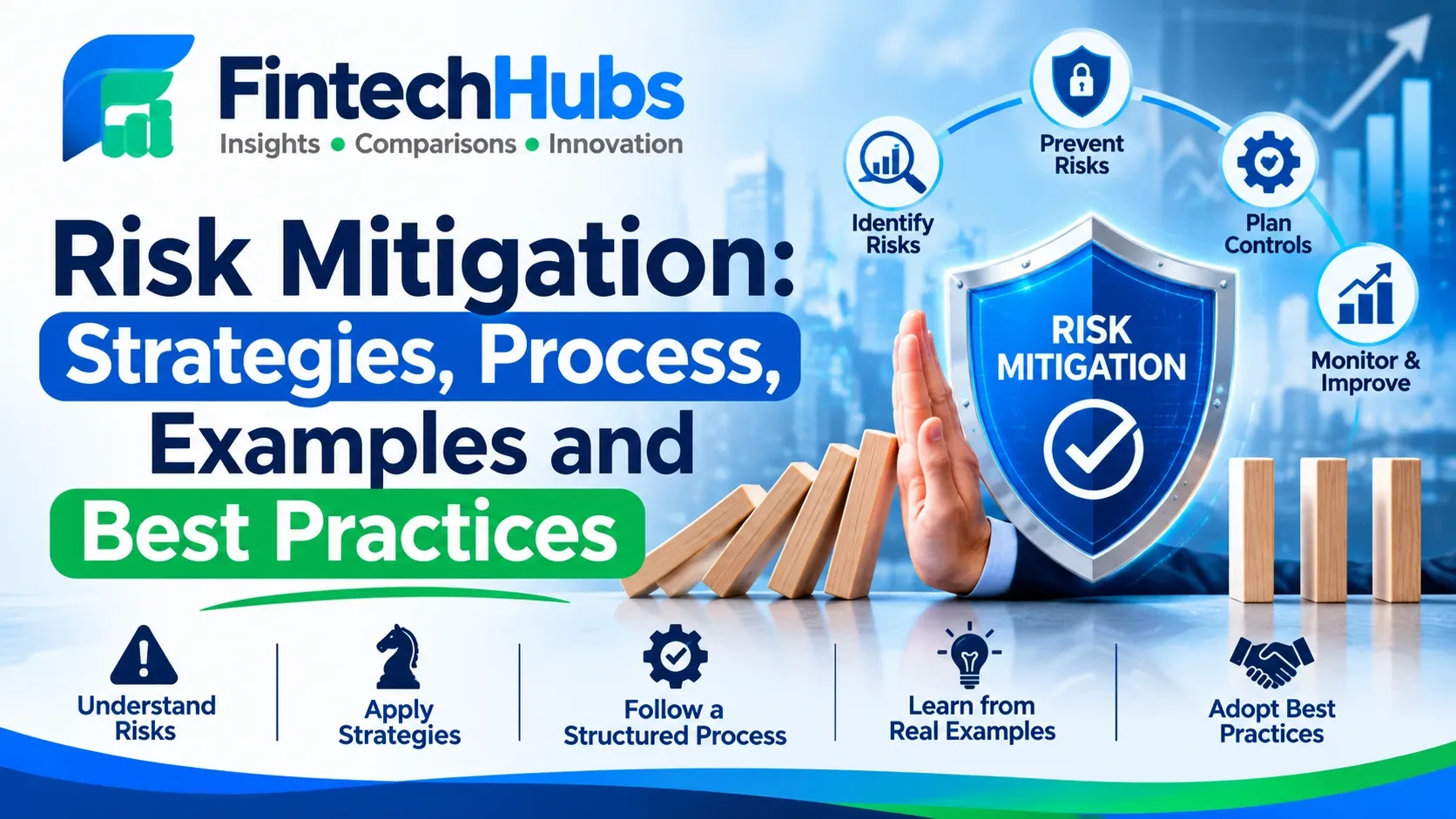
Risk Mitigation: Strategies, Process, Examples and Best Practices
Risk mitigation is the practice of taking planned action to reduce the likelihood or the impact of a risk that has already been identified. It is one stage of the wider risk management cycle, and it works best when it is tied to business objectives, assigned to named owners, funded properly and reviewed regularly. This guide explains what risk mitigation is, why it matters, how the process works, which strategies are available, how to build a practical plan and which mistakes to avoid.
What Is Risk Mitigation?
Risk mitigation is the set of actions an organisation takes to make a known risk less likely, less damaging, or both. It begins after risks have been identified and assessed. Its purpose is to bring exposure down to a level the organisation is willing to accept, not to remove all risk. Every business that wants to grow takes on some risk, so the practical question is how much risk is acceptable and what it costs to get there.
1.1 Key Terms
Term | Meaning |
Risk appetite | The amount of risk an organisation is prepared to take in pursuit of its objectives |
Inherent risk | The level of exposure before any controls are applied |
Residual risk | The exposure that remains after controls are in place |
Risk owner | The person accountable for managing a specific risk |
Risk register | A living record of risks, scores, responses, actions and owners |
Key risk indicator (KRI) | An early-warning metric that signals rising risk |
1.2 Risk Mitigation, Risk Management and Risk Treatment
These terms are related but not identical.
Term | What it covers |
Risk management | The full cycle: identify, analyse, evaluate, treat, monitor and report |
Risk treatment | The decision on how to respond: avoid, reduce, transfer or accept |
Risk mitigation | Actions that reduce the likelihood or impact of a specific risk |
In everyday use, "mitigation" is often applied to any response. Strictly speaking, it refers to the reduction option only.
2. Why Risk Mitigation Matters
2.1 Financial Protection
Effective controls reduce unexpected losses from fraud, outages, litigation, supplier failure and market shocks.
2.2 Safety and Wellbeing
Hazard controls, training and clear procedures help prevent injuries and protect people.
2.3 Reputation and Trust
A data breach, product failure or compliance lapse can damage customer and investor confidence for years.
2.4 Regulatory Compliance
Many sectors expect documented risk controls and evidence that they operate effectively.
2.5 Better Decision-Making
Leaders who understand their risks can pursue opportunities with more confidence and allocate resources more sensibly.
2.6 Operational Resilience
Organisations with tested response and recovery plans return to normal operations faster after disruption.
3. The Risk Management Process
ISO 31000 is the international guidance standard for risk management. It provides principles for building risk management into governance, strategy, planning, reporting and culture. It is guidance rather than a certifiable standard. A typical process follows seven steps.
3.1 Establish the Context
Define objectives, scope, stakeholders and the criteria used to judge risk.
3.2 Identify Risks
Use workshops, audits, incident history, checklists, interviews and scenario analysis to list what could go wrong.
3.3 Analyse Risks
Estimate the likelihood and impact of each risk. Analysis may be qualitative (low, medium, high) or quantitative (expected financial loss).
3.4 Evaluate Risks
Compare each risk with the organisation's appetite and rank risks in order of priority.
3.5 Treat Risks
Select and implement a response: avoid, reduce, transfer or accept (see Section 4).
3.6 Monitor and Review
Track indicators, test controls and update the plan as conditions change. A single annual review is only a snapshot that becomes outdated as the business, suppliers, technology or regulations change.
3.7 Communicate and Consult
Keep decision-makers and affected teams informed at every stage.
4. Core Risk Response Strategies
The standard responses to a risk are to avoid it, reduce it, transfer it or accept it. Sources use slightly different labels, but the logic is the same.
4.1 Risk Avoidance
The organisation stops or changes the activity so that the risk no longer exists. Avoidance suits situations where the potential consequences outweigh the expected benefit, or where the exposure cannot be reduced to an acceptable level.
Example: A retailer decides not to enter a market with unstable regulation.
Trade-off: Avoiding a risk may also mean giving up the opportunity connected to it.
4.2 Risk Reduction (Mitigation)
The organisation adds controls that lower the likelihood of the event, the size of the impact, or both.
Examples: Multi-factor authentication, preventive equipment maintenance, staff training, quality inspections and system redundancy.
4.3 Risk Transfer (Sharing)
Part of the financial or operational burden is shifted to another party through insurance, contracts, outsourcing or hedging.
Example: A company buys cyber insurance and includes liability terms in vendor agreements.
Limitation: Transfer moves cost, but legal and reputational accountability usually remains with the organisation.
4.4 Risk Acceptance (Retention)
The organisation knowingly keeps the risk, usually because the cost of mitigation exceeds the likely loss or the risk is already low.
Example: A small firm accepts minor fluctuations in office-supply prices.
Good practice: Document the decision, name an owner and set a threshold that triggers review.
4.5 Combining Strategies
Mature programmes rarely rely on one response alone. They often layer reduction on top of transfer, or pair acceptance with clear monitoring thresholds. For instance, a retailer may reduce theft through security systems and transfer residual losses through insurance.
5. Types of Risk and Example Mitigation Measures
Risk category | Typical threats | Example mitigation measures |
Strategic | Poor market timing, competitor moves | Scenario planning, staged investment, regular strategy reviews |
Operational | Process failure, equipment breakdown, human error | Standard procedures, preventive maintenance, cross-training |
Financial | Cash shortfall, credit default, currency swings | Diversified funding, credit limits, hedging, cash reserves |
Cybersecurity | Phishing, ransomware, data leakage | Patching, MFA, encryption, tested backups, incident response plan |
Compliance and legal | Regulatory breaches, contract disputes | Policy training, internal audits, legal review |
Supply chain | Supplier failure, shipping delays | Multiple suppliers, safety stock, supplier assessments |
Project | Scope creep, delays, budget overruns | Clear scope, milestones, contingency budget |
Health and safety | Workplace injury, hazardous exposure | Hazard assessments, protective equipment, incident reporting |
Reputational | Social-media crises, product recalls | Communications plan, quality systems, media monitoring |
Environmental and climate | Flooding, extreme heat, resource disruption | Site resilience, insurance, business continuity planning |
6. The Hierarchy of Controls
Safety and risk professionals rank controls by how reliable they are. Higher controls depend less on human behaviour, so they are generally more dependable.
6.1 Eliminate
Remove the hazard entirely.
6.2 Substitute
Replace the hazard with a less hazardous alternative.
6.3 Engineering Controls
Use guards, ventilation, automated shut-offs or system redundancy.
6.4 Administrative Controls
Use procedures, training, signage and work scheduling.
6.5 Personal Protective Equipment
Treat protective equipment as the last line of defence, not the first.
Treatment choices should be linked to this hierarchy so that residual risk falls to an acceptable level.
7. Common Risk Management Frameworks
7.1 ISO 31000:2018
Provides general principles and process guidance that apply to any organisation or sector.
7.2 COSO ERM
A governance-focused framework widely used in finance, audit and corporate oversight.
7.3 NIST Frameworks
More technical and security-oriented. NIST SP 800-37, for example, addresses security and privacy risk in information systems.
7.4 ISO/IEC 27001 and 27005
Cover information security management and information security risk management respectively.
7.5 Choosing and Combining Frameworks
The right choice depends on industry, size and regulatory obligations. Many organisations combine frameworks. A manufacturer, for example, might use ISO 31000 as its overall structure and apply a NIST framework to its IT environment. Always check the current version of a standard before relying on it.
8. How to Build a Risk Mitigation Plan
8.1 Create a Risk Register
List each risk with a description, category, cause and consequence.
8.2 Score and Prioritise
Use a consistent likelihood-and-impact matrix and address the highest-scoring risks first.
8.3 Choose a Response
Assign avoid, reduce, transfer or accept to each risk and record the reason.
8.4 Define Specific Actions
State exactly what will be done. "Improve security" is too vague, while "enable multi-factor authentication for all staff accounts" can be delivered and checked.
8.5 Assign Owners and Deadlines
Actions without owners rarely get completed.
8.6 Budget for Controls
Underfunded plans stall. Attach a cost estimate to each treatment and link it to a budget cycle.
8.7 Test, Monitor and Update
Run drills and audits, track indicators and revise the plan after incidents or major changes.
8.8 Sample Risk Register
Risk | Likelihood | Impact | Response | Action | Owner | Due | Residual risk |
Key supplier fails | Medium | High | Reduce | Qualify a second supplier | Procurement lead | Q2 | Medium |
Phishing attack | High | Medium | Reduce and transfer | Staff training, MFA, cyber insurance | IT manager | Q1 | Low |
Minor price fluctuation | Low | Low | Accept | Review annually | Finance | Annual | Low |
9. Cost-Benefit Analysis of Controls
A control is worth adding when the reduction in expected loss is greater than its total cost, including design, installation, operation and maintenance. A simplified formula is:
Net benefit = (expected loss before control - expected loss after control) - cost of control
If the net benefit is negative, consider a cheaper control, transfer or acceptance. Some safety and legal obligations must be met regardless of cost.
10. Measuring Effectiveness
10.1 Key Risk Indicators
Early-warning metrics such as overdue software patches, supplier delivery delays or near-miss reports.
10.2 Incident Trends
The number, severity and cost of incidents over time.
10.3 Control Testing Results
Pass and fail rates from audits, drills and simulations.
10.4 Recovery Metrics
The time taken to restore services after a disruption.
10.5 Residual Risk Movement
Whether risk scores genuinely fall after treatment.
11. Risk Mitigation Examples by Industry
11.1 Healthcare
Infection-control protocols, double-checks on medication and backup systems for patient records.
11.2 Construction
Site safety planning, regular inspections and contract clauses that allocate weather and delay risk.
11.3 Banking and Finance
Capital buffers, stress testing, credit limits and fraud monitoring.
11.4 E-Commerce
Payment-fraud screening, backup logistics partners and tested website recovery procedures.
11.5 Manufacturing
Preventive maintenance, quality control, dual sourcing and safety stock.
These examples are illustrative, not compliance instructions. Every organisation should assess its own obligations and operating environment.
12. Common Mistakes to Avoid
Treating mitigation as a one-time project instead of a continuous cycle.
Maintaining a risk register that nobody uses.
Relying on insurance alone and neglecting prevention.
Leaving actions without a clear owner.
Focusing on dramatic risks while ignoring frequent small ones.
Failing to test controls until a real incident occurs.
Overlooking links between risks, such as a supplier failure that becomes a cash-flow problem.
Reporting risks without explaining the business impact.
13. Best Practices
Tie risks to business objectives so they earn leadership attention.
Keep scoring criteria simple and consistent.
Combine several controls rather than relying on one.
Prefer stronger controls from the hierarchy where practical.
Run scenario exercises and learn from near misses.
Review plans after every major incident or business change.
Encourage employees to report problems early without fear of blame.
14. Frequently Asked Questions
What is risk mitigation in simple terms?
It means taking steps to make a possible problem less likely to happen, or less harmful if it does.
What are the four types of risk mitigation?
Avoidance, reduction, transfer and acceptance. Strictly speaking, "mitigation" means reduction, and the four together are risk treatment options.
What is an example of risk mitigation?
Backing up business data daily and testing the restores, which limits the damage if systems fail or are attacked.
What is the difference between risk mitigation and risk avoidance?
Avoidance removes the activity that creates the risk. Mitigation keeps the activity and reduces the risk attached to it.
What is residual risk?
The risk that remains after controls have been applied.
Can risk be eliminated completely?
Rarely. The practical goal is to reduce risk to an acceptable level at a reasonable cost.
Who is responsible for risk mitigation?
Senior leadership sets appetite and accountability, risk owners manage specific risks, and every employee contributes to day-to-day controls.
How often should a mitigation plan be reviewed?
On a fixed schedule (many organisations use quarterly or annual cycles) and whenever there is a major change or incident.
Is risk mitigation only for large organisations?
No. Small businesses face the same categories of risk and can use a simple register and a few well-chosen controls.
15. Conclusion
Risk mitigation turns risk awareness into action. Identify what could go wrong, rank it, choose the right response, assign ownership, fund the controls, test them and keep reviewing. The aim is an organisation that makes informed decisions and recovers quickly when things go wrong, not one with zero risk.
References and Further Reading
ISO 31000:2018, Risk management: Guidelines (International Organization for Standardization)
COSO, Enterprise Risk Management: Integrating with Strategy and Performance
ANSI/ASSP/ISO 31000 guidance articles on risk treatment (American Society of Safety Professionals)
Disclaimer: This article is general information, not legal, financial or professional risk advice. Verify current standards and regulations with the official publishers before relying on them.
Share this article
Related Articles
What Is Smurfing? A Complete Guide to All Its Meanings
An original explainer covering every major meaning of "smurfing," how each works, why it matters, and how to spot or prevent it.

Why Is Investing a More Powerful Tool to Build Long-Term Wealth Than Saving?
Investing is more powerful than saving for long-term wealth because it lets your money earn higher returns, compound on itself, and outpace inflation.
ComplyAdvantage vs Dow Jones AML Screening: Features, Data, and Use Cases
Compare ComplyAdvantage and Dow Jones AML screening solutions, including sanctions screening, PEP checks, adverse media, integrations, pricing, and key selection factors.