Regulatory Reporting Automation: Simplifying Financial Compliance
Discover how regulatory reporting automation simplifies financial compliance — key benefits, technologies, challenges, best practices, and 10 FAQs.
Regulatory Reporting Automation: Simplifying Financial Compliance
Behind every bank, payment company, and investment firm sits an obligation most customers never see: a constant stream of reports that must be compiled, verified, and submitted to regulators, often on tight deadlines and with zero tolerance for error. These reports cover everything from capital adequacy and liquidity positions to suspicious transactions and consumer complaint data. For decades, producing them was a slow, manual process compliance teams pulling data from multiple systems, reconciling it by hand, and formatting it to meet exacting regulatory specifications.
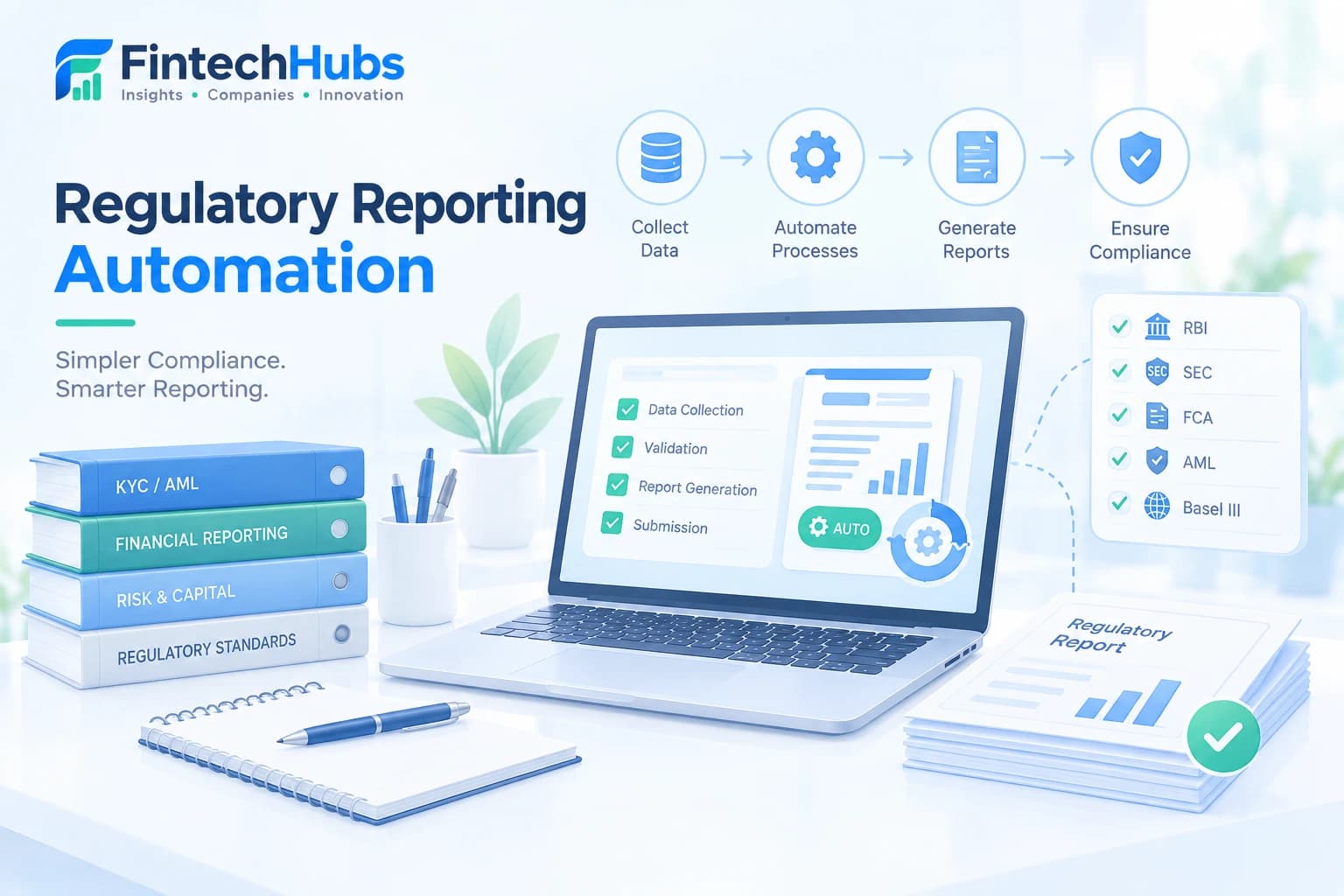
Regulatory reporting automation is the technology that has transformed this process. By using software to pull data directly from source systems, validate it automatically, and generate reports in the exact format regulators require, institutions have moved from reactive, labor-intensive compliance toward proactive, continuous, and far more accurate reporting.
This guide provides an in-depth look at regulatory reporting automation: what it is, how it works, the different types of reports it covers, its core branches and technologies, why it matters, and where the field is heading.
2. What Is Regulatory Reporting Automation?
Regulatory reporting automation refers to the use of software to collect, validate, format, and submit the reports that financial institutions and other regulated businesses are legally required to provide to regulators and supervisory authorities. Rather than compliance staff manually gathering data from disparate systems and assembling reports by hand, automated platforms connect directly to an institution's underlying data sources transaction systems, risk models, customer databases and generate accurate, properly formatted reports with minimal manual intervention.
The goal isn't just speed. Automation is designed to reduce the risk of human error, ensure consistency across reporting periods, create clear audit trails, and free compliance professionals to focus on judgment-intensive work rather than repetitive data assembly.
3. Why Regulatory Reporting Is So Complex
Several factors make regulatory reporting one of the more challenging compliance functions for financial institutions:
Volume and variety of reports: Large institutions may be required to file dozens of distinct report types to multiple regulators, each with its own format, frequency, and data requirements.
Frequent regulatory changes: Reporting requirements are updated regularly, requiring institutions to continuously adapt their processes and systems.
Data fragmentation: The data needed for a single report often lives across multiple, disconnected internal systems, making manual assembly slow and error-prone.
Strict accuracy and deadline requirements: Regulators generally have little tolerance for late or inaccurate filings, and errors can trigger further scrutiny or penalties.
Cross-border complexity: Institutions operating in multiple countries must often reconcile different reporting standards and requirements across jurisdictions simultaneously.
4. How Regulatory Reporting Automation Works
Step 1: Data Integration
The automation platform connects to an institution's core systems transaction processing, risk management, customer records, general ledger pulling in the raw data needed for various reports.
Step 2: Data Validation and Quality Checks
Automated rules check incoming data for completeness, accuracy, and consistency, flagging gaps or anomalies before they make it into a final report rather than after submission.
Step 3: Mapping to Regulatory Templates
The validated data is automatically mapped into the specific format, fields, and structure each regulator requires, eliminating the manual reformatting that used to consume significant compliance time.
Step 4: Review and Approval Workflow
Even in a highly automated system, most institutions maintain a human review and sign-off step before submission, ensuring accountability and giving compliance officers a final check on accuracy.
Step 5: Submission and Confirmation
The report is submitted to the relevant regulatory authority, often through a secure electronic filing system, with the platform tracking submission confirmation and deadlines.
Step 6: Audit Trail and Recordkeeping
The system maintains a complete, timestamped record of the data sources, calculations, and approvals behind each report, supporting both internal governance and regulatory examinations.
5. Types of Regulatory Reports Institutions Must File
Regulatory reporting automation supports a wide range of report types, including:
Capital adequacy and liquidity reports: Demonstrating an institution holds sufficient capital and liquid assets relative to its risk
Transaction reporting: Covering large or specific categories of transactions regulators require visibility into
Suspicious activity reports: Related to anti-money laundering obligations
Consumer complaint and fair lending reports, tracking how institutions are treating customers
Trade and market conduct reporting: Particularly for investment firms and trading desks
Tax reporting: Including reporting on customer accounts and transactions for tax authorities
Prudential and risk reporting: Covering an institution's overall risk exposure and financial health
Data breach and incident reporting: Required when a security or privacy incident occurs
6. Core Components of an Automated Reporting System
Data connectors and integration layers: That pull information from core banking, trading, and risk systems
A centralized data repository or "golden source": That consolidates and reconciles data used across multiple reports
A rules and validation engine: That checks data quality and regulatory logic before report generation
Template and formatting engines: That map data into the specific structure each regulator requires
Workflow and approval tools: Supporting human review and sign-off
Submission and tracking modules: Managing the actual filing process and deadline monitoring
Audit trail and version control: Documenting exactly how each report was produced
7. Key Branches and Use Cases
A. Prudential and Capital Reporting Automation
Focused on the reports demonstrating an institution's financial health and risk exposure to banking regulators.
B. Transaction and Trade Reporting Automation
Focused on reporting specific transactions or trading activity, particularly relevant for payments companies and investment firms.
C. AML and Financial Crime Reporting Automation
Focused specifically on suspicious activity reports and related anti-money laundering filings, closely tied to broader AML technology.
D. Tax Reporting Automation
Focused on the specific reports financial institutions must provide to tax authorities regarding customer accounts and transactions.
E. Consumer Protection and Conduct Reporting
Focused on reports tracking fair treatment of customers, complaint handling, and conduct-related metrics.
F. Cross-Border and Multi-Jurisdictional Reporting
Specialized tools helping institutions operating in multiple countries manage differing reporting requirements from a single, coordinated system.
G. Regulatory Change Management Integration
Increasingly, reporting automation platforms are integrated with regulatory change tracking tools, automatically flagging when a rule change will affect an existing report template.
8. Key Technologies Behind Modern Reporting Automation
API-based data integration: Allowing real-time or near-real-time connections to source systems rather than periodic manual extracts
Cloud-based platforms : Offering scalability and easier updates as reporting requirements change
Machine learning for data quality: identifying anomalies or likely errors in source data before they propagate into a final report
Natural language processing: increasingly used to interpret regulatory text and help map new requirements to existing data structures
Robotic process automation (RPA): Used to automate repetitive manual steps in legacy systems that lack modern API connectivity
Blockchain and distributed ledger pilots: Explored by some regulators and institutions for shared, tamper-evident reporting records
9. Why Regulatory Reporting Automation Matters
Reducing Human Error
Manual data assembly is inherently prone to mistakes. Automation significantly reduces the risk of the kind of reporting errors that can trigger regulatory scrutiny or penalties.
Meeting Deadlines Reliably
Automated systems can produce reports far faster than manual processes, reducing the risk of late filings and the penalties that often accompany them.
Freeing Compliance Talent for Higher-Value Work
When routine data assembly is automated, compliance professionals can focus on interpreting ambiguous regulatory requirements, managing relationships with regulators, and handling genuinely complex judgment calls.
Supporting Better Regulatory Relationships
Consistent, accurate, on-time reporting builds regulatory trust, which can translate into smoother examinations and a stronger overall relationship with supervisory authorities.
Enabling Scalability
As institutions grow, transaction volumes and reporting complexity grow with them. Automation allows reporting capacity to scale without a proportional increase in compliance headcount.
Reducing Compliance Costs
While automation requires upfront investment, it typically reduces the ongoing labor cost of compliance significantly compared to fully manual processes, particularly for institutions with extensive reporting obligations.
10. Benefits for Different Stakeholders
For financial institutions: lower compliance costs, reduced regulatory risk, and faster, more accurate reporting
For regulators: more consistent, higher-quality data, enabling better oversight and faster identification of systemic risks
For compliance professionals: less time spent on repetitive data assembly and more time available for genuine risk analysis and judgment
For customers: indirectly, a more stable and well-supervised financial system that reduces the risk of institutional failures or misconduct going undetected
11. Challenges and Limitations
Legacy system integration: Many institutions still rely on older core systems that weren't designed for modern API-based data extraction, complicating automation efforts.
Data quality at the source: Automation can only be as accurate as the underlying data; poor data governance elsewhere in the institution can undermine even a well-designed reporting system.
Keeping pace with regulatory change: Automated systems still require ongoing updates whenever reporting requirements change, meaning automation reduces but doesn't eliminate ongoing maintenance work.
Cost of initial implementation: Building or purchasing a comprehensive reporting automation platform requires significant upfront investment, which can be a barrier for smaller institutions.
Over-reliance risk: Institutions must maintain sufficient human oversight and understanding of their reporting obligations rather than treating automated systems as a fully "set and forget" solution.
Cross-jurisdictional inconsistency: Even sophisticated automation platforms can struggle to elegantly handle significantly different reporting standards across many different countries simultaneously.
12. Best Practices for Implementation
Start with a clear data governance foundation before layering automation on top of poor-quality source data
Prioritize automating the highest-volume, most error-prone reports first to demonstrate value quickly
Maintain human review and sign-off checkpoints even in highly automated workflows
Build flexible systems that can adapt to regulatory changes without requiring a complete rebuild
Invest in staff training so compliance teams understand how the automated system works, not just how to use it
Regularly audit automated outputs against manual spot-checks to catch systemic errors early
13. The Competitive and Vendor Landscape
The regulatory reporting automation market includes specialized reporting software vendors focused specifically on this function, larger enterprise RegTech and compliance platform providers that include reporting automation as one module within a broader suite, core banking and risk management system providers that have built reporting capabilities directly into their platforms, and consulting firms that combine reporting technology with implementation and managed services for institutions that prefer a more hands-off approach.
14. Future Trends to Watch
Real-time and continuous reporting: moving away from periodic batch reporting toward continuous data feeds available to regulators on demand
Greater regulator-side automation ("suptech"): as supervisory authorities themselves adopt automated tools to analyze incoming reports more efficiently
AI-assisted interpretation of new regulations: helping institutions map regulatory text changes directly to affected report templates
Standardization efforts: as regulators and industry bodies work toward more consistent reporting formats across jurisdictions, reducing the burden of managing many bespoke formats
Greater use of shared utility models: where multiple institutions rely on common reporting infrastructure or data standards rather than each building bespoke systems
Increased focus on explainability: as regulators expect institutions to be able to clearly explain how an automated system produced a given report
15. Frequently Asked Questions
1. What is regulatory reporting automation? It's the use of software to collect, validate, format, and submit the compliance reports financial institutions are legally required to provide to regulators, replacing manual data assembly with automated data integration and report generation.
2. Why do financial institutions need to automate regulatory reporting? Because manual reporting is slow, labor-intensive, and prone to error, and the volume and complexity of reporting requirements have grown significantly, making manual processes difficult to sustain accurately at scale.
3. What types of reports can be automated? A wide range, including capital adequacy reports, transaction reporting, suspicious activity reports, tax reporting, consumer conduct reports, and trade reporting, among others.
4. Does automation eliminate the need for compliance staff? No. Automation handles repetitive data assembly and formatting, but human compliance professionals remain essential for judgment calls, reviewing and approving reports, and interpreting ambiguous regulatory requirements.
5. How does regulatory reporting automation reduce errors? By pulling data directly from source systems and applying consistent, automated validation rules, it removes much of the manual data entry and reformatting where human errors typically occur.
6. What is the biggest challenge in implementing reporting automation? Integrating with legacy core systems that weren't originally designed for modern API-based data extraction is often the most significant technical challenge, alongside ensuring the underlying data quality is strong enough to support accurate automation.
7. How does reporting automation help during regulatory examinations? Automated systems typically maintain detailed audit trails showing exactly how each report was produced, which data sources were used, and who approved it — making it easier to demonstrate compliance and respond to regulator questions during an examination.
8. Can small financial institutions benefit from reporting automation, or is it only for large banks? Smaller institutions can benefit significantly, particularly from cloud-based or vendor-hosted platforms that don't require the same upfront infrastructure investment as building an in-house system, though cost remains a consideration.
9. How often do reporting requirements change, and how does automation handle that? Requirements can change fairly frequently depending on the jurisdiction and regulator. Modern automation platforms are typically designed with flexible, configurable templates so they can be updated without a complete system rebuild, though updates still require ongoing maintenance.
10. What is "suptech," and how does it relate to reporting automation? Suptech (supervisory technology) refers to regulators' own use of automated tools to analyze the reports they receive. As institutions automate their reporting, more regulators are correspondingly automating their review process, moving the entire ecosystem toward more real-time, data-driven supervision.
16. Conclusion
Regulatory reporting automation has transformed one of the most essential but historically labor-intensive functions in financial services turning a slow, manual, error-prone process into a fast, accurate, and increasingly continuous one. Its core value lies not just in efficiency, but in the accuracy, consistency, and audit-readiness it brings to an area where mistakes carry real regulatory and reputational consequences. As data integration technology, AI-assisted validation, and regulator-side automation all continue to mature, regulatory reporting is set to become an increasingly real-time, seamless part of how financial institutions operate freeing compliance professionals to focus on the judgment-intensive work that technology still can't replace.
This content is for informational and educational purposes only and does not constitute legal, financial, or compliance advice. Institutions should consult qualified compliance and legal professionals regarding their specific regulatory obligations.
Share this article
Related Articles
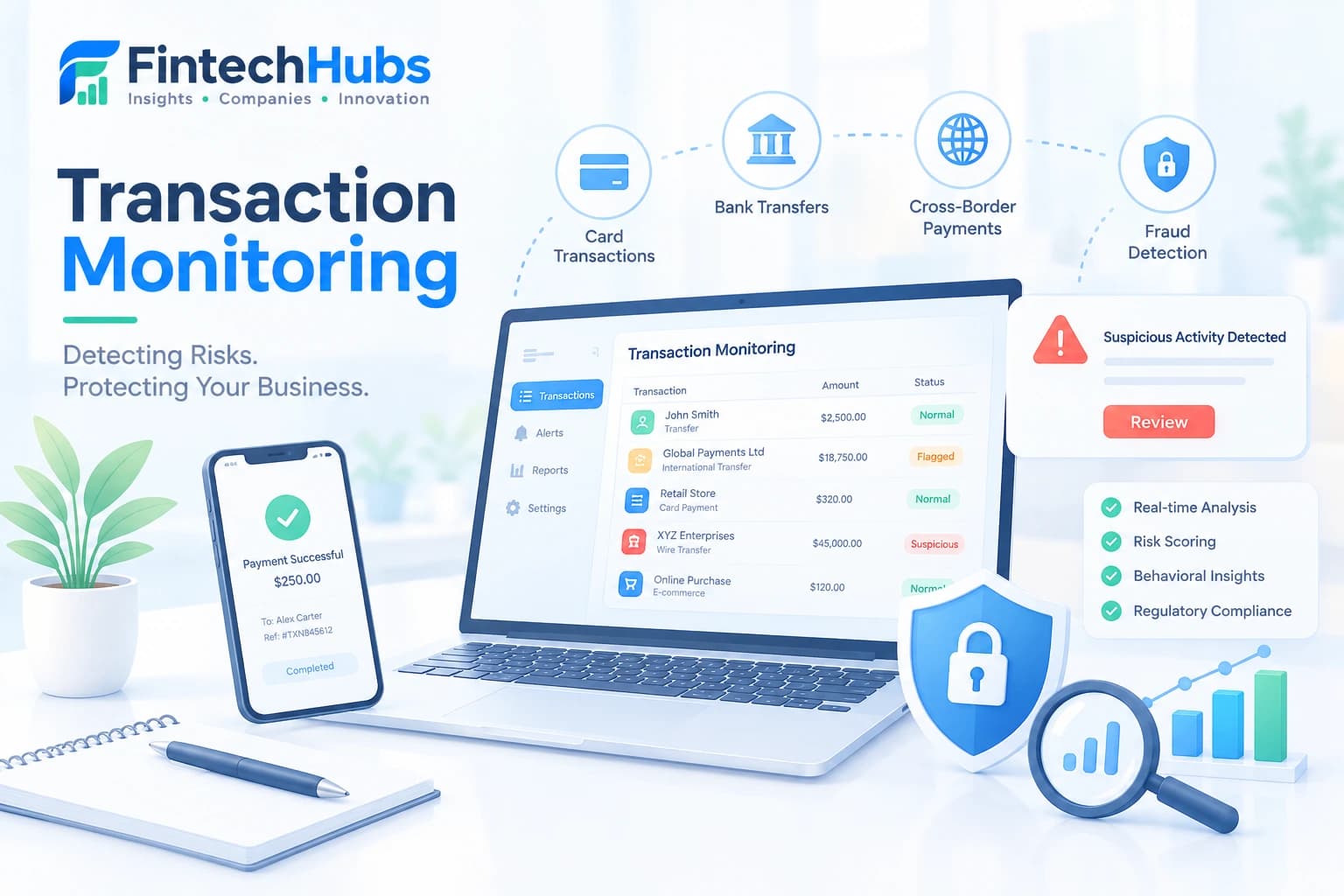
Transaction Monitoring: A Complete Guide to Financial Security
A complete guide to transaction monitoring, covering how it works, AML compliance, AI detection, best practices, common challenges, and 10 key FAQs.
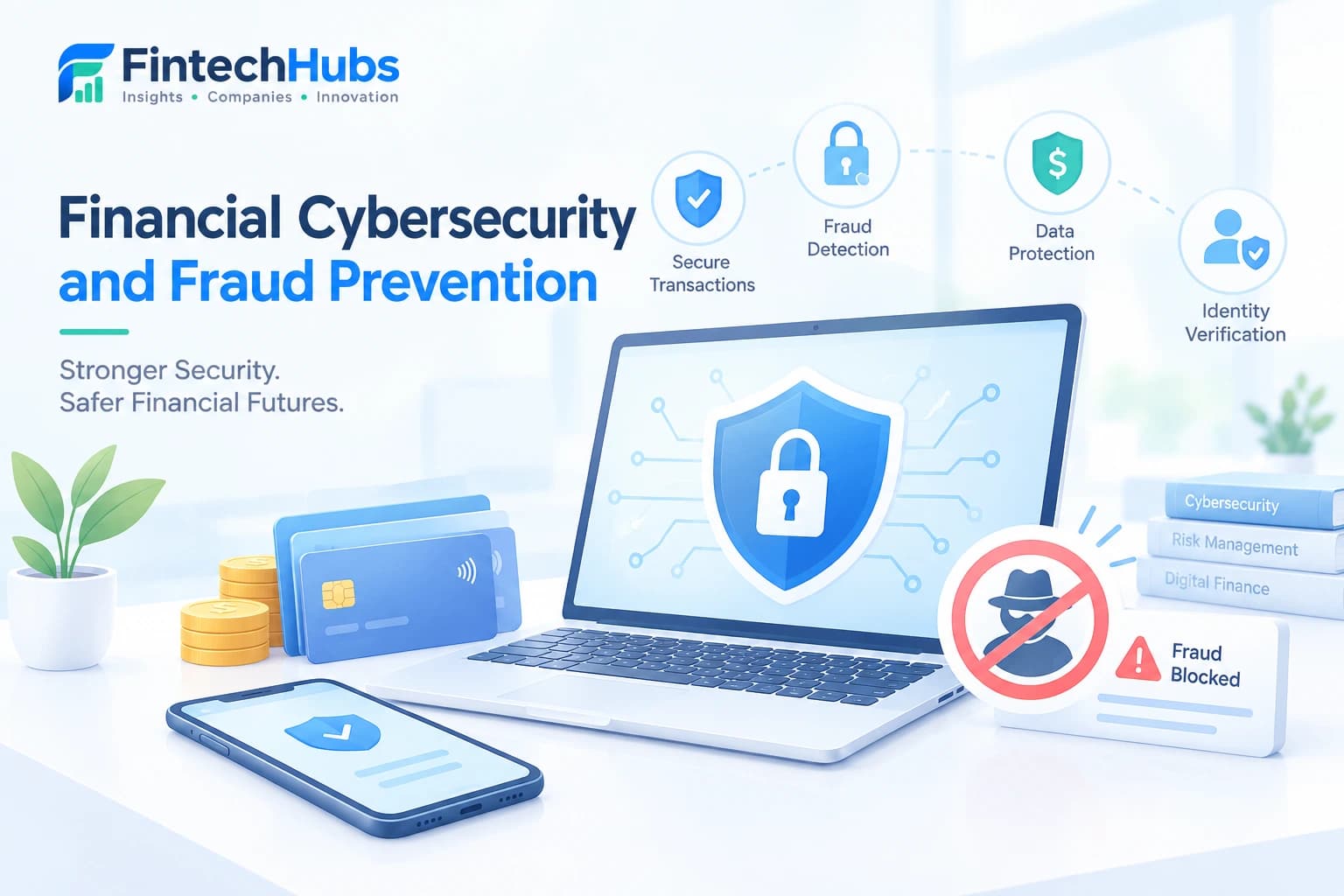
Financial Cybersecurity & Fraud Prevention: Full Guide
A complete guide to financial cybersecurity and fraud prevention, types of fraud, key technologies, best practices, trends, and 10 essential FAQs.
RegTech: Solutions, Benefits & Trends Guide 2026
Discover regulatory technology (RegTech) in 2026, top solutions, key benefits, and emerging trends transforming compliance for banks and fintechs.