
What Is KYC? Know Your Customer Explained
Learn what Know Your Customer (KYC) means, how the verification process works, and why it matters for fraud prevention, AML compliance, and financial security.
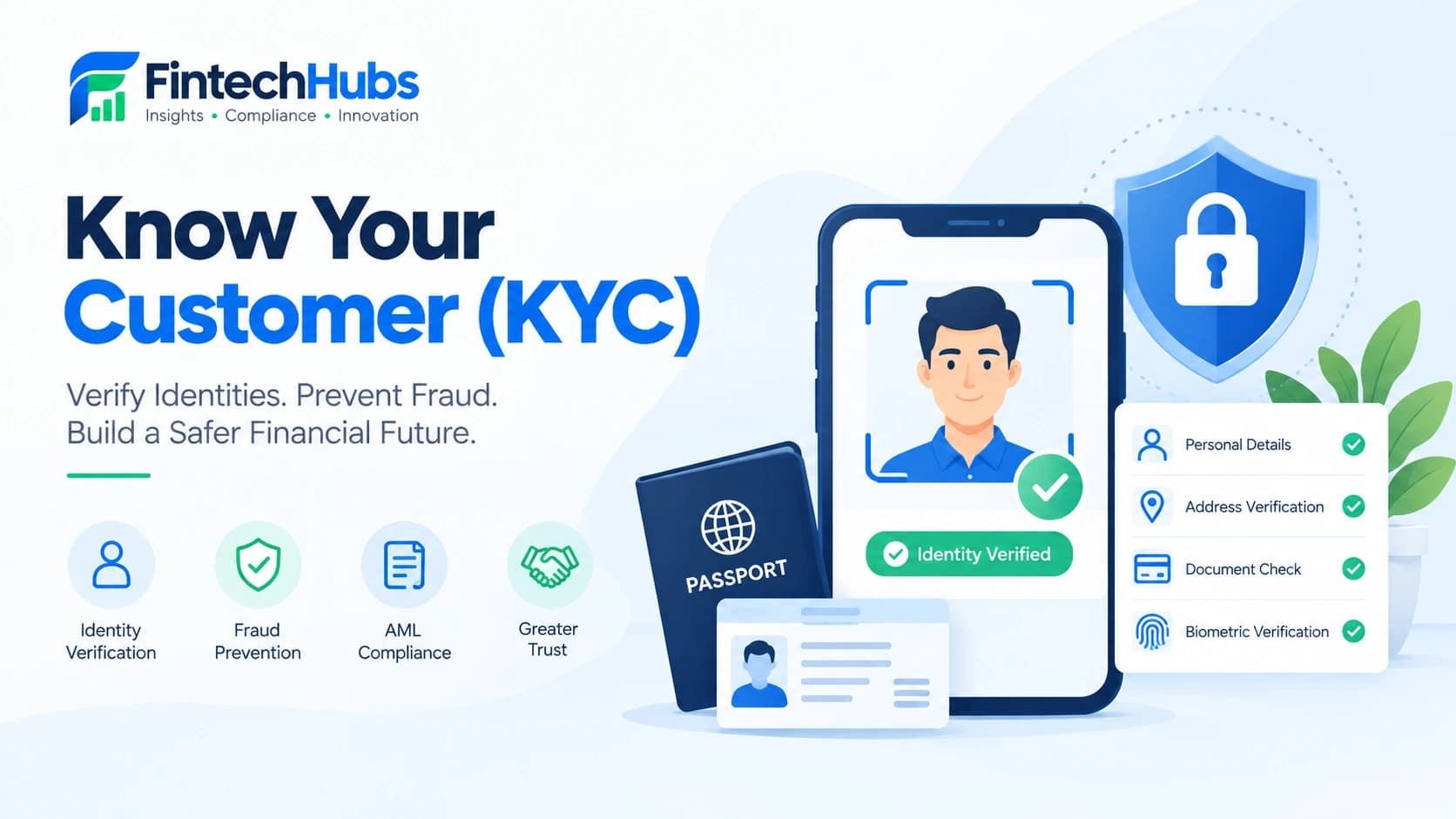
Know Your Customer (KYC): Everything You Need to Know in 2026
What Is KYC?
KYC is the process of identifying and verifying the identity of a customer and understanding their profile and expected activity, both at the start of a relationship and throughout it. A closely related concept is Customer Due Diligence (CDD), which describes the broader set of measures (identification, verification, beneficial ownership checks, understanding the purpose of the relationship and ongoing monitoring). In practice, many institutions use the terms KYC and CDD almost interchangeably.
1.1 The Core Questions KYC Answers
Who is the customer? Is the identity real, and does the person or entity match the documents provided?
Who really owns or controls it? For companies and trusts, who are the ultimate beneficial owners?
Is the customer risky? Are they a politically exposed person (PEP), on a sanctions list, linked to adverse media or located in a high-risk jurisdiction?
What is the purpose of the relationship? What products will they use, and what activity is expected?
Is behaviour consistent with the profile? Do transactions make sense for this customer over time?
1.2 KYC vs. Related Terms
Term | Meaning | Relationship to KYC |
KYC | Identifying and understanding customers | The foundation of customer-facing compliance |
CIP (Customer Identification Programme) | US term for minimum identity information and verification at account opening | A component of KYC |
CDD | Verification plus risk assessment and ongoing monitoring | Often used as a synonym for KYC |
EDD (Enhanced Due Diligence) | Additional checks for high-risk customers | A higher tier of CDD |
SDD (Simplified Due Diligence) | Reduced checks for demonstrably low-risk situations | A lower tier of CDD |
KYB (Know Your Business) | KYC for companies and organisations | Applies KYC principles to entities |
AML / CFT | Laws and controls against money laundering and terrorist financing | The wider framework KYC supports |
Sanctions screening | Checking parties against sanctions lists | Performed alongside KYC |
Transaction monitoring | Detecting unusual activity | Uses KYC data as its baseline |
Why KYC Matters
Legal and regulatory compliance: Failing to meet KYC duties can lead to fines, licence restrictions, criminal liability and reputational damage.
Preventing financial crime: KYC makes it harder for criminals to open accounts, move illicit funds or hide behind shell companies.
Fraud reduction: Identity verification reduces account opening fraud, synthetic identities and account takeover.
Protecting the financial system: It supports market integrity and public trust.
Sanctions compliance: Screening helps firms avoid dealing with prohibited parties.
Better risk decisions: Understanding customers allows suitable products, limits and monitoring.
Customer protection: Verified identities help protect people from impersonation and misuse of their data.
Business access: Strong compliance is often required by banking partners, card schemes and investors.
The Legal and Regulatory Framework
3.1 Global Standards: FATF
The Financial Action Task Force (FATF) sets the international AML/CFT standards that most countries implement. Key recommendations relevant to KYC include customer due diligence (Recommendation 10), politically exposed persons (12), wire transfer and virtual asset Travel Rule requirements (16 and 15), transparency of beneficial ownership of legal persons and arrangements (24 and 25), and obligations for designated non-financial businesses and professions (22 and 23). FATF promotes a risk-based approach, which means that controls should be proportionate to the level of risk. Regional bodies such as MENAFATF, the Asia/Pacific Group and MONEYVAL assess countries against these standards.
3.2 United States
Bank Secrecy Act (BSA) and USA PATRIOT Act: establish AML programme requirements and Customer Identification Programmes for financial institutions.
FinCEN CDD Rule: Requires covered institutions to identify and verify beneficial owners of legal entity customers (commonly those owning 25% or more, plus a control person) and to conduct ongoing monitoring.
OFAC sanctions: Firms must screen against sanctions lists and block or reject prohibited transactions.
Corporate Transparency Act: Its beneficial ownership reporting regime has been significantly narrowed by 2025 changes, so check its current scope.
Regulators and examiners: FinCEN, the OCC, the Federal Reserve, the FDIC, the SEC, FINRA and state regulators supervise different sectors.
3.3 European Union
Existing Directives (AMLD): The Fourth, Fifth and Sixth Anti-Money Laundering Directives set CDD, beneficial ownership register and criminal liability rules, implemented through national laws.
New AML package: Includes the Anti-Money Laundering Regulation (EU) 2024/1624, which creates a directly applicable single rulebook, applying largely from July 2027, and a new directive on national frameworks. It sets harmonised CDD requirements, beneficial ownership rules and a lower cash payment limit.
AMLA: The new EU Anti-Money Laundering Authority, based in Frankfurt, is being built up to coordinate national supervisors and directly supervise certain high-risk cross-border institutions in later years.
(Travel Rule): Extends information requirements to crypto-asset transfers, applying since the end of 2024.
eIDAS 2.0 and the EU Digital Identity Wallet: Member states are required to provide digital identity wallets, which may allow reusable, verified identity credentials.
GDPR: Applies to personal data processing in KYC.
3.4 United Kingdom
The Money Laundering Regulations 2017 (as amended), the Proceeds of Crime Act and the Terrorism Act form the core framework, with supervision by bodies such as the FCA, HMRC and professional supervisors. Industry guidance from the Joint Money Laundering Steering Group is widely used. The Economic Crime and Corporate Transparency Act 2023 strengthens Companies House powers and identity verification for company directors and others.
3.5 Asia-Pacific
Singapore: MAS notices and guidelines under the Banking, Securities and Payment Services frameworks, with strong emphasis on risk-based CDD and use of national digital identity (Singpass and MyInfo).
Hong Kong: the Anti-Money Laundering and Counter-Terrorist Financing Ordinance, with HKMA, SFC and IA guidelines.
India: the Prevention of Money Laundering Act, the RBI Master Direction on KYC, central KYC records (CKYC), Aadhaar-based e-KYC under defined conditions and Video-based Customer Identification Process (V-CIP).
Pakistan: State Bank of Pakistan AML/CFT regulations, SECP rules for non-bank financial institutions and tiered account models to support financial inclusion.
Others: Japan, South Korea, Australia (AUSTRAC) and others have detailed CDD rules, often including real-name or electronic verification requirements.
3.6 Middle East
The UAE, Saudi Arabia, Qatar, Bahrain, Kuwait and Oman have national AML laws and central bank or capital markets regulations, with free zones such as DIFC and ADGM applying their own rules. Regulators emphasise beneficial ownership, PEP screening, goAML-style reporting systems and increasingly digital onboarding.
3.7 Sector Coverage
KYC duties extend beyond banks to payment institutions, e-money firms, crypto-asset service providers, broker-dealers, insurers, money service businesses, casinos, real estate agents, lawyers, accountants, trust and company service providers, and dealers in precious metals and stones, depending on the jurisdiction.
The KYC Lifecycle
4.1 Customer Identification Programme (CIP)
Collect core identity information: full name, date of birth, address and a government-issued identification number for individuals; for entities, legal name, registration number, address, legal form and directors.
4.2 Verification
Confirm the information with reliable, independent sources, such as government IDs, electronic identity checks, official registries or trusted databases.
4.3 Risk Assessment and Customer Risk Rating
Assign a risk level based on customer type, geography, product, delivery channel, expected activity and other factors.
4.4 Screening
Check against sanctions lists (such as UN, OFAC, EU and UK lists), PEP lists, watchlists and adverse media sources.
4.5 Due Diligence Tiering
Apply SDD, standard CDD or EDD depending on risk.
4.6 Understanding the Relationship
Record the purpose of the account, expected volumes, source of funds and, where needed, source of wealth.
4.7 Approval and Onboarding Decision
Approve, reject or escalate. High-risk cases typically need senior management sign-off.
4.8 Ongoing Monitoring
Monitor transactions and customer information over time, rescreen against updated lists, refresh KYC data on a schedule or on trigger events, and investigate unusual activity.
4.9 Reporting and Record Keeping
File suspicious activity or transaction reports with the financial intelligence unit when required, and retain records for the legally required period, commonly five years or longer after the relationship ends.
Documents and Information Typically Required
5.1 Individuals
Category | Examples |
Identity | Passport, national ID card, driving licence, residence permit |
Address | Utility bill, bank statement, tenancy agreement, government letter (rules vary on age of document) |
Other data | Date of birth, nationality, tax identification number, occupation, employer |
Purpose and activity | Account purpose, expected transaction types and volumes |
Source of funds / wealth | Salary slips, sale agreements, inheritance records (for higher risk) |
Biometrics | Selfie and liveness check matched to ID photo |
5.2 Businesses (KYB)
Category | Examples |
Legal existence | Certificate of incorporation, registry extract, articles of association |
Ownership and control | Shareholder register, ultimate beneficial owners, directors, authorised signatories |
Structure | Group chart showing parents, subsidiaries and trusts |
Operations | Business description, website, licences, main customers and suppliers |
Financial information | Financial statements, tax registration, bank references |
Source of funds | Contracts, funding documents, investor details |
Compliance posture | AML policies for regulated clients, regulatory licences |
Verification Methods
Method | How it works | Strengths | Limitations |
Document verification | Image of ID is checked for authenticity features and data consistency | Scalable, familiar | Vulnerable to high-quality forgeries if used alone |
Biometric face match and liveness | Selfie or video compared to ID photo, with checks that a real person is present | Strong against impersonation | Needs defences against deepfakes and injection attacks; privacy and bias considerations |
NFC chip reading | Reads the chip in an ePassport or national ID and verifies digital signatures | Very high assurance for supported documents | Needs compatible devices and documents |
Database and credit bureau checks | Matches identity data against trusted sources | Fast, no document upload | Coverage gaps, especially for young or thin-file customers |
Electronic ID and digital identity | National or bank-issued digital IDs (for example, Singpass, BankID, Aadhaar-based e-KYC under rules) | High assurance and smooth experience | Availability varies by country |
Video KYC | Live or recorded video session with an agent | Human judgement and remote access | Higher cost, scheduling and fraud risk if poorly controlled |
Open banking verification | Customer authorises access to bank data to confirm account ownership and details | Strong link to a real bank account | Requires customer consent and market support |
In-person verification | Face-to-face check with original documents | Traditional gold standard | Inconvenient and costly |
Reusable KYC / KYC utilities | Previously verified identity data shared with consent | Reduces repeated checks | Needs trust frameworks and legal clarity |
Best practice is to combine methods and layer controls, matching the strength of verification to the risk.
The Risk-Based Approach
A risk-based approach calibrates effort to risk rather than treating all customers the same.
7.1 Common Risk Factors
Customer risk: type (individual, company, trust, charity), ownership complexity, occupation, PEP status, adverse media, transparency.
Geographic risk: residence or operations in jurisdictions with weak AML controls, sanctions or high corruption levels, including those on FATF lists.
Product and service risk: cash-intensive products, anonymity features, private banking, trade finance, virtual assets, high-value or cross-border payments.
Delivery channel risk: non-face-to-face onboarding, use of intermediaries or introducers.
Behavioural risk: unusual transaction patterns, rapid movement of funds, inconsistent information.
7.2 Due Diligence Levels
Level | When used | Typical measures |
Simplified (SDD) | Demonstrably low risk and permitted by law | Reduced verification, lighter monitoring, simplified data |
Standard (CDD) | Normal risk | Identify and verify, screen, understand purpose, monitor |
Enhanced (EDD) | High risk, PEPs, high-risk countries, complex structures | Source of wealth and funds, senior approval, deeper checks, frequent reviews, closer monitoring |
7.3 Politically Exposed Persons (PEPs)
PEPs hold prominent public functions, and their family members and close associates are also covered by many regimes. Being a PEP is not wrongdoing, but it carries higher corruption risk, so EDD and senior management approval are usually required.
7.4 Beneficial Ownership
Institutions must look through ownership layers to the natural persons who ultimately own or control a legal entity. Thresholds commonly fall at 25% (some jurisdictions or higher-risk cases use 10%), and control by other means must also be considered. Complex structures, nominee shareholders, bearer instruments and offshore vehicles raise red flags.
Ongoing Monitoring and Periodic Review
Transaction monitoring: rules and models to detect unusual patterns against the customer's profile.
Continuous screening: rescreening customers against updated sanctions, PEP and adverse media data.
Periodic reviews: refreshing information on a risk-based cycle; higher-risk customers are reviewed more often (often annually) than lower-risk ones.
Trigger events: changes in ownership, address, business activity, negative news or unusual transactions can require an event-driven review.
Perpetual KYC (pKYC): a model where data is updated continuously from internal and external sources, replacing fixed review cycles with event-based refresh.
Exit decisions: if due diligence cannot be completed or risk becomes unacceptable, firms may need to refuse, restrict or terminate the relationship and consider filing a suspicious report.
Red Flags in KYC
Reluctance to provide information or documents, or inconsistent details.
Documents that appear altered, expired or counterfeit.
Use of nominee directors or layered offshore structures with no clear business reason.
Customer with no clear connection to the country or business purpose of the account.
Rapid onboarding followed by high-value, high-velocity transactions.
Multiple accounts sharing the same address, device or phone number.
Source of funds that cannot be explained or does not fit the profile.
Adverse media regarding financial crime or corruption.
Pressure to bypass checks or speed up approval.
Businesses with activities inconsistent with their registered purpose.
Technology in KYC
10.1 Core Technologies
Optical character recognition (OCR) and document forensics: extract and validate data from IDs and detect tampering.
Biometrics and liveness detection: face matching, passive and active liveness, and presentation and injection attack detection.
Machine learning and AI: risk scoring, entity resolution, anomaly detection and alert prioritisation.
Graph analytics: revealing hidden links between people, companies, devices and accounts.
Workflow and case management: orchestrating checks, approvals and audit trails.
APIs and data aggregation: connecting registries, screening providers, credit bureaus and identity networks.
Digital identity wallets and verifiable credentials: allow customers to share verified attributes with consent.
RegTech and SupTech: automation for compliance teams and regulators.
10.2 Emerging Threats
Deepfakes and synthetic media: AI-generated faces, voices and videos used to pass remote checks.
Injection attacks: feeding fake images into the verification pipeline rather than the camera.
Synthetic identities: combining real and fabricated data to create new personas.
Document mills and forged documents produced with generative tools.
Money mule recruitment: real people used to open accounts for criminals.
Account takeover after onboarding.
Defences include liveness testing certified to recognised standards, device and behavioural signals, cross-checking multiple data sources, NFC chip verification and ongoing monitoring rather than a single check at onboarding.
10.3 Responsible Use of AI
Firms should test models for accuracy and bias, keep humans in the loop for significant decisions, document model governance, provide explanations where required, and comply with emerging AI regulation in their markets.
Data Protection and Privacy in KYC
KYC involves highly sensitive personal data, so privacy law and security are integral.
Lawful basis and transparency: explain what data is collected, why and how long it is kept. AML obligations commonly provide the legal basis, but notices are still needed.
Data minimisation: collect only what is necessary and proportionate to risk.
Biometric data: treated as sensitive in many laws (for example, GDPR special category data and some US state laws), so consent, necessity and security require extra care.
Retention: AML rules often require keeping records for several years after the relationship ends, while privacy law requires deletion when no longer needed. Policies must reconcile both.
Cross-border transfers: transferring KYC data between group entities or vendors requires safeguards.
Security: encryption, access controls, segregation, logging, vendor due diligence and breach response plans.
Third-party providers: clear contracts on roles, audit rights and sub-processors.
Data subject rights: processes to handle access, correction and complaint requests while respecting AML confidentiality rules, such as tipping-off restrictions.
KYC for Different Sectors
Sector | KYC focus |
Banks and credit unions | Full CDD, EDD for high risk, correspondent banking due diligence, ongoing monitoring |
Payment and e-money firms | Fast digital onboarding, wallet limits, merchant KYB, mule account detection |
Crypto-asset service providers | Identity verification, wallet screening, blockchain analytics, Travel Rule compliance |
Broker-dealers and asset managers | Suitability plus AML, source of wealth, beneficial ownership of funds and investors |
Insurance | Policyholder and beneficiary checks, especially for life and investment products |
Gaming and betting | Age verification, responsible gambling, source of funds for high spenders |
Real estate and legal professionals | Buyer and seller due diligence, source of funds, beneficial owners of purchasing entities |
Marketplaces and gig platforms | Seller and driver identity, payout verification, fraud prevention |
Telecom and fintech partnerships | SIM registration, wallet KYC, partner due diligence |
Common Challenges
Onboarding friction and drop-off: long forms and repeated checks cause customers to abandon applications.
False positives in screening: name matches flood analysts with alerts.
Fragmented data and legacy systems: customer data scattered across silos.
Complex beneficial ownership: layered structures and inconsistent registries.
Evolving regulation across jurisdictions: multinational firms must align different rules.
Fraud sophistication: deepfakes and synthetic identities.
Cost and resourcing: large teams and manual reviews.
Periodic review backlogs: refresh cycles that are slow and costly.
Financial inclusion: people without standard documents risk being excluded.
Privacy and data security risks associated with large volumes of sensitive data.
Vendor and model risk: dependence on third-party tools and AI that need governance.
Best Practices for an Effective KYC Programme
Adopt a documented, risk-based framework with board and senior management oversight.
Appoint a qualified compliance or money laundering reporting officer with authority and resources.
Design customer journeys that feel simple: pre-fill data, use clear instructions and offer mobile-first flows.
Layer verification methods according to risk, combining document, biometric, database and device signals.
Tune screening to reduce false positives using fuzzy matching thresholds, secondary identifiers and good data quality.
Use a single customer view across products to avoid duplicate checks and missed links.
Move toward continuous monitoring and event-driven reviews.
Keep strong audit trails showing what was checked, when, by whom and why decisions were taken.
Train staff regularly, including on new fraud methods and typologies.
Test and validate systems and models independently and periodically.
Manage vendors rigorously, with due diligence, SLAs and exit plans.
Integrate KYC with fraud, sanctions and transaction monitoring to share intelligence.
Provide alternative paths for customers without standard documents, consistent with local rules.
Review policies at least annually and whenever laws or risks change.
Implementation Roadmap
Define scope and obligations: list the regulations and regulators that apply to each product, customer type and country.
Conduct an enterprise-wide risk assessment covering customers, products, channels and geographies.
Draft policies and procedures, including risk rating methodology, tiers of due diligence and escalation rules.
Map the customer journey and identify points of friction and risk.
Select technology and partners for verification, screening, monitoring and case management.
Integrate data and systems to create a unified customer risk profile.
Pilot and tune: test thresholds, measure accuracy and refine workflows before full rollout.
Train teams and communicate to customers why information is needed.
Launch with monitoring dashboards for approval times, rejection reasons, alert volumes and quality.
Review and improve continuously through quality assurance, audits and lessons learned.
Key Metrics and KPIs
KPI | What it shows |
Onboarding completion rate and drop-off | Customer experience quality |
Average time to verify | Efficiency |
Auto-approval rate vs manual review rate | Automation level |
False positive rate in screening | Accuracy and analyst workload |
Alert backlog and handling time | Operational health |
Fraud and synthetic identity detection rate | Effectiveness against fraud |
High-risk customer share and review timeliness | Risk governance |
Cost per verified customer | Efficiency and budget |
Regulatory findings and audit issues | Programme quality |
Rate of SAR/STR filings and quality | Reporting effectiveness |
Trends Shaping KYC in 2026 and Beyond
Harmonised rules in the EU: The single AML rulebook and the new AML authority will shape cross-border compliance planning.
Digital identity wallets and reusable credentials: Reducing repeated checks and improving privacy through selective disclosure.
Perpetual KYC and real-time risk scoring: Replacing fixed review cycles.
AI-powered investigation and case summarisation: With strong governance and human oversight.
Stronger deepfake and injection defences: Including hardware-backed camera signals and certified liveness.
Greater beneficial ownership transparency: Through registries, though access and scope vary and are legally contested in some places.
Convergence of KYC, fraud and cyber teams: For shared signals on identity and behaviour.
Crypto and Travel Rule alignment: Bringing digital asset firms closer to banking-grade controls.
Shared utilities and consortium models: Where permitted, to reduce duplication for common customers.
Inclusion-focused design: With tiered KYC and alternative evidence for underserved people.
Greater regulatory attention to technology governance: Including vendor risk and AI explainability.
Frequently Asked Questions (FAQs)
1. What does KYC stand for and what is its purpose?
KYC stands for Know Your Customer. Its purpose is to verify customers' identities, understand their activities and assess their risk, so that organisations can prevent money laundering, terrorist financing, fraud and sanctions breaches, and comply with the law.
2. Who has to comply with KYC requirements?
Banks, payment and e-money firms, crypto-asset service providers, securities firms, insurers, money service businesses and many designated non-financial businesses, such as casinos, real estate agents, lawyers and accountants, depending on the country. Other companies may adopt KYC voluntarily to manage fraud and partner requirements.
3. What is the difference between KYC and AML?
AML (anti-money laundering) is the broad set of laws and controls that aim to prevent illicit funds entering the financial system. KYC is one core part of AML, focusing on knowing and verifying customers. AML also includes transaction monitoring, sanctions screening, reporting and governance.
4. What documents are needed for KYC?
Individuals usually need a government-issued photo ID, such as a passport or national ID card, and sometimes proof of address. Businesses typically provide incorporation documents, ownership and director details, and information on beneficial owners. Higher-risk customers may also need to prove source of funds or wealth.
5. What is the difference between CDD and EDD?
Customer Due Diligence (CDD) is the standard process of identifying, verifying and monitoring customers. Enhanced Due Diligence (EDD) adds deeper checks, such as source of wealth verification, senior management approval and more frequent reviews, for higher-risk customers like PEPs or those linked to high-risk countries.
6. How long does KYC take?
Digital checks for low-risk individuals can take minutes or less, while manual reviews, complex corporate structures or EDD can take days or weeks. Speed depends on data quality, the verification methods used, risk level and regulatory requirements.
7. What is eKYC and video KYC?
eKYC uses electronic means, such as digital ID, database checks or biometrics, to verify identity remotely. Video KYC involves a live or recorded video session with an agent who checks the customer and documents. Both are allowed in many jurisdictions under specific conditions, such as in India and parts of Asia and Europe.
8. How often must KYC information be updated?
There is no single global rule. Firms set review cycles based on risk, with high-risk customers reviewed more frequently, for example annually, and lower-risk ones less often. Reviews are also triggered by events such as ownership changes, unusual activity or adverse news, and some firms use continuous or perpetual KYC.
9. How is customer data protected during KYC?
Organisations should use encryption, strict access controls, secure storage, vendor due diligence and retention limits, and comply with privacy laws such as GDPR. Customers should receive clear notices on how their data is used, and sensitive data such as biometrics requires extra safeguards.
10. What happens if a company fails to comply with KYC rules?
Consequences can include regulatory fines, enforcement actions, restrictions or loss of licence, criminal liability for individuals, loss of banking relationships and reputational harm. Organisations may also face losses from fraud and the cost of remediation programmes.
Conclusion
KYC has evolved from a paperwork exercise into a strategic capability that combines regulatory compliance, fraud prevention and customer experience. Strong programmes are built on a clear risk-based framework, reliable verification methods, accurate screening, continuous monitoring and good data governance. The best ones also make onboarding fast and fair so that legitimate customers are not driven away.
As rules harmonise in some regions, digital identity matures and criminals adopt AI, organisations must keep their controls current and adaptable. Investing in data quality, technology, skilled people and independent testing helps ensure that KYC protects both the institution and the wider financial system.
Because obligations differ widely and keep changing, treat this guide as an orientation framework and confirm requirements with your regulator, compliance team and legal advisers.
Disclaimer: This article is original, general-information content and is not legal or compliance advice. KYC and anti-money laundering (AML) rules vary by country, sector and risk level, and they change frequently. Provider names and examples are illustrative, not endorsements. Confirm obligations with your regulator, compliance officer and legal counsel.
Share this article
Related Articles
ComplyAdvantage vs Dow Jones AML Screening: Features, Data, and Use Cases
Compare ComplyAdvantage and Dow Jones AML screening solutions, including sanctions screening, PEP checks, adverse media, integrations, pricing, and key selection factors.
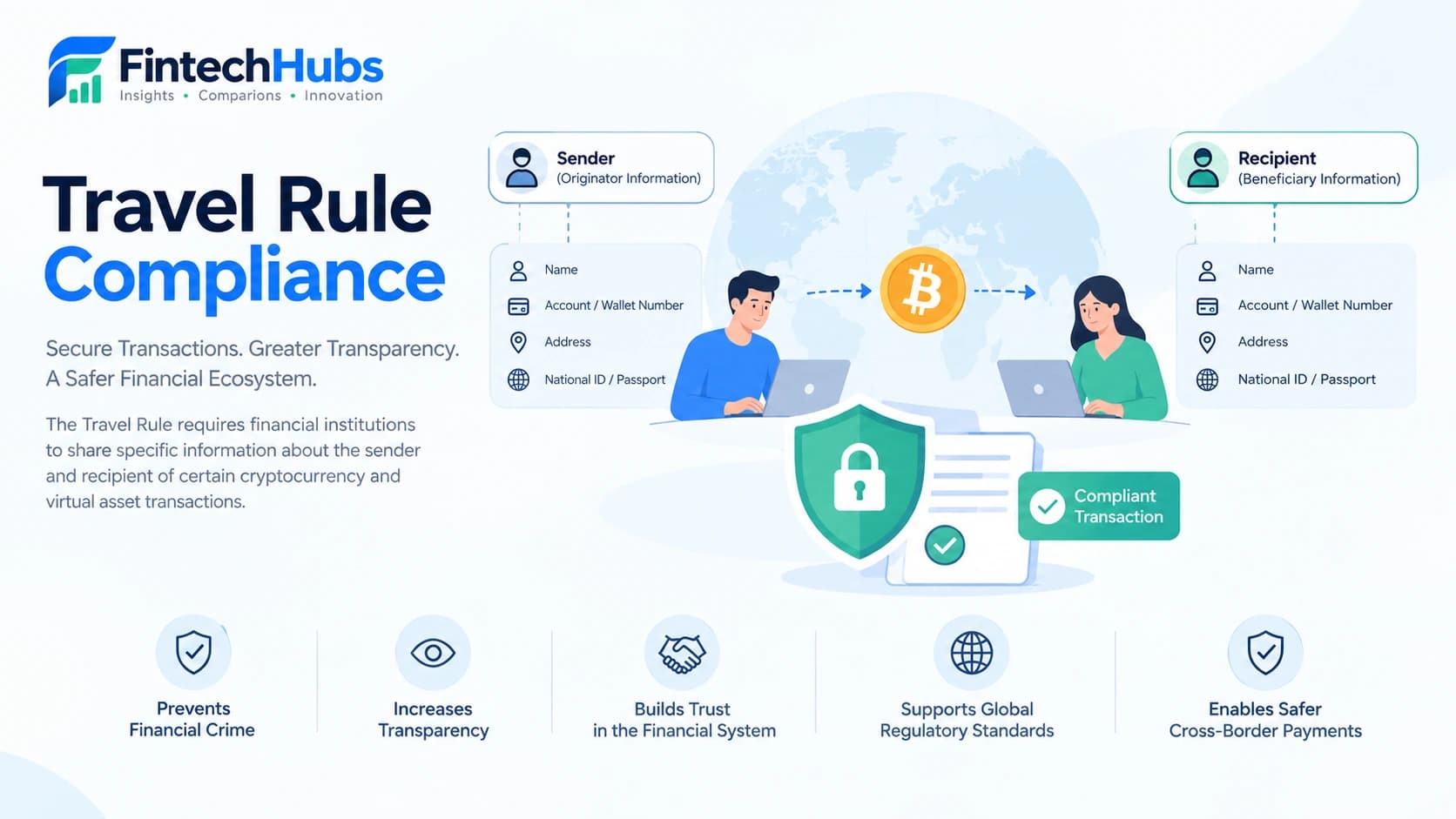
Travel Rule Compliance: Requirements, Challenges & Solutions
Learn about Travel Rule compliance requirements, key challenges, and solutions for crypto businesses. Discover how VASPs can strengthen AML compliance and meet regulatory obligations.
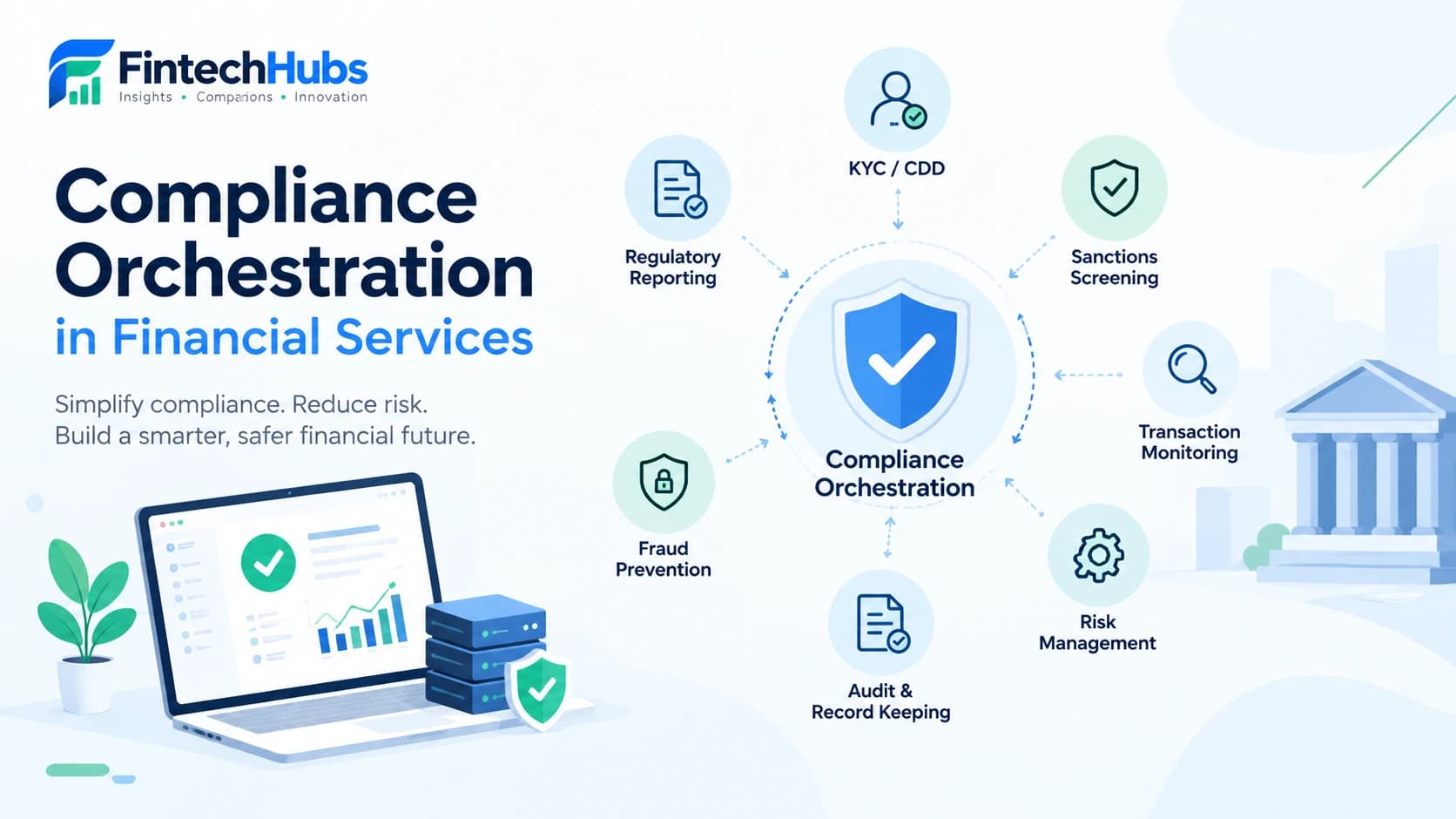
Compliance Orchestration in Financial Services Explained
Discover how compliance orchestration unifies KYC, AML, screening, and monitoring into one workflow. Learn benefits, key components, and how to implement it.