
Real-Time Payments: How Instant Networks Transform Commerce
Explore real-time payments infrastructure how instant payment networks like UPI, PIX, and FedNow work, key use cases, security risks, and 10 FAQs.
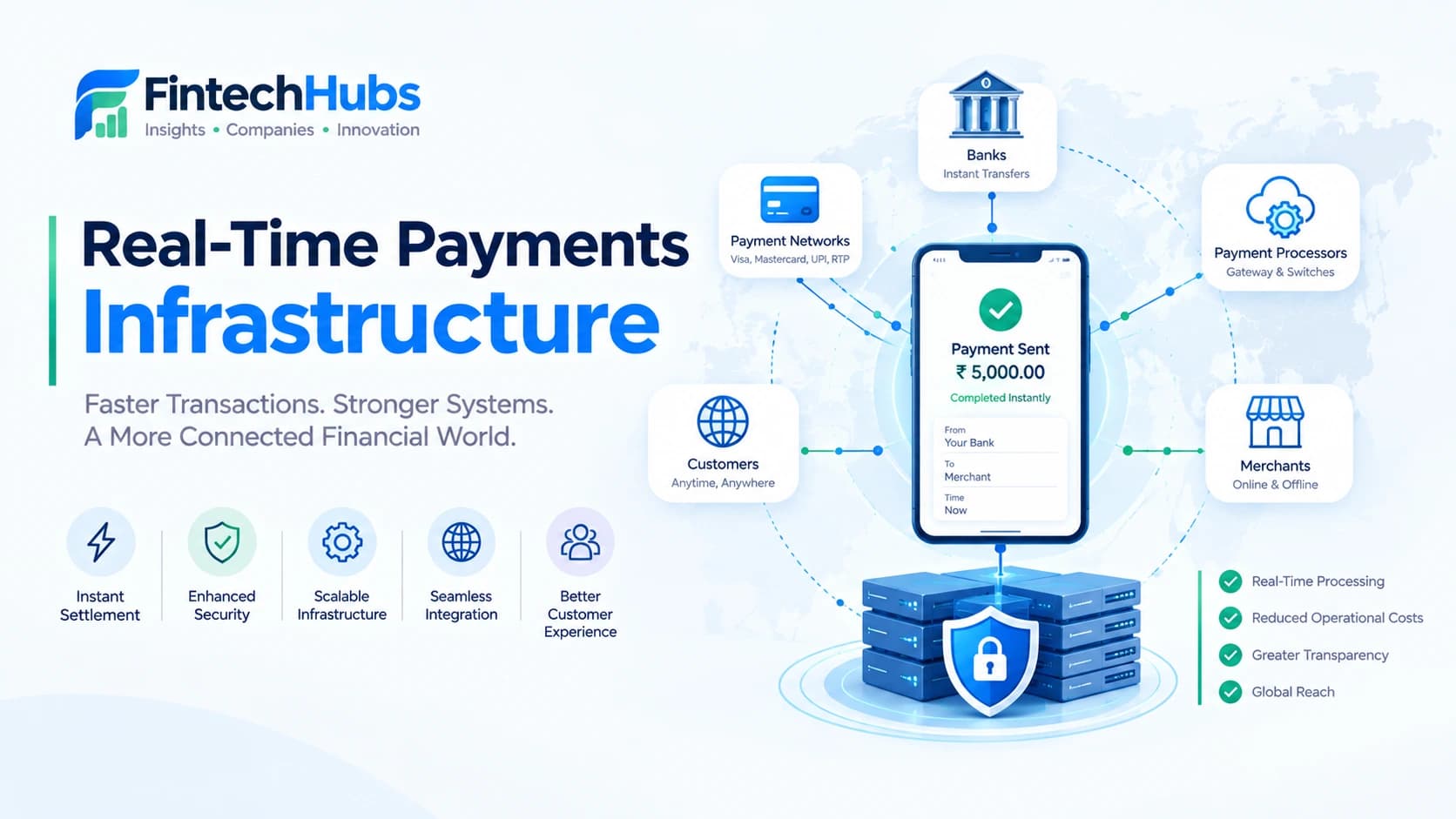
Real-Time Payments Infrastructure: How Instant Payment Networks Are Transforming Global Commerce
For most of banking history, moving money between accounts meant waiting. A bank transfer initiated on a Friday afternoon might not settle until the following Monday or Tuesday, held up by batch processing cycles, banking hours, and the layers of intermediary institutions a payment had to pass through. Real-time payments infrastructure has rewritten that expectation entirely. Today, in a growing number of countries, a payment initiated at any hour, on any day, can move from one bank account to another, with funds available to the recipient, within seconds.
This shift isn't just a convenience upgrade. Real-time payments infrastructure is reshaping how businesses manage cash flow, how consumers split bills and pay each other, how governments disburse benefits, and how entire economies move money. This guide provides a complete, professional look at real-time payments infrastructure: what it is, how it works, the major networks operating around the world, its branches and use cases, why it matters, and where the technology is heading.
What Is Real-Time Payments Infrastructure?
Real-time payments infrastructure refers to the systems, networks, and technology that allow money to be transferred between bank accounts and made available to the recipient within seconds, rather than the hours or days typical of traditional payment rails. These systems typically operate continuously, twenty-four hours a day, seven days a week, including weekends and holidays, in contrast to older payment systems that operate only during banking hours on business days.
The defining characteristics of real-time payments infrastructure are speed (settlement in seconds), availability (continuous operation rather than limited banking hours), and finality (once a payment is confirmed, it is typically irrevocable, unlike some traditional transfers that can be reversed or recalled).
Why Real-Time Payments Emerged
Several forces drove the development of real-time payment systems around the world:
Changing consumer and business expectations: As digital services in nearly every other area of life became instantaneous, slow, multi-day bank transfers increasingly felt outdated and inconvenient.
Central bank and government initiatives: Many real-time payment systems were developed or strongly encouraged by central banks and national payment authorities aiming to modernize national payments infrastructure and reduce dependence on cash and checks.
Financial inclusion goals: Real-time payments can reduce reliance on expensive, slower alternative payment methods, supporting broader access to fast, affordable financial services, particularly in markets with large unbanked or underbanked populations.
Business cash flow needs: Businesses, particularly small and medium-sized enterprises, benefit significantly from faster access to funds, improving cash flow management compared to waiting days for traditional transfers to settle.
Competitive pressure from fintech innovation: The rise of fintech companies offering faster, more convenient payment experiences pushed traditional banking infrastructure to modernize in order to remain competitive.
How Real-Time Payment Systems Work
Step 1: Payment Initiation
A payment is initiated by the sender, typically through a bank's mobile app, online banking portal, or a connected third-party application, specifying the recipient and amount.
Step 2: Message Transmission
The payment instruction is transmitted through the real-time payment network's messaging infrastructure to the recipient's financial institution, typically using standardized messaging formats that carry both payment and related data.
Step 3: Validation and Fraud Screening
The receiving institution, and often the network itself, performs real-time validation checks, including account verification and fraud screening, within the extremely tight time window the system requires.
Step 4: Funds Settlement
Unlike many traditional payment systems that settle transactions in batches at set intervals, real-time payment systems typically settle each transaction individually and immediately, often using pre-funded settlement accounts held at the central bank to enable instant finality.
Step 5: Confirmation and Fund Availability
The recipient's institution confirms receipt, and funds are made available in the recipient's account, with confirmation typically sent back to the sender, all within a matter of seconds.
Step 6: Irrevocability
Once a real-time payment is confirmed and settled, it is generally final and cannot be unilaterally reversed by the sender or sending institution, a significant difference from certain traditional payment methods that allow for recall or reversal under some circumstances.
Core Components of Real-Time Payments Infrastructure
A central payments switch or network operator: Routing messages and coordinating settlement between participating financial institutions
Standardized messaging formats: Ensuring payment instructions and accompanying data can be consistently processed across different banks and systems
Real-time gross settlement mechanisms: Enabling individual, immediate settlement of each transaction rather than batch processing
Participant financial institutions: Including banks and, increasingly, licensed non-bank payment providers connected to the network
Fraud detection and risk management systems: Operating within the compressed time window real-time payments require
APIs and connectivity layers: Allowing banks, fintech companies, and businesses to integrate with the real-time payment network
Directory and account verification services: Confirming that payment details correspond to valid, active accounts before funds are sent
Major Real-Time Payment Networks Around the World
This is a representative overview of significant real-time payment systems; coverage, features, and adoption continue to evolve, so readers should verify current details with official sources.
FedNow (United States): A real-time payment service developed by the Federal Reserve, enabling financial institutions across the country to offer instant payment services to their customers.
RTP Network (United States): Operated by The Clearing House, a real-time payment system available to banks and credit unions across the U.S., functioning alongside FedNow.
Faster Payments (United Kingdom): One of the earlier major real-time payment systems globally, enabling near-instant payments between UK bank accounts.
SEPA Instant Credit Transfer (European Union): Enabling instant euro-denominated payments across participating countries in the Single Euro Payments Area.
UPI, Unified Payments Interface (India): One of the world's most widely adopted real-time payment systems, supporting an enormous volume of person-to-person and person-to-merchant transactions.
PIX (Brazil): A real-time payment system developed by the Central Bank of Brazil, which has seen rapid, widespread adoption since its launch.
PromptPay (Thailand): Thailand's national real-time payment system, widely used for both person-to-person and merchant payments.
PayNow (Singapore): Enabling real-time transfers using mobile numbers or national identification numbers rather than full bank account details.
New Payments Platform, NPP (Australia): Australia's real-time payments infrastructure, supporting instant account-to-account transfers.
Zelle (United States): A bank-backed, consumer-focused instant payment network operating alongside broader real-time infrastructure like RTP and FedNow.
Many other countries have developed or are actively developing their own real-time payment systems, reflecting a broader global trend toward instant payments infrastructure as a national priority.
Branches and Use Cases of Real-Time Payments
A. Person-to-Person (P2P) Payments
Enabling individuals to instantly send money to friends and family, splitting bills, repaying debts, or sending gifts, often through simplified identifiers like a phone number or email address rather than full bank account details.
B. Person-to-Business (P2B) and Point-of-Sale Payments
Allowing consumers to pay businesses directly and instantly from their bank account, often through QR codes or payment requests, increasingly used as an alternative to card payments in some markets.
C. Business-to-Business (B2B) Payments
Enabling businesses to settle invoices and payments with suppliers and partners instantly, improving cash flow and reducing the administrative burden of tracking pending transfers.
D. Payroll and Earned Wage Access
Supporting instant payroll disbursements and, increasingly, earned wage access services that allow employees to access earned income before the traditional payday.
E. Government Disbursements
Enabling governments to distribute benefits, tax refunds, and emergency relief payments instantly, which proved particularly significant during large-scale emergency relief efforts in various countries.
F. Insurance Claims Payouts
Allowing insurers to disburse claim payments to policyholders instantly rather than through traditional check-based or multi-day transfer processes, improving customer experience during often-stressful claim situations.
G. Marketplace and Gig Economy Payouts
Supporting instant payouts to marketplace sellers, gig workers, and freelancers, improving cash flow for individuals who may rely on timely access to earned income.
H. Request for Payment (RfP)
A capability within many real-time payment networks allowing a business or individual to send a formal payment request to another party, who can then approve and instantly fulfill it, streamlining invoicing and bill payment.
I. Account-to-Account (A2A) E-Commerce Payments
An emerging use case where real-time payment rails are used directly for online purchases, offering an alternative to card-based checkout that can reduce processing costs for merchants.
Real-Time Payments vs. Traditional Payment Rails
Understanding real-time payments requires contrasting them with the payment systems they complement or, in some cases, are beginning to replace:
Traditional bank transfers: (such as older automated clearing house-style systems) typically process transactions in batches at set intervals, often only during business days and hours, with settlement that can take one to several business days.
Card payments: Typically offer immediate authorization at the point of sale but involve a more complex settlement process behind the scenes, often taking a day or more for funds to actually reach the merchant's account, along with interchange and processing fees.
Wire transfers: Can move money quickly, sometimes within the same day, but are typically limited to banking hours, often involve higher fees, and are generally used for larger, less frequent transactions rather than everyday payments.
Real-time payments: Combine the immediacy of card authorization with full fund settlement, operate continuously without banking-hour restrictions, and are generally designed for both everyday small transactions and increasingly larger business payments, often at a lower cost than wire transfers.
Key Technologies Behind Real-Time Payments
ISO 20022 messaging standards, an increasingly common international standard for financial messaging that supports richer transaction data than many older formats, used by numerous real-time payment networks globally
Real-time gross settlement (RTGS) systems, often involving central bank-held settlement accounts that enable immediate, final settlement
APIs, allowing banks, fintech companies, and businesses to connect to and build on top of real-time payment networks
Cloud-based and highly available infrastructure, supporting the continuous, twenty-four-hour operation real-time payment systems require
Fraud detection systems optimized for speed, performing risk analysis within the compressed time window real-time transactions demand, often relying heavily on machine learning given the limited time for manual review
Directory and alias services, allowing payments to be sent using simplified identifiers like phone numbers rather than full account and routing details
Why Real-Time Payments Infrastructure Matters
Economic Efficiency
Faster movement of money throughout the economy can improve overall financial efficiency, reducing the time value lost to funds sitting in transit between accounts.
Financial Inclusion
Real-time payments can provide fast, affordable financial services to populations that may have relied on more expensive or less accessible alternatives, supporting broader financial inclusion goals, particularly in emerging markets.
Business Cash Flow
Faster access to funds significantly improves cash flow management for businesses of all sizes, particularly small and medium-sized enterprises that may be more sensitive to delays in payment settlement.
Consumer Convenience
Real-time payments match the instant expectations consumers have developed across other digital services, improving everyday financial experiences from splitting a bill to receiving a refund.
Reducing Reliance on Cash and Checks
In markets where real-time payments have seen strong adoption, they have significantly reduced reliance on cash and paper checks, which carry their own costs, risks, and inefficiencies.
Supporting Economic Resilience
The ability to move money quickly, including for emergency government disbursements, has proven valuable in supporting faster economic response during crises and emergencies.
Impact on Businesses and Commerce
Real-time payments infrastructure is reshaping commerce in several significant ways:
Improved cash flow management: Allowing businesses to access and deploy funds more quickly rather than waiting days for traditional transfers to clear
Reduced reliance on costly short-term financing: As faster payment settlement can reduce the need for businesses to bridge cash flow gaps with credit
Lower payment processing costs:In some cases, as real-time payment rails can offer lower fees compared to card networks or wire transfers for certain transaction types
Streamlined supplier and vendor payments: Improving B2B relationships through faster, more predictable settlement
New payment experiences at checkout: As account-to-account real-time payments begin to offer an alternative to card-based online and in-person payments
Simplified payroll and gig economy payouts: Supporting more flexible, faster compensation models for employees and independent workers
Impact on Consumers
For everyday consumers, real-time payments have changed expectations and behavior around money movement:
Instant peer-to-peer transfers: Have become a common, often default, way to split expenses and send money to friends and family
Faster access to refunds and reimbursements: Improving the experience of returns, insurance payouts, and other scenarios where consumers are owed money
Reduced need for cash: As instant account-to-account transfers provide a fast, convenient alternative in many everyday situations
Greater visibility and control: Is real-time payment confirmations provide immediate certainty about whether a payment was sent or received, compared to the uncertainty of waiting days for a traditional transfer to clear
New scam and fraud risks: Since the speed and irrevocability of real-time payments can be exploited by fraudsters, a challenge discussed further in the security section below
Cross-Border Real-Time Payments
While most real-time payment networks were initially developed as domestic systems, cross-border real-time payments represent a significant and growing area of development:
Interlinking initiatives: Are underway in various regions to connect separate national real-time payment systems, allowing instant payments to move across borders rather than only within a single country.
Correspondent banking challenges: Have historically made cross-border payments slower and more expensive than domestic transfers, and real-time infrastructure is increasingly being explored as a way to address these inefficiencies.
Regional initiatives: Particularly in Southeast Asia and parts of Europe, have made notable progress in linking national real-time payment systems to support faster regional remittances and commerce.
Currency conversion and settlement complexity: Remain significant technical and regulatory challenges for extending real-time payment speed and finality across different currencies and jurisdictions.
International standard-setting efforts: Including the broader adoption of common messaging standards like ISO 20022, are helping lay the groundwork for more interoperable cross-border real-time payment capabilities in the future.
Challenges and Limitations
Interoperability across systems: With many countries developing separate, sometimes technically incompatible real-time payment systems, true global interoperability remains an ongoing challenge.
Irrevocability risk: Because real-time payments typically cannot be reversed once settled, mistaken or fraudulent payments can be more difficult to recover compared to some traditional payment methods.
Fraud and scam exposure: The speed of real-time payments leaves little time for traditional fraud review processes, and criminals have increasingly exploited this speed through social engineering scams that trick victims into authorizing fraudulent instant payments.
Infrastructure and modernization costs: Smaller financial institutions may face significant costs and technical challenges in connecting to and fully supporting real-time payment networks.
Consumer and business awareness: Adoption can be slowed by limited awareness or understanding of real-time payment capabilities, particularly in markets where the systems are newer.
Liquidity management demands: Continuous, twenty-four-hour settlement requires financial institutions to manage liquidity differently than with traditional batch-settled systems, which some institutions have found operationally challenging.
Security and Fraud Considerations
The speed and finality that make real-time payments valuable also create distinct security challenges that participants need to actively manage:
Authorized push payment fraud: Has become a particularly significant concern, where victims are deceived into willingly authorizing a real-time payment to a fraudster, leaving little opportunity for reversal once the payment settles.
Real-time fraud detection: Has become essential, requiring financial institutions and payment networks to perform sophisticated risk analysis within seconds rather than the hours or days available with slower payment methods.
Account verification services: Confirming that payment details genuinely correspond to the intended recipient before funds are sent, have become an important defense against both error and certain types of fraud.
Consumer education: Plays a significant role in fraud prevention, given that many real-time payment fraud losses stem from social engineering rather than technical system vulnerabilities.
Regulatory attention to liability and reimbursement: Has increased in various markets, as policymakers consider how responsibility for authorized push payment fraud losses should be allocated between financial institutions and consumers.
Best Practices for Businesses Adopting Real-Time Payments
Evaluate which real-time payment use cases, such as supplier payments, payroll, or customer refunds, offer the clearest cash flow and efficiency benefits for the specific business
Work with banking and payment partners experienced in real-time payment integration to ensure smooth technical implementation
Build robust internal fraud monitoring specifically calibrated for the speed and irrevocability of real-time transactions
Train relevant staff on the operational differences between real-time payments and traditional payment methods, including the limited ability to reverse completed transactions
Monitor liquidity management practices to ensure sufficient funds are available to support continuous, real-time settlement obligations
Stay informed about evolving real-time payment capabilities and interoperability developments relevant to the business's markets
Clearly communicate real-time payment options and their benefits to customers and partners to encourage adoption
The Competitive and Vendor Landscape
The real-time payments ecosystem includes national and regional network operators, such as central banks and bank-owned consortiums that build and govern individual real-time payment systems, core banking technology providers that help financial institutions connect to and support real-time payment networks, fintech infrastructure companies offering APIs and tools that let businesses easily integrate real-time payment capabilities, fraud detection and risk management vendors specializing in the compressed decision windows real-time payments require, and payment orchestration platforms increasingly incorporating real-time payment rails alongside traditional card and transfer options.
Future Trends to Watch
Expanding cross-border interoperability: Expect continued investment in interlinking separate national real-time payment systems, gradually extending the speed and convenience of domestic instant payments to international transactions.
Growth of account-to-account commerc:. As real-time payment rails mature, expect continued growth in their use as a direct checkout alternative to card payments, particularly in markets with strong real-time payment adoption.
Deeper integration with business financial operations: Real-time payments are increasingly being integrated into broader business financial workflows, including accounting, treasury management, and payroll systems, rather than functioning as a standalone capability.
Continued expansion of national real-time payment systems: More countries are expected to launch or further develop their own real-time payment infrastructure, continuing a broad global trend toward instant payments as standard financial infrastructure.
Growing regulatory attention to fraud liability: Expect continued regulatory development around how losses from authorized push payment fraud should be allocated and prevented, given the growing scale of real-time payment adoption.
AI-driven real-time fraud detection: As transaction volumes grow, expect continued advancement in machine learning-based fraud detection specifically designed to operate within the extremely tight time windows real-time payments require.
Expansion of request-for-payment capabilities: Features allowing businesses and individuals to formally request and receive instant payments are expected to see growing adoption, streamlining invoicing and bill payment processes.
Frequently Asked Questions
1. What is real-time payments infrastructure?
Real-time payments infrastructure refers to the systems and networks that allow money to be transferred between bank accounts and made available to the recipient within seconds, operating continuously rather than only during traditional banking hours.
2. How is a real-time payment different from a traditional bank transfer?
Traditional bank transfers are often processed in batches at set intervals and may take one or more business days to settle, while real-time payments are processed and settled individually, typically within seconds, and are available continuously, including weekends and holidays.
3. Can a real-time payment be reversed if sent by mistake?
Generally, no. Once a real-time payment is confirmed and settled, it is typically final and cannot be unilaterally reversed, which makes it important to verify payment details carefully before sending.
4. What are some examples of real-time payment networks around the world?
Notable examples include FedNow and the RTP network in the United States, Faster Payments in the United Kingdom, SEPA Instant Credit Transfer in the European Union, UPI in India, PIX in Brazil, and PromptPay in Thailand, among many others developed by countries around the world.
5. Are real-time payments safe to use?
Real-time payment networks generally include robust security and fraud detection measures, but the speed and irrevocability of these payments mean users should be especially cautious about verifying recipient details and being alert to scams, since fraudulent payments are difficult to recover once completed.
6. Do businesses benefit from accepting or making real-time payments?
Yes, businesses can benefit through improved cash flow from faster fund access, reduced reliance on short-term financing, and, in some cases, lower processing costs compared to card payments or wire transfers.
7. Can real-time payments be used for cross-border transactions?
In most cases, existing real-time payment networks are domestic systems, though interlinking initiatives in various regions are increasingly working to connect separate national systems and extend instant payment capabilities across borders.
8. What is authorized push payment fraud, and how does it relate to real-time payments?
This is a type of fraud where a victim is deceived into knowingly authorizing a payment to a fraudster. It is a particular concern with real-time payments because, once the payment settles, it typically cannot be reversed, unlike some traditional payment methods.
9. Do all banks support real-time payments?
Support varies by country and institution. While many major financial institutions in markets with established real-time payment networks have connected to those systems, adoption among smaller institutions can vary, and availability depends on the specific country and bank.
10. How do real-time payments affect everyday consumers?
Consumers benefit from instant peer-to-peer transfers, faster refunds and reimbursements, and reduced reliance on cash, though they should also remain aware of the increased importance of verifying payment details given the irrevocable nature of these transactions.
Conclusion
Real-time payments infrastructure represents one of the most significant modernizations of financial plumbing in decades, transforming an experience once measured in days into one measured in seconds. Its branches, spanning person-to-person transfers, business payments, payroll, government disbursements, and emerging account-to-account commerce, all reflect the same underlying shift: money is increasingly expected to move as quickly as information does. As cross-border interoperability continues to develop, as more countries build out their own instant payment infrastructure, and as fraud prevention technology evolves to match the speed of these systems, real-time payments are positioned to become not just a convenient alternative, but the standard expectation for how money moves through the global economy.
This content is for informational and educational purposes only and does not constitute financial, legal, or compliance advice. Real-time payment systems, their features, and availability vary by country and change over time. Readers and businesses should consult qualified professionals and verify current details with relevant financial institutions and official sources.
Share this article
Related Articles
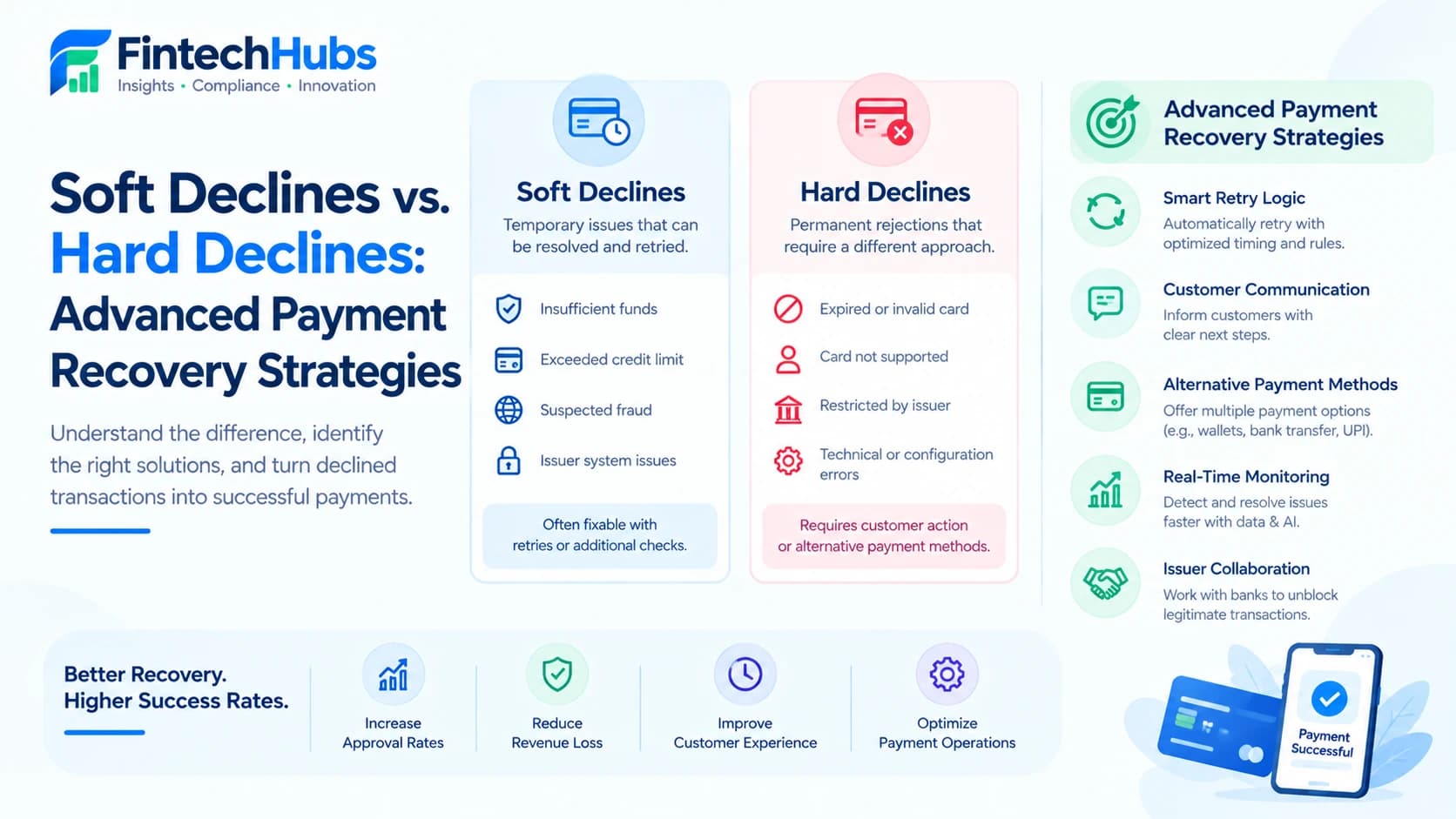
Soft vs Hard Declines: Advanced Payment Recovery Guide
Soft vs hard declines explained: Visa and Mastercard retry rules, smart retries, network tokens, 3-D Secure, dunning, recovery metrics, and 10 FAQs.
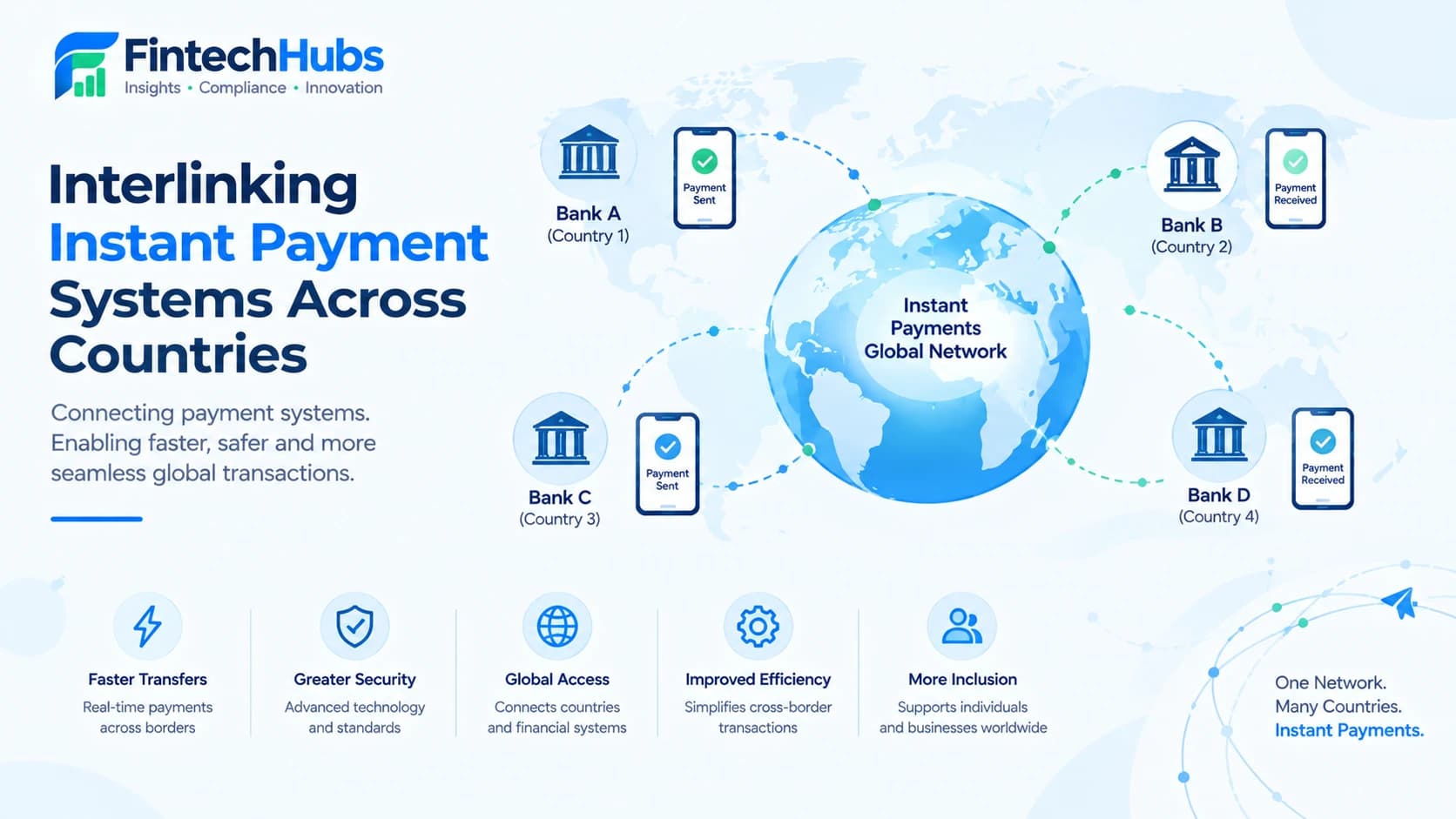
Interlinking Instant Payment Systems Across Countries
How countries link instant payment systems: bilateral links, Nexus, UPI-PayNow, risks, compliance, operations, a rollout roadmap, and 10 FAQs.
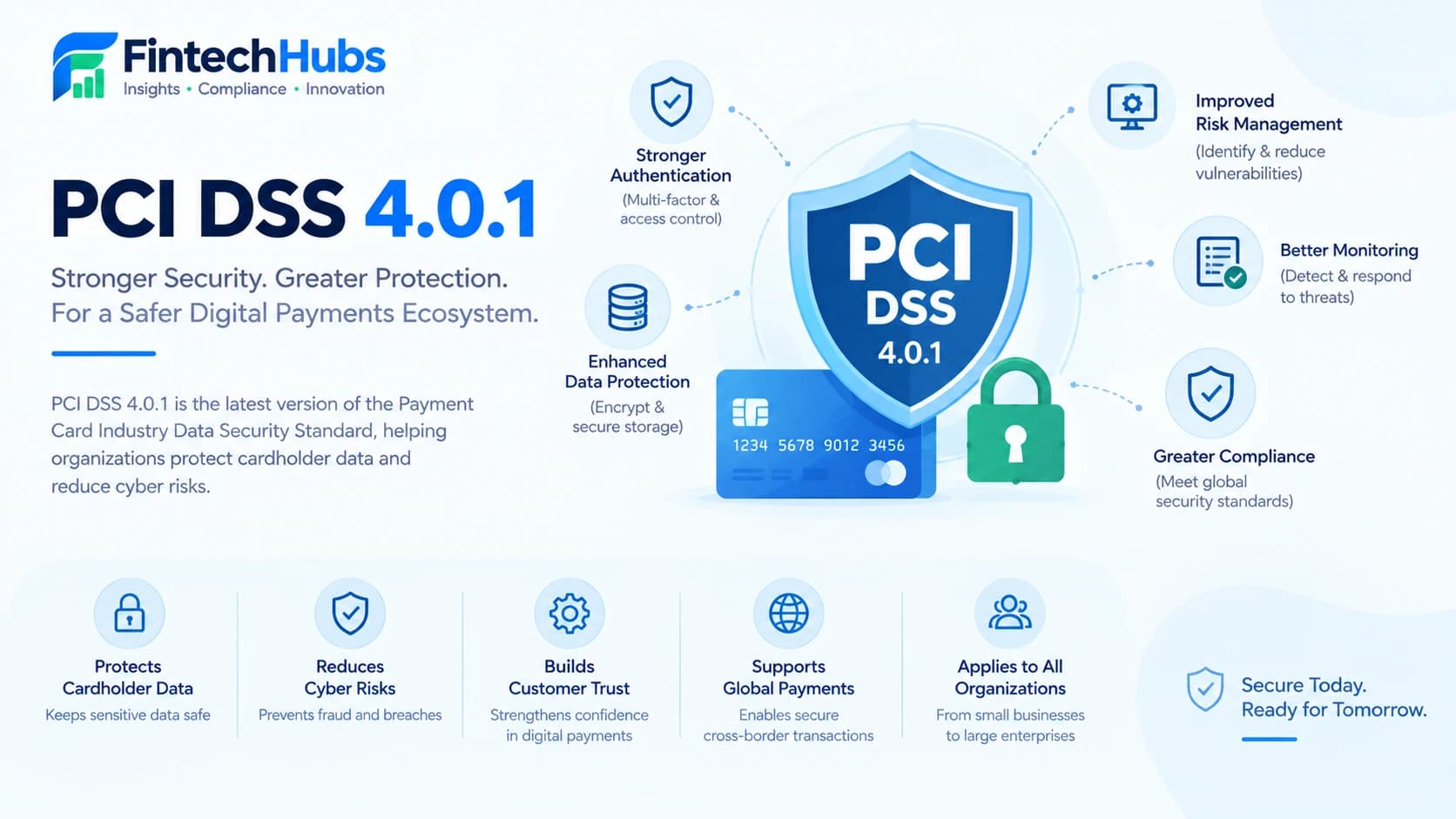
PCI DSS 4.0.1: Technical Requirements for Modern Payments
PCI DSS 4.0.1 explained: 12 requirements, MFA, payment page scripts, cloud and API compliance, scope reduction, a rollout roadmap, and 10 FAQs.