Payment Orchestration: Routing, Costs & Conversion Guide
Discover how payment orchestration optimizes routing, reduces costs, and boosts conversion rates key branches, technologies, best practices, and 10 FAQs.
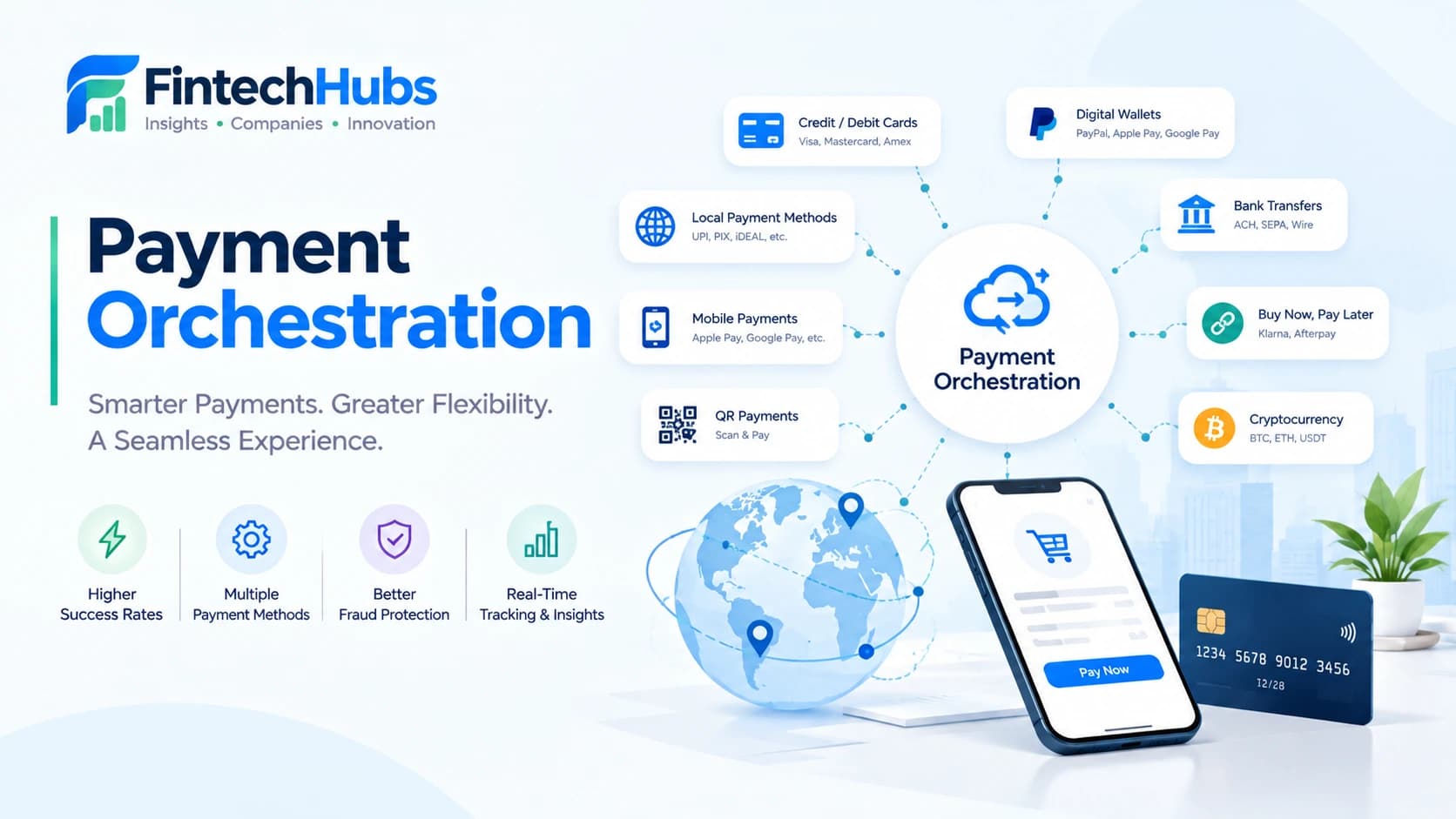
Payment Orchestration: How Modern Businesses Optimize Payment Routing, Costs, and Conversion
As businesses expand across borders, add new payment methods, and sell through more channels, their payment infrastructure often becomes a tangle of direct integrations: one connection to a card processor, another to a regional payment method, another to a fraud tool, and separate logic scattered across the codebase to decide which one to use when. Each new payment provider added to handle a new market or reduce reliance on a single processor multiplies this complexity. Payment orchestration is the technology layer built to solve exactly this problem.
Payment orchestration sits between a business and the many payment service providers, processors, and payment methods it relies on, acting as a single, intelligent layer that manages how transactions are routed, processed, and optimized across that entire ecosystem. Rather than each provider being bolted on separately, a payment orchestration platform lets a business plug in multiple providers once and then dynamically decide, often in real time, which one should handle each individual transaction. This guide provides a complete, professional look at payment orchestration: what it is, how it works, its core components and branches, why it matters, and where the technology is heading.
What Is Payment Orchestration?
Payment orchestration refers to a software layer that sits between a merchant’s checkout or billing system and the various payment service providers, acquiring banks, and payment methods it uses to process transactions. Instead of integrating directly and separately with each payment processor, a business integrates once with an orchestration platform, which then connects to multiple providers on the business’s behalf.
The orchestration layer takes on the responsibility of deciding, often dynamically and in real time, which payment provider or route should process a given transaction, based on factors such as cost, success likelihood, currency, region, and provider performance. In effect, it turns a fragmented, manually managed payment stack into a centralized, intelligently managed one.
Why Payment Orchestration Emerged
Several trends in how businesses sell and accept payments created the need for orchestration:
Global expansion: Businesses selling internationally often need to support region-specific payment methods and local acquiring relationships to maximize approval rates and minimize costs, multiplying the number of payment providers involved.
Resilience concerns: Relying on a single payment processor creates a single point of failure; if that processor experiences downtime or performance issues, the business can lose the ability to process payments entirely.
Rising complexity of the payments ecosystem: The number of available payment methods, digital wallets, and regional processors has grown substantially, making direct, one-off integrations increasingly difficult to manage and maintain.
Pressure to improve conversion and reduce costs: As competition for conversion rate optimization intensified, businesses began looking for ways to route transactions through the provider most likely to succeed and least expensive for each specific transaction, rather than using one processor for everything.
Engineering overhead of multiple integrations: Without orchestration, supporting multiple payment providers requires significant ongoing engineering effort to build, test, and maintain each separate integration.
How Payment Orchestration Works
Step 1: Unified Integration
A business integrates once with the payment orchestration platform, rather than building and maintaining separate integrations with each individual payment processor, acquiring bank, or payment method provider.
Step 2: Connecting Multiple Providers
The orchestration platform connects to multiple payment service providers, processors, and payment methods on the business’s behalf, often through its own pre-built integrations with major providers.
Step 3: Transaction Intake
When a customer initiates a payment, the transaction details, including amount, currency, payment method, and customer location, are passed to the orchestration layer rather than directly to a single processor.
Step 4: Intelligent Routing Decision
The orchestration platform evaluates the transaction against configured rules and, in more advanced systems, machine learning models, to determine which available payment provider should process this specific transaction, considering factors like cost, historical success rates, and provider uptime.
Step 5: Transaction Processing
The transaction is routed to the selected provider for processing, with the orchestration layer managing the technical communication and data formatting required by that specific provider.
Step 6: Failure Handling and Retry Logic
If a transaction fails or is declined, the orchestration platform can automatically attempt to route it through an alternative provider, a technique often called retry logic or cascading, increasing the overall likelihood of a successful payment.
Step 7: Reporting and Reconciliation
The platform consolidates transaction data, reporting, and reconciliation across all connected providers into a single, unified view, rather than requiring the business to manage separate reporting from each processor individually.
Core Components of a Payment Orchestration Platform
A unified API layer: Allowing businesses to integrate once and access multiple payment providers through a consistent interface
A routing engine: Applying rules and logic to determine which provider processes each transaction
Provider connectors: Pre-built integrations with major payment processors, acquiring banks, and payment methods
Failover and retry logic: Automatically rerouting failed transactions to alternative providers
Analytics and reporting dashboards: Consolidating transaction data across all connected providers
Tokenization and data security infrastructure: Protecting sensitive payment data as it moves through the platform
Reconciliation tools: Matching transactions across providers for accurate financial reporting
Branches and Capabilities of Payment Orchestration
A. Smart Transaction Routing
Dynamically directing each transaction to the payment provider most likely to succeed or most cost-effective, based on configurable rules or real-time performance data.
B. Failover and Cascading
Automatically retrying a failed or declined transaction through an alternative provider, increasing the overall chance of successful payment completion without requiring the customer to retry manually.
C. Multi-Acquirer and Multi-Processor Management
Allowing businesses to maintain relationships with multiple acquiring banks and processors simultaneously, reducing dependency on any single provider and supporting resilience.
D. Payment Method Expansion
Enabling businesses to offer a broader range of regional and alternative payment methods, such as local digital wallets or bank transfer methods, without separately integrating each one.
E. Fraud and Risk Tool Integration
Coordinating with fraud detection and risk management tools across the orchestration layer, allowing consistent fraud screening regardless of which underlying processor ultimately handles a transaction.
F. Currency and Cross-Border Optimization
Routing international transactions through providers and acquiring relationships best suited to a specific currency or region, helping reduce cross-border fees and improve local approval rates.
G. Subscription and Recurring Payment Management
Supporting orchestration-level logic for recurring billing, including retry strategies for failed subscription payments, often called involuntary churn recovery.
H. Reporting and Reconciliation Consolidation
Bringing together transaction, settlement, and reconciliation data from multiple providers into a single, unified reporting layer.
I. Vendor Negotiation Support
By maintaining relationships with multiple providers and being able to shift transaction volume between them, orchestration can give businesses stronger leverage in negotiating processing rates with individual providers.
Payment Orchestration vs. Traditional Payment Gateways
It’s useful to distinguish payment orchestration from a traditional payment gateway, since the two are related but serve different roles:
A payment gateway typically connects a business to a single payment processor or a limited set of payment methods, handling the technical process of securely capturing and transmitting payment data for processing.
Payment orchestration sits at a higher level, coordinating across multiple gateways, processors, and payment methods simultaneously, making intelligent decisions about which one should handle each transaction rather than relying on a single, fixed path.
In practice, many businesses use an orchestration platform alongside multiple gateways or processors, with the orchestration layer managing the relationships and routing logic between them.
Key Technologies Behind Payment Orchestration
APIs and unified integration layers: Sbstracting the technical differences between multiple payment providers into a single, consistent interface
Rules engines, allowing businesses to configure routing logic based on specific business criteria
Machine learning and predictive analytics: Increasingly used to dynamically optimize routing decisions based on real-time success rate predictions rather than static rules alone
Tokenization: Replacing sensitive card and payment data with secure tokens that can be used across multiple providers without repeatedly exposing the underlying data
Cloud infrastructure: Supporting the scalability and reliability required to process high transaction volumes across multiple connected providers
Real-time monitoring and alerting systems: Tracking provider performance and uptime to inform routing decisions and flag issues quickly
Why Payment Orchestration Matters
Improved Payment Resilience
By maintaining relationships with multiple providers and automatically failing over when one experiences issues, orchestration significantly reduces the risk of a single point of failure disrupting a business’s ability to accept payments.
Reduced Engineering Burden
Rather than building and maintaining separate integrations with each payment provider, businesses can integrate once with an orchestration platform and gain access to multiple providers, significantly reducing ongoing engineering overhead.
Stronger Negotiating Position
Because orchestration makes it easier to shift transaction volume between providers, businesses often gain greater leverage in negotiating more favorable processing rates.
Better Global Reach
Orchestration makes it easier to support region-specific payment methods and local acquiring relationships, which can significantly improve approval rates and customer experience in international markets.
Centralized Visibility
Consolidated reporting and analytics across all payment providers give businesses a clearer, unified view of payment performance, rather than having to piece together data from multiple separate systems.
Strategic Flexibility
As a business’s payment needs evolve, orchestration makes it easier to add, remove, or shift volume between providers without the significant engineering lift that would otherwise be required for each change.
How Payment Orchestration Improves Conversion Rates
Conversion rate, the percentage of attempted payments that complete successfully, is directly affected by payment orchestration in several ways:
Smart routing to higher-performing providers: By directing transactions to the processor statistically most likely to approve a specific type of transaction, orchestration can meaningfully increase approval rates.
Automatic retry and cascading: When a transaction is declined by one provider, automatically retrying through an alternative provider, rather than simply failing the transaction, can recover a meaningful share of otherwise lost sales.
Localized payment methods: Offering payment methods familiar and trusted in a specific region can reduce checkout abandonment compared to forcing customers to use unfamiliar payment options.
Reduced technical failures: By monitoring provider uptime and performance in real time, orchestration can route around providers experiencing technical issues before they affect a large number of customers.
Optimized checkout experience: Consolidated payment infrastructure can support a smoother, more consistent checkout experience even as multiple providers operate behind the scenes.
How Payment Orchestration Reduces Costs
Dynamic cost-based routing: Directing transactions to the lowest-cost available provider for a given transaction type, when multiple viable options exist
Reduced engineering costs: Since maintaining one orchestration integration is typically less resource-intensive than building and maintaining many separate direct integrations
Stronger rate negotiation leverage: As the ability to shift volume between providers can support more favorable pricing discussions
Lower cross-border and currency conversion costs: By routing international transactions through providers and acquiring relationships better suited to specific regions or currencies
Reduced lost revenue from failed transactions: Since improved approval rates and retry logic directly translate into more completed, revenue-generating transactions
More efficient reconciliation processes: Reducing the manual effort and potential errors involved in reconciling transactions across multiple separate provider reports
Industries and Use Cases
E-commerce and online retail: Supporting high transaction volumes, multiple payment methods, and global customer bases
Subscription and SaaS businesses: Managing recurring billing and reducing involuntary churn from failed renewal payments
Marketplaces and platforms: Coordinating payments across multiple sellers, currencies, and payout requirements
Travel and hospitality: Handling high-value transactions and diverse international payment preferences
Gaming and digital entertainment; Supporting high transaction volumes and a wide range of regional payment methods
Financial services and fintech: Managing complex payment flows alongside strict compliance and risk management requirements
Enterprise businesses with multiple brands or regions: Consolidating payment infrastructure across diverse business units or markets
Challenges and Limitations
Implementation complexity: While orchestration simplifies the end state, the initial integration and configuration, particularly for businesses migrating from existing direct provider relationships, can require significant planning and effort.
Vendor lock-in considerations: Businesses should evaluate how easily they could migrate away from a specific orchestration platform if needed, since the orchestration layer itself becomes a critical piece of infrastructure.
Cost of the orchestration layer itself: Orchestration platforms typically charge their own fees, which businesses need to weigh against the cost savings and efficiency gains the platform provides.
Data security and compliance scope: Because the orchestration layer handles payment data across multiple providers, it becomes a significant point of focus for security and compliance requirements, including payment card industry standards.
Routing logic complexity: Designing and maintaining effective routing rules, especially as a business scales and adds providers, requires ongoing attention and expertise.
Provider relationship management: Even with orchestration, businesses still need to maintain underlying commercial relationships and agreements with each connected payment provider.
Best Practices for Implementing Payment Orchestration
Clearly define business goals for orchestration, whether the priority is resilience, cost reduction, conversion improvement, or global expansion, since this shapes platform selection and configuration
Start with a thorough audit of existing payment infrastructure and provider relationships before designing new routing logic
Choose an orchestration platform with strong, proven integrations for the specific providers and regions relevant to the business
Design routing rules based on clear, measurable criteria, and validate them with real transaction data rather than assumptions
Implement robust monitoring and alerting to catch provider performance issues quickly
Maintain strong security and compliance practices around the orchestration layer, given its central role in handling payment data
Plan for an incremental migration from existing direct integrations rather than attempting a single, high-risk cutover
Regularly review and refine routing logic based on ongoing performance data rather than treating initial configuration as permanent
Maintain clear internal ownership and expertise for the orchestration platform rather than treating it as a “set and forget” system
The Competitive and Vendor Landscape
The payment orchestration market includes specialized orchestration platforms built specifically around multi-provider routing and management, payment processors and gateways that have added orchestration-like capabilities to their broader product offerings, enterprise payment infrastructure providers serving large, complex global businesses, and fintech infrastructure companies offering orchestration as one component of a broader payments and financial operations platform.
Future Trends to Watch
Greater use of AI-driven routing: Expect continued growth in machine learning-based routing decisions that dynamically optimize for success rates and cost in real time, moving beyond static, rules-based routing logic.
Deeper integration with fraud and risk management: Payment orchestration is increasingly converging with fraud detection and risk management tools, allowing more holistic, coordinated decision-making across the entire payment flow.
Expansion into broader financial operations: Some orchestration platforms are expanding beyond pure payment routing into adjacent areas such as payouts, treasury management, and broader financial operations orchestration.
Growing importance in emerging and regional markets: As businesses continue expanding into new international markets with diverse local payment preferences, orchestration is expected to play an increasingly central role in supporting that expansion efficiently.
Increased focus on orchestration-layer security and compliance. As orchestration platforms become more central to payment infrastructure, expect continued investment in security certifications and compliance capabilities at the orchestration layer itself.
Consolidation among providers. As the market matures, expect continued consolidation among orchestration vendors, as well as increasing orchestration-like capabilities being built directly into major payment processors’ own platforms.
Frequently Asked Questions
1. What is payment orchestration?
Payment orchestration is a software layer that sits between a business and multiple payment service providers, processors, and payment methods, managing how transactions are routed, processed, and optimized across that entire ecosystem through a single, unified integration.
2. How is payment orchestration different from a payment gateway?
A payment gateway typically connects a business to a single processor or limited set of payment methods, while payment orchestration coordinates across multiple gateways, processors, and payment methods simultaneously, making intelligent routing decisions between them.
3. Why would a business need multiple payment providers instead of just one?
Using multiple providers improves resilience against outages, can improve approval rates for specific transaction types or regions, supports broader geographic expansion, and can create stronger negotiating leverage on processing costs.
4. How does payment orchestration improve conversion rates?
It improves conversion primarily through smart routing to the provider most likely to approve a given transaction, automatic retry through alternative providers when a transaction is declined, and support for region-appropriate payment methods that customers are more likely to complete.
5. Does payment orchestration reduce payment processing costs?
It can, primarily through dynamic routing to lower-cost providers when multiple viable options exist, reduced engineering costs compared to maintaining many separate integrations, and stronger leverage in negotiating processing rates with providers.
6. Is payment orchestration only useful for large enterprises?
While large, global businesses often see the most significant benefits given their transaction volume and complexity, growing businesses expanding internationally or seeking improved resilience can also benefit from orchestration, and platform options exist across different business sizes.
7. What happens if a transaction is declined by one provider in an orchestration setup?
Many orchestration platforms support automatic failover or cascading, where a declined transaction is automatically retried through an alternative connected provider, increasing the overall likelihood of successful payment completion.
8. Does payment orchestration handle recurring and subscription payments?
Yes, many orchestration platforms include specific capabilities for managing recurring billing, including intelligent retry strategies for failed subscription renewal payments, often referred to as involuntary churn recovery.
9. What security considerations apply to payment orchestration?
Because the orchestration layer handles payment data across multiple providers, it requires strong security practices, including tokenization and compliance with relevant payment card industry security standards, making the security posture of the orchestration platform itself an important evaluation factor.
10. How difficult is it to implement payment orchestration for a business with existing payment integrations?
Implementation complexity varies depending on the number of existing provider relationships and the business’s specific requirements, but most businesses benefit from an incremental migration approach rather than attempting to replace all existing payment infrastructure at once.
Conclusion
Payment orchestration has become an essential layer of infrastructure for businesses managing increasingly complex, multi-provider payment ecosystems. Its branches, spanning smart transaction routing, automatic failover, multi-acquirer management, payment method expansion, and consolidated reporting, all serve a shared purpose: turning a fragmented collection of individual payment integrations into a coordinated, intelligently managed system. By improving resilience, reducing costs, and increasing conversion rates through smarter routing and retry logic, payment orchestration allows businesses to focus on growth and customer experience rather than the underlying complexity of managing multiple payment relationships. As AI-driven routing, broader financial operations integration, and expanding global payment method support continue to mature, payment orchestration is positioned to remain a foundational, increasingly strategic component of how modern businesses manage payments.
This content is for informational and educational purposes only and does not constitute financial, legal, or compliance advice. Businesses should consult qualified professionals regarding their specific payment infrastructure and compliance needs.
Share this article
Related Articles
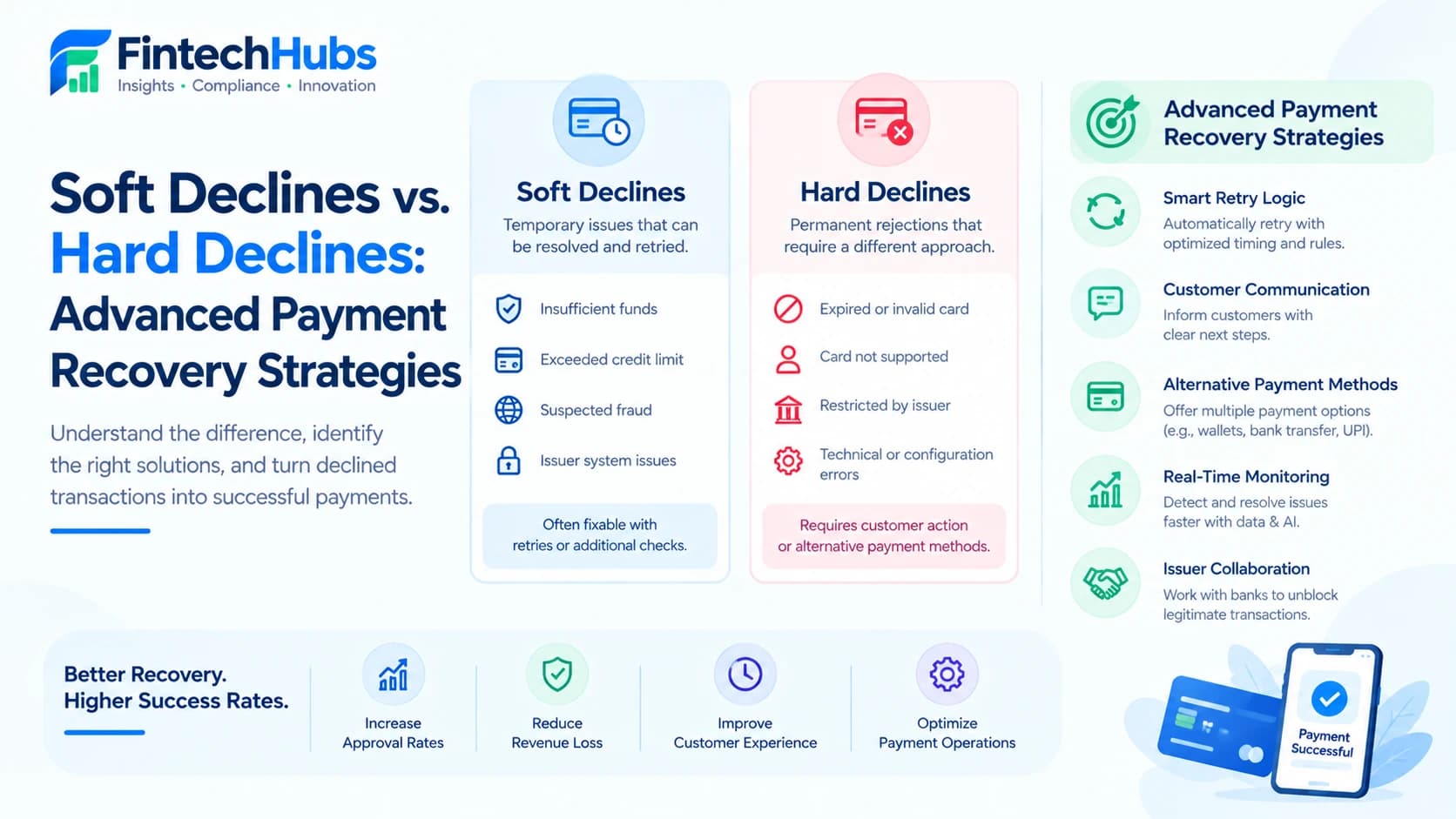
Soft vs Hard Declines: Advanced Payment Recovery Guide
Soft vs hard declines explained: Visa and Mastercard retry rules, smart retries, network tokens, 3-D Secure, dunning, recovery metrics, and 10 FAQs.
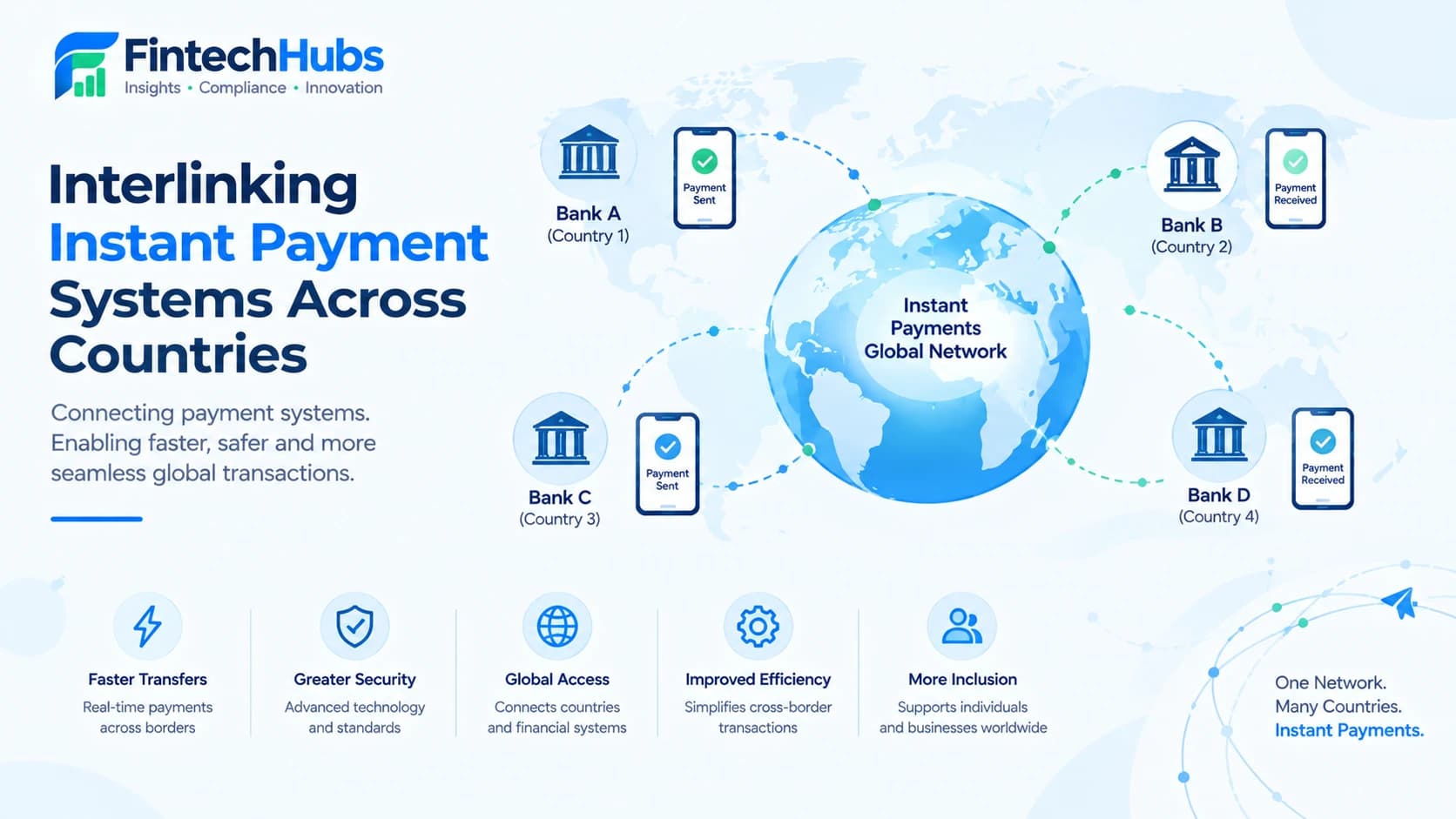
Interlinking Instant Payment Systems Across Countries
How countries link instant payment systems: bilateral links, Nexus, UPI-PayNow, risks, compliance, operations, a rollout roadmap, and 10 FAQs.
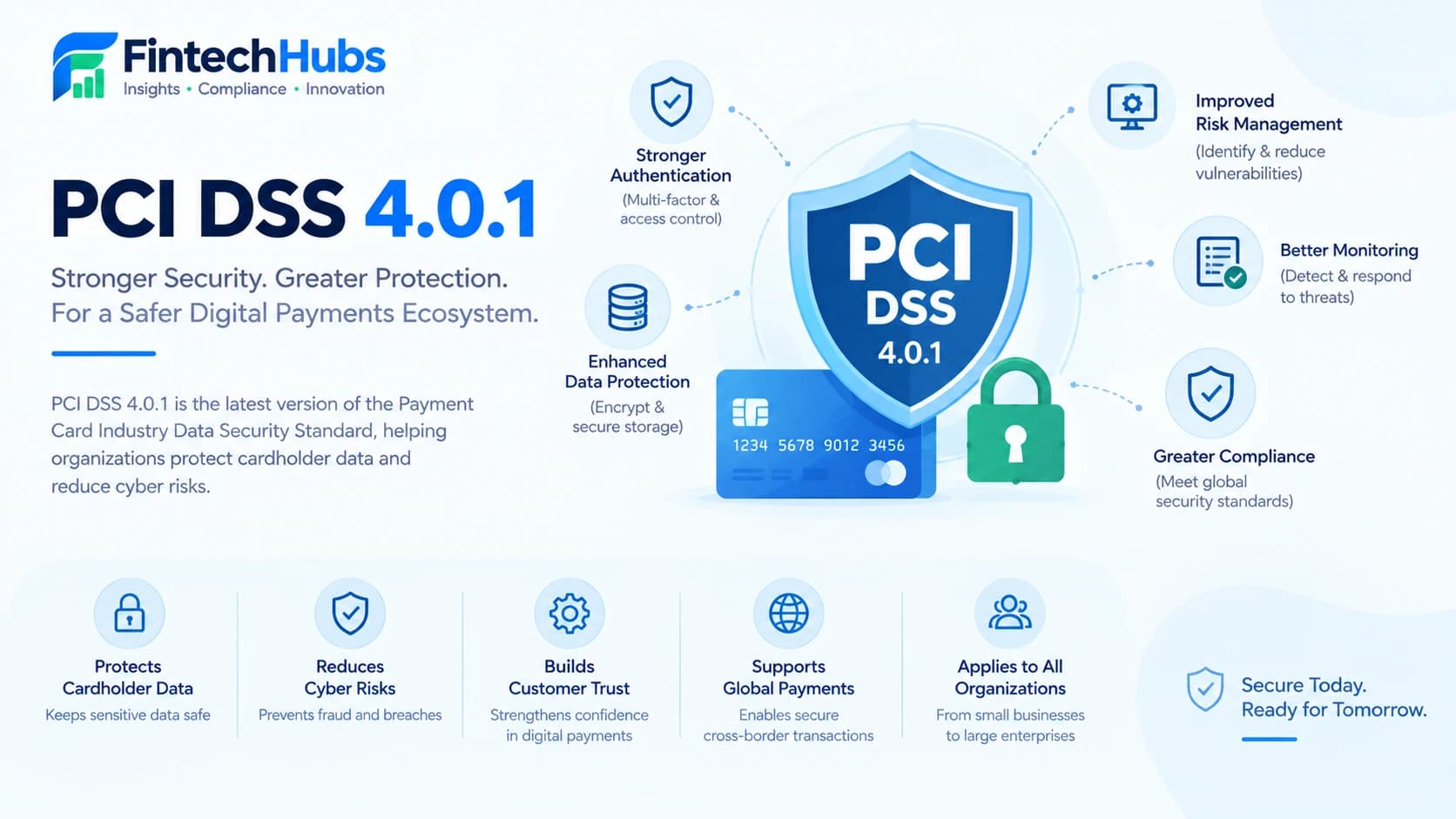
PCI DSS 4.0.1: Technical Requirements for Modern Payments
PCI DSS 4.0.1 explained: 12 requirements, MFA, payment page scripts, cloud and API compliance, scope reduction, a rollout roadmap, and 10 FAQs.