Fintech Regulation and Compliance
Understand fintech regulation and compliance in 2026 licensing, AML, consumer protection, crypto rules, and how oversight shapes financial technology.
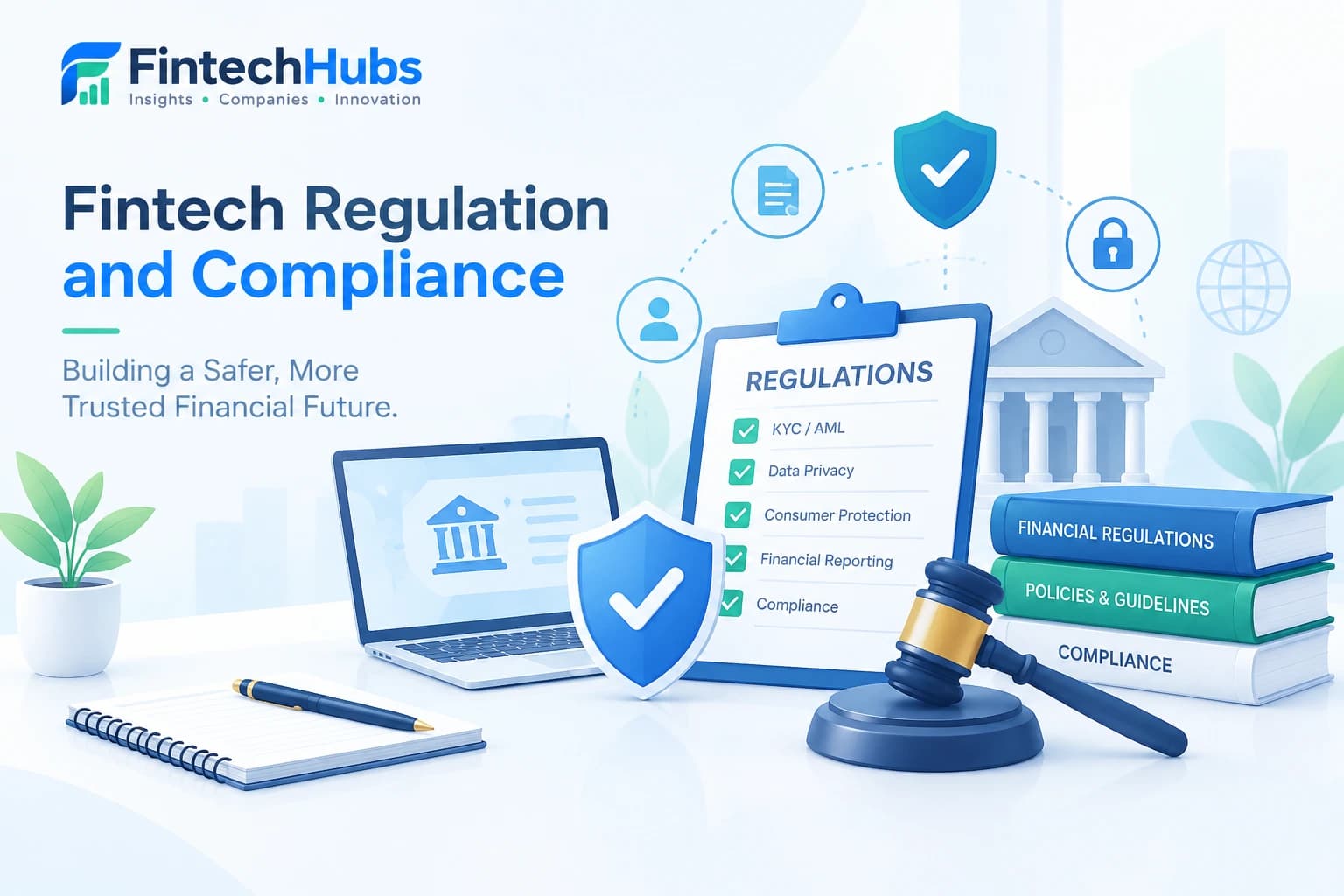
Fintech Regulation and Compliance: A Complete Guide to Financial Technology in 2026
Introduction
Financial technology didn't grow up inside a regulatory vacuum, but it also didn't grow up with rules built specifically for it. Most of today's fintech companies operate inside legal frameworks originally designed for traditional banks, brokerages, and insurers frameworks that regulators, courts, and legislators have spent the last two decades adapting, reinterpreting, and rewriting to fit a world of digital wallets, algorithmic lending, cryptocurrency, and cross-border payment apps.
Fintech regulation and compliance is the body of law, oversight, and institutional practice governing how financial technology companies can legally operate what licenses they need, what consumer protections they must provide, how they must safeguard data, and how regulators supervise them once they're in the market. It's easy to think of regulation as the opposite of innovation, but in practice, clear and well-designed regulatory frameworks are often what allow fintech innovation to scale safely and gain the public trust needed for mass adoption.
This guide is distinct from RegTech (the technology used to automate compliance) instead, it covers the regulatory landscape itself: what rules exist, who enforces them, the major branches of fintech regulation, why this framework matters, and where it's heading as the technology keeps evolving.
1. What Is Fintech Regulation and Compliance, Exactly?
Fintech regulation refers to the laws, rules, and supervisory frameworks that govern financial technology companies everything from licensing requirements to operate a payments business, to consumer protection standards for digital lending, to data privacy laws governing how financial apps handle customer information.
Compliance is the practical discipline of actually meeting those requirements: obtaining the right licenses, implementing required consumer protections, submitting regulatory filings, and maintaining the internal controls regulators expect.
Because fintech companies often operate at the intersection of banking, technology, and sometimes entirely new asset classes (like cryptocurrency), they frequently face a more complex regulatory picture than traditional financial institutions, having to satisfy multiple overlapping regulatory bodies rather than a single, well-established supervisory relationship.
2. How Fintech Regulatory Oversight Actually Works
Step 1: Licensing and Market Entry
Before launching, a fintech company typically needs to determine what type of license or registration its business model requires a money transmitter license for payments, a lending license for credit products, a broker-dealer registration for investment products, or a full banking charter for deposit-taking. Requirements vary significantly by jurisdiction and business model.
Step 2: Ongoing Supervisory Relationship
Once licensed, fintech companies typically fall under the ongoing supervision of one or more regulatory bodies, which may conduct periodic examinations, require regular reporting, and monitor for compliance with applicable rules.
Step 3: Consumer Protection Compliance
Regulations typically require clear disclosure of fees and terms, fair lending practices, dispute resolution processes, and protections against deceptive or abusive practices often enforced through both proactive supervision and after-the-fact enforcement action.
Step 4: Data Privacy and Security Compliance
Fintech companies handling sensitive financial data must comply with data protection laws governing how that information is collected, stored, shared, and secured, with specific requirements varying significantly across different countries and regions.
Step 5: Anti-Money Laundering and Financial Crime Compliance
Nearly all fintech companies handling money movement are subject to anti-money laundering and counter-terrorism financing requirements, including customer identity verification and suspicious activity reporting obligations.
Step 6: Enforcement and Remediation
When violations occur, regulators can impose fines, require corrective action plans, restrict business activities, or in severe cases revoke licenses entirely with the possibility of enforcement action serving as an ongoing incentive for compliance investment.
3. The Branches of Fintech Regulation and Compliance
A. Banking and Payments Licensing
The rules governing who can hold customer funds, issue payment accounts, and move money including money transmitter licenses, e-money licenses, and full banking charters, each with different capital, reporting, and operational requirements.
B. Lending Regulation
Rules governing consumer and business lending, including interest rate caps (usury laws), fair lending requirements prohibiting discriminatory lending practices, truth-in-lending disclosure requirements, and debt collection practices an area where algorithmic and AI-driven lending decisions face particular regulatory attention around fairness and explainability.
C. Securities and Investment Regulation
Rules governing investment platforms, robo-advisors, and trading apps, including registration requirements for investment advisers, suitability and fiduciary standards, and disclosure requirements designed to ensure investment products and advice serve customers' genuine interests.
D. Data Privacy and Protection Law
Regulations governing how financial technology companies collect, use, share, and secure personal and financial data, including rules around consent, data portability, and the specific protections often required for particularly sensitive financial information.
E. Anti-Money Laundering (AML) and Financial Crime Law
The legal framework requiring financial institutions and fintech companies to verify customer identities, monitor for suspicious transactions, and report potential money laundering or terrorist financing activity to relevant authorities.
F. Consumer Protection Regulation
Rules specifically designed to protect individual consumers from unfair, deceptive, or abusive financial practices, covering everything from clear fee disclosure to protections against predatory lending and aggressive debt collection.
G. Cryptocurrency and Digital Asset Regulation
A rapidly evolving branch addressing how cryptocurrencies, stablecoins, and other digital assets should be classified and regulated as securities, commodities, currencies, or something new entirely with significant variation in approach across different countries.
H. Open Banking and Data-Sharing Regulation
Rules specifically governing how financial data can be securely shared between institutions and third-party providers with customer consent, discussed in depth in our dedicated Open Banking guide, and closely tied to broader data privacy law.
I. Cross-Border and International Regulatory Coordination
The complex set of rules and coordination mechanisms governing fintech companies that operate across multiple countries, including international standards for anti-money laundering, sanctions compliance, and increasingly, cross-border data transfer restrictions.
J. AI and Algorithmic Accountability Regulation
An emerging branch specifically addressing the use of artificial intelligence in financial decision-making credit underwriting, fraud detection, investment advice focusing on explainability, bias prevention, and accountability for automated decisions that affect people's financial lives.
4. Why Fintech Regulation and Compliance Matters
Protecting Consumers
At its core, financial regulation exists to protect people from fraud, unfair practices, and financial products that could cause serious harm a purpose that remains just as important, if not more so, as financial products become faster, more automated, and less transparent to the average user.
Maintaining Trust in the Financial System
Widespread trust that the financial system is fair, stable, and well-supervised is essential for it to function at all. Regulatory oversight even when it feels burdensome to individual companies helps maintain the collective trust that allows people to use digital payments products confidently.
Leveling the Competitive Playing Field
Clear regulatory requirements ensure that fintech companies compete on the quality of their products and services rather than by cutting corners on consumer protection, data security, or financial stability protecting both consumers and responsible competitors.
Enabling Sustainable Growth
Companies that build compliance into their foundation from the start tend to scale more sustainably than those that treat it as an afterthought, avoiding the disruptive enforcement actions, fines, and reputational damage that can derail a fast-growing fintech company.
Financial Stability
Beyond individual consumer protection, financial regulation also serves a broader systemic purpose preventing the kind of excessive risk-taking or interconnected failures that can threaten the stability of the wider financial system.
Enabling Responsible Innovation
Well-designed regulatory frameworks, including regulatory sandboxes that let fintech companies test new products under close supervision before full-scale launch, can actually accelerate innovation by giving companies a clear, predictable path to bring new ideas to market responsibly.
5. Challenges and Criticisms
Regulatory fragmentation: Fintech companies, especially those operating internationally, must often navigate significantly different and sometimes conflicting regulatory requirements across jurisdictions, adding substantial complexity and cost.
Pace of innovation versus pace of regulation: Technology often moves faster than the legislative and regulatory process, leaving gaps where new business models operate in genuine legal ambiguity until rules catch up.
Disproportionate burden on smaller players: Compliance costs can be substantial, sometimes creating barriers that favor large, well-resourced incumbents over smaller startups trying to innovate, even when the underlying product is beneficial to consumers.
Regulatory arbitrage: Differences in regulatory stringency between jurisdictions can incentivize companies to base operations where oversight is lightest, potentially undermining consumer protection goals.
Uncertainty around emerging technology: Areas like cryptocurrency, AI-driven lending, and decentralized finance often lack clear regulatory classification, creating genuine uncertainty for companies trying to operate responsibly and for regulators trying to apply existing frameworks to genuinely novel situations.
Balancing innovation and caution: Regulators face real tension between encouraging beneficial innovation and protecting consumers from products that may be poorly understood or genuinely risky a balance reasonable people frequently disagree on.
6. The Regulatory Landscape
Fintech regulatory oversight typically involves multiple types of authorities, which vary by country but generally include:
Central banks and monetary authorities: Often overseeing payments systems and monetary stability
Banking regulators: Overseeing licensed depository institutions and their fintech partners
Securities and investment regulators: Overseeing investment platforms, robo-advisors, and trading products
Consumer protection agencies: Focused specifically on fair treatment of individual consumers
Data protection authorities: Overseeing privacy and data security compliance
Financial intelligence units, focused on anti-money laundering and financial crime enforcement
Emerging digital asset regulators: In jurisdictions that have created dedicated oversight bodies or frameworks for cryptocurrency and digital assets
Many fintech companies must build compliance relationships with several of these authorities simultaneously, depending on the specific products they offer.
7. Where Fintech Regulation and Compliance Are Headed
Growing focus on AI accountability: As AI plays an increasingly central role in credit decisions, fraud detection, and investment advice, expect continued regulatory development around explainability, bias testing, and accountability for automated financial decisions.
Clearer digital asset frameworks: As cryptocurrency and digital assets mature from a niche market into a more mainstream part of the financial system, more jurisdictions are expected to develop clearer, more comprehensive regulatory frameworks specifically addressing them.
Expansion of regulatory sandboxes: More regulators are expected to adopt sandbox-style programs that let fintech companies test innovative products under close supervision, balancing consumer protection with room for genuine innovation.
Greater international coordination: As fintech companies increasingly operate across borders, expect continued efforts toward greater international regulatory coordination, particularly around anti-money laundering standards and data-sharing frameworks.
Deeper integration of RegTech into supervision itself: Regulators are increasingly adopting their own "suptech" (supervisory technology) tools, enabling more real-time, data-driven supervision rather than relying solely on periodic examinations and manual reporting review.
Sharper focus on embedded and invisible finance: As financial services become embedded into non-financial platforms, expect regulators to pay closer attention to ensuring consumers understand who is actually responsible for the financial products they're using, even when the branding obscures the underlying licensed institution.
Conclusion
Fintech regulation and compliance forms the legal and institutional foundation that everything else in financial technology ultimately depends on. Its branches, spanning banking and payments licensing, lending regulation, securities law, data privacy, anti-money laundering requirements, and the newer frontiers of cryptocurrency and AI accountability, all serve the same underlying purpose: ensuring that as financial technology becomes faster, more automated, and more deeply embedded in everyday life, it remains fair, transparent, and trustworthy for the people using it. As innovation continues to outpace even well-intentioned regulatory frameworks, the ongoing work of adapting rules to fit new technology without stifling the genuine benefits that technology can bring will remain one of the central, unresolved tensions shaping the future of financial services.
Share this article
Related Articles
Financial Cybersecurity and Fraud Prevention
Learn how financial cybersecurity and fraud prevention work in 2026 — fraud detection, identity verification, scam protection, and key industry trends.

Personal Finance Management
Learn how personal finance management works in 2026, including budgeting, saving, investing, digital banking, fintech apps, and smarter ways to manage your money.
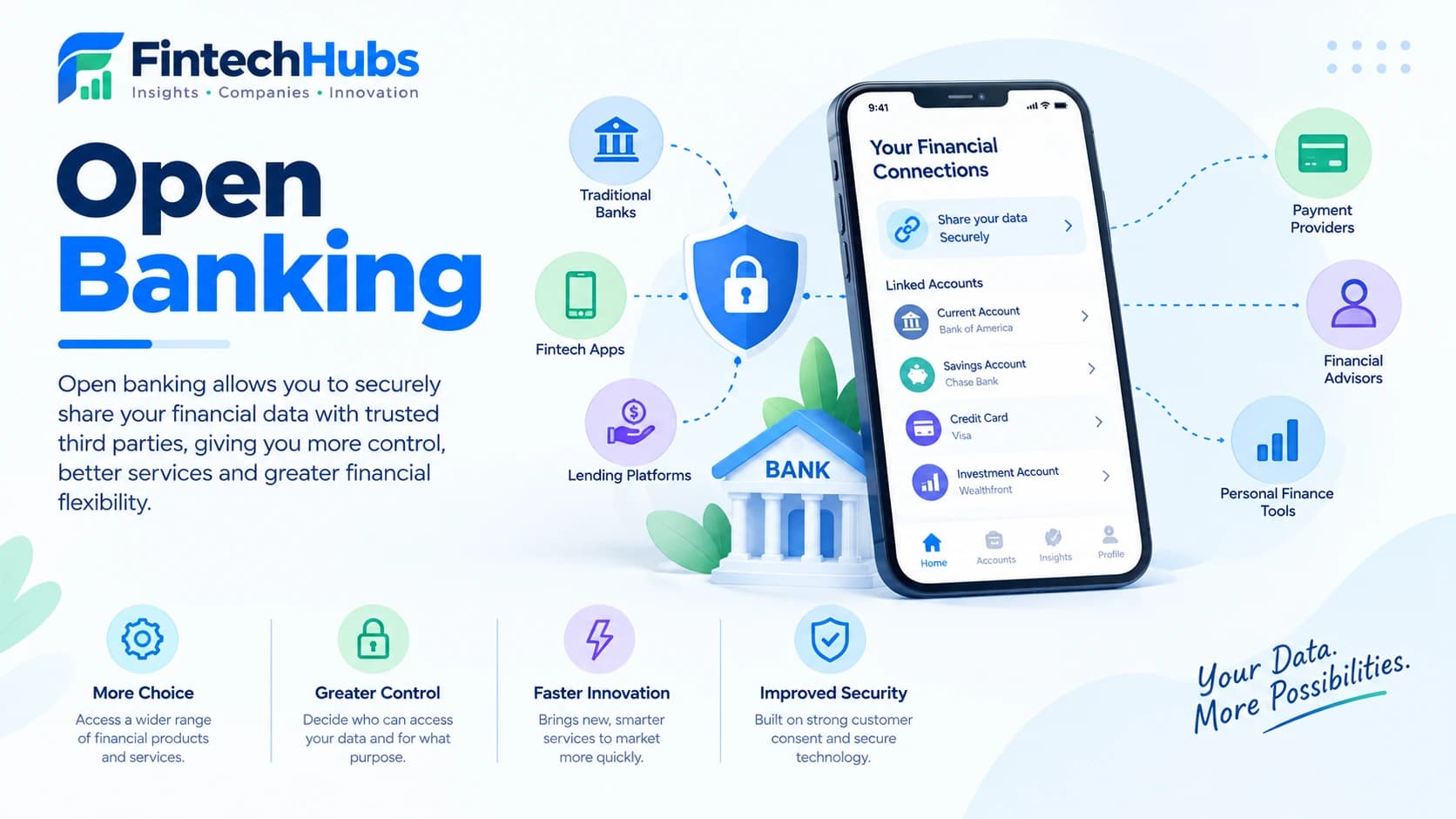
Open Banking: Complete Guide to Open Banking in 2026
Learn what open banking is, how it works, its benefits, security, APIs, and how fintech companies are transforming financial services in 2026.