
AML Platforms: The 10 Best Anti-Money Laundering Software Solutions in 2026
Compare the 10 best AML platforms of 2026, from NICE Actimize to Napier AI. See key features, ideal users, a comparison table and how to choose the right fit.
AML Platforms: The 10 Best Anti-Money Laundering Software Solutions in 2026
An AML platform is the software backbone that lets banks, fintechs, payment firms and crypto businesses spot money laundering, satisfy regulators and keep a defensible audit trail. This guide ranks ten leading options for 2026: NICE Actimize, Oracle Financial Services Crime and Compliance Management, SAS Anti-Money Laundering, Nasdaq Verafin, LexisNexis Risk Solutions, ComplyAdvantage, Hawk, Napier AI, ACTICO and Sumsub.
The scale of the problem explains the demand. A widely cited UN estimate puts the amount laundered worldwide each year at roughly 2% to 5% of global GDP. Regulators answer with tougher rules and larger penalties, and one industry roundup reports that global AML fines rose 417% year over year in the first half of 2025, reaching $1.23 billion. Spreadsheets and manual reviews cannot keep up with that pressure.
Below you will find what an AML platform does, why it matters, the features worth demanding, a framework for choosing, the ten platforms in detail, a side-by-side table, 2026 regulatory and technology trends, implementation advice and a short FAQ.
What Is an AML Platform?
An AML platform is a software system that automates the detection, investigation and reporting of suspected money laundering and terrorist financing. It sits between your customer and transaction data on one side and your compliance team and regulators on the other.
In practice it works as a pipeline:
Collect data: The system ingests customer profiles, account details, payments and external watchlists.
Screen and score: Names are checked against sanctions, politically exposed persons (PEP) and adverse media sources, and each customer receives a risk rating.
Monitor activity: Rules, behavioral analytics and machine learning models look for patterns such as structuring, rapid movement of funds or unusual cross-border flows.
Raise alerts: Suspicious activity creates an alert, ideally ranked by risk so analysts see the most serious cases first.
Investigate: Analysts review linked accounts, relationships and history inside a case management tool.
Report: Confirmed cases become suspicious activity reports (SARs) or suspicious transaction reports (STRs) filed with the financial intelligence unit, with every decision logged.
Some products cover the whole chain. Others specialize, for example in screening data or in transaction monitoring, and are combined with other tools. Knowing which type you are buying is the first step in comparing vendors.
Why AML Software Matters in 2026
AML software has moved from a nice-to-have to a baseline control, for four reasons.
Regulatory pressure is rising: The EU's Anti-Money Laundering Authority (AMLA) began operating in 2025 and took over the AML mandate of the European Banking Authority on 1 January 2026. It plans to directly supervise up to 40 high-risk cross-border financial groups from 2028. Australia's updated AML/CTF obligations took effect on 31 March 2026.
Penalties and reputation are at stake: Fines, license restrictions and public enforcement actions can cost far more than the technology that would have prevented them.
Volumes and speed have grown: Real-time payments, digital wallets and cross-border flows generate more transactions than human teams can review, and criminals adapt quickly.
Fraud and laundering overlap: Mule accounts and scam proceeds blur the line between fraud and money laundering, which is pushing vendors toward unified fraud and AML platforms, often called FRAML.
Market forecasts point the same way. One vendor roundup, citing Fortune Business Insights, projects the global AML software market at about $2.91 billion in 2026, growing at roughly 15.9% a year through 2030. Treat such figures as directional, since market-size estimates vary by research firm.
Key Features to Look For
Most enterprise products cover the basics, so judge the depth of each capability rather than its presence.
Customer and payment screening: Coverage of sanctions, PEP and adverse media lists, fuzzy name matching that can be tuned, and screening of payments in real time.
Transaction monitoring: A library of ready-made typologies, a safe place to test rules (a sandbox), and support for behavioral models alongside rules.
Customer risk scoring and ongoing monitoring: Dynamic risk ratings that update when something changes, and a clear answer to whether monitoring is event-driven or batch-based.
Alert triage and false-positive reduction: Risk-ranked alerts and models that cut noise without hiding genuine patterns.
Case management and investigation tools: Entity resolution, network or graph views, and automated evidence gathering.
Regulatory reporting: Templates and e-filing for SARs and STRs in the jurisdictions you operate in.
Explainable AI and model governance: Clear reasons behind each score, versioning, validation and audit trails that satisfy examiners.
Integration and deployment: Open APIs, cloud, hybrid or on-premises options, and a realistic path to connect your core banking and payment systems.
Crypto and Travel Rule support: Wallet screening and originator and beneficiary data exchange if you handle virtual assets.
How to Choose the Right AML Platform
Start with your own risk profile, then test vendors against it. A product that suits a global bank can overwhelm a startup, and the reverse is also true.
Map your obligations: List the jurisdictions, license types and products you are regulated for, and which of screening, monitoring, KYC and reporting you need.
Match the vendor to your size: Enterprise suites suit complex institutions with in-house technical teams. Cloud-native and API-first tools suit fintechs and payment firms that need to launch fast.
Check deployment limits: Some institutions must keep data on premises or in a private cloud, which rules out SaaS-only products.
Ask about false positives with real data: Request a proof of concept on your own transactions and ask how the vendor measures its false-positive rate.
Probe explainability: Regulators expect you to justify model decisions, so ask how the system documents them.
Plan integration early: Count the systems to connect, the data cleanup required and the vendor's migration support, including what exiting the contract would involve.
Calculate total cost: Include licenses, data feeds, implementation, tuning and staff time, not just the headline subscription.
Review vendor viability and support: Look at analyst recognition, customer references in your segment and the product roadmap.
Analyst reports can help you build a shortlist. Chartis Research, for instance, publishes a RiskTech Quadrant for AML transaction monitoring that ranks vendors on completeness of offering and market potential. Use such reports as one input, not a verdict.
The 10 Best AML Platforms in 2026
The list is ordered by market segment, from enterprise suites to cloud-native and onboarding-led tools, not as a strict ranking. Picks reflect capability breadth, analyst recognition and fit for different buyers. No vendor paid for placement. Capability descriptions come from vendor materials and press releases, so confirm current details in a demo before you buy.
1. NICE Actimize
Best for: large banks and global institutions that want a unified fraud, AML and sanctions stack.
NICE Actimize offers the X-Sight platform, which brings fraud, AML, sanctions and surveillance analytics together, plus ActOne for case management. Its Suspicious Activity Monitoring product applies entity-centric analytics to money laundering typologies, and a cloud AML Essentials offering targets mid-sized institutions. In April 2025 the company added agentic AI to ActOne through InvestigateAI, which it says can cut investigation time by 50% or more.
Strengths: breadth across financial crime, mature case management, generative AI for SAR narratives.
Consider: enterprise-scale implementations usually need significant budget and integration effort.
2. Oracle Financial Services Crime and Compliance Management (FCCM)
Best for: banks seeking a modular end-to-end suite, particularly those already invested in Oracle technology.
Oracle's cloud service covers KYC, customer screening, transaction monitoring and regulatory reporting as pre-integrated applications that can be bought together or separately. It ships a catalog of out-of-the-box AML scenarios and reporting templates, and the current transaction monitoring datasheet describes AI scoring, graph-based entity intelligence and an AI Investigator that drafts investigation summaries and SAR narratives. An on-premises suite remains available.
Strengths: governed rule and model lifecycle, strong regulatory reporting, flexible deployment.
Consider: broad suites take planning to configure and tune to your own typologies.
3. SAS Anti-Money Laundering
Best for: analytics-driven institutions that want to build and tune their own detection models.
SAS Anti-Money Laundering runs on the SAS Viya platform and combines proven rules with machine learning and peer-group anomaly detection. Its feature list includes entity-level alert aggregation, automatic alert prioritization, a workflow builder, entity resolution, network visualization and case creation with regulatory report filing.
Strengths: deep analytics, flexible data model, strong network exploration.
Consider: gets the most from teams with data science skills.
4. Nasdaq Verafin
Best for: US and Canadian community banks and credit unions.
Verafin is a cloud platform covering AML/CFT compliance, fraud detection, high-risk customer management and sanctions screening. Its distinguishing feature is consortium analytics: anonymized intelligence is shared across more than 2,500 institutions, so smaller firms benefit from patterns seen elsewhere. Nasdaq acquired the company in 2021 for $2.75 billion. In June 2026 it announced new agentic AI workers, beginning with an Agentic AML Analyst and an Agentic Fraud Analyst.
Strengths: unified fraud and AML, network-effect data, tailored to smaller institutions.
Consider: its core market is North America, so check fit if you operate elsewhere.
5. LexisNexis Risk Solutions
Best for: firms that value strong risk data and want to orchestrate several checks in one flow.
LexisNexis Risk Solutions delivers transaction monitoring through its RiskNarrative orchestration platform and was named a Category Leader in Chartis's AML transaction monitoring quadrant update. That report assessed more than 50 vendors on completeness of offering and market potential.
Strengths: data depth, orchestration across identity, screening and monitoring.
Consider: confirm which modules you need, since capabilities are spread across several products.
6. ComplyAdvantage
Best for: fintechs, payment firms and banks that want AI-driven risk data with screening and monitoring in one product.
ComplyAdvantage is known for its sanctions, PEP and adverse media data and for pairing that data with transaction monitoring. An independent comparison of AML providers lists it among the vendors that include transaction monitoring in the platform, unlike some identity verification specialists.
Strengths: data quality focus, API-friendly, suits fast-growing firms.
Consider: ask how ongoing monitoring is triggered and how false-positive rates are measured on your data.
7. Hawk
Best for: banks and payment providers that need explainable AI for regulators and auditors.
Hawk, founded in Munich in 2018, offers a modular platform covering payment screening, customer screening, customer risk rating, transaction monitoring and fraud monitoring. It layers machine learning on top of rules and emphasizes transparent, explainable decisions that can be validated. Because it is modular, you can replace a legacy monitoring engine first and add modules later.
Strengths: explainability, combined AML and fraud view, incremental adoption.
Consider: check regional coverage and integrations for your core systems.
8. Napier AI
Best for: banks, payment firms and fintechs that want a modular, API-ready platform.
Napier AI Continuum includes client screening, transaction screening, transaction monitoring with more than 100 built-in typologies, and perpetual client risk assessment. Its Continuum Live (hosted, plug-and-play) and Continuum Flow (API-based) options launched in 2024 to suit different technology strategies. In September 2026 it joined the Microsoft Marketplace.
Strengths: no-code rule building, sandbox testing, flexible delivery.
Consider: compare module-by-module pricing against bundled alternatives.
9. ACTICO
Best for: banks, especially in Europe, that prioritize transparent modeling and rule governance.
ACTICO, a software provider for regulatory compliance and decision automation, was named a Category Leader in the Chartis RiskTech Quadrant for AML Transaction Monitoring in 2026. A prior Chartis report recognized it for risk typology modeling, analytical modeling and model quality and validation.
Strengths: model governance, automation of monitoring logic, analyst recognition.
Consider: confirm which screening and KYC modules are native versus partner-provided.
10. Sumsub
Best for: fintechs, crypto businesses and marketplaces that want onboarding checks and AML in one vendor relationship.
Sumsub began as an identity verification provider and has expanded into an all-in-one compliance platform that combines KYC, business verification, AML screening and transaction monitoring. That bundle reduces the number of integrations for firms that are onboarding-heavy.
Strengths: fast onboarding, unified customer lifecycle, quick integration.
Consider: very large banks with complex monitoring needs may want a deeper dedicated engine.
AML Platforms Compared at a Glance
Use this table to narrow the list before requesting demos.
Platform | Best for | Standout strength | Main consideration |
NICE Actimize | Large banks | Unified fraud, AML and sanctions with agentic AI investigations | Heavier implementation |
Oracle FCCM | Banks wanting a full suite | Pre-integrated KYC, screening, monitoring and reporting | Needs careful tuning |
SAS Anti-Money Laundering | Analytics-led institutions | Rules plus machine learning, network analytics | Best with data science staff |
Nasdaq Verafin | US and Canadian community banks and credit unions | Consortium data across 2,500+ institutions | North America focus |
LexisNexis Risk Solutions | Data-driven orchestration | RiskNarrative platform, Chartis category leader | Modules spread across products |
ComplyAdvantage | Fintechs and payment firms | AI-driven risk data with monitoring | Verify monitoring triggers |
Hawk | Banks needing explainability | Explainable AI over rules, modular adoption | Check regional integrations |
Napier AI | Banks and fintechs | 100+ typologies, hosted or API delivery | Compare modular pricing |
ACTICO | European banks | Model governance, Chartis category leader | Confirm native modules |
Sumsub | Onboarding-heavy fintechs and crypto | KYC, KYB, AML and monitoring in one vendor | Less depth for complex banks |
Trends Shaping AML Technology
Agentic and generative AI. Vendors are moving from scoring alerts to automating investigation steps. NICE Actimize and Nasdaq Verafin have both announced agentic AI features, and Oracle describes AI-drafted SAR narratives. Regulators still expect human oversight and explainable decisions, so governance matters as much as speed.
Convergence of fraud and AML. Criminals do not respect the boundary between fraud and laundering, so unified FRAML platforms that share data and cases are gaining ground.
Real-time monitoring and perpetual KYC. Instant payments leave little time to intervene, and event-driven risk updates are replacing periodic batch reviews.
Crypto and the Travel Rule. In June 2025 the FATF revised Recommendation 16, the Travel Rule, for certain funds transfers. Implementation of the rule for virtual assets remains uneven worldwide, and in the EU the MiCA regime ties crypto-asset licensing to AML compliance.
European harmonization. The EU's single AML rulebook, the AMLR, applies from 10 July 2027, and AMLA expects to supervise selected high-risk groups directly from 2028. Firms with EU exposure should check that a vendor's roadmap covers these changes.
Graph and network intelligence. Linking customers, accounts and counterparties helps investigators spot networks rather than isolated transactions. Chartis named graph analytics provider Linkurious a Category Leader in its 2026 transaction monitoring quadrant.
Implementation Best Practices and Common Mistakes
A strong product still fails if it is rolled out badly. These habits help.
Clean your data first. Detection quality depends on complete, consistent customer and transaction data.
Run a proof of concept. Test on your own historical data and compare alert quality, volume and investigator effort.
Tune before you scale. Calibrate thresholds and scenarios in a sandbox, and document the reasons for each change.
Keep humans in the loop. Define which decisions AI can recommend and which need analyst sign-off.
Train investigators. Tools only pay off when analysts understand typologies and the case workflow.
Plan for model governance. Record validation, versioning and performance monitoring so you can answer examiner questions.
Build a phased rollout. Start with the highest-risk products or regions and expand once results are stable.
Common mistakes include choosing on feature lists alone, underestimating integration time, raising thresholds to cut alerts instead of improving precision, and treating the purchase as the end of the program rather than the start of continuous improvement.
Frequently Asked Questions
What does AML software do?
It automates customer screening, transaction monitoring, alert investigation and regulatory reporting so firms can detect suspected money laundering and prove they acted on it.
Who needs an AML platform?
Any regulated business with AML obligations, including banks, credit unions, payment institutions, e-money firms, crypto exchanges, brokers and some non-financial sectors. Small firms may start with an all-in-one cloud tool, while large banks usually need enterprise suites.
What is the difference between AML screening and transaction monitoring?
Screening checks people and companies against sanctions, PEP and adverse media lists. Transaction monitoring analyzes behavior over time to find suspicious patterns. They are separate regulatory requirements, and not every product includes both.
How much does AML software cost?
Pricing varies widely by volume, modules and deployment, and most enterprise vendors quote privately. Budget for licenses, data feeds, integration, tuning and staff time, and compare total cost over several years.
How can AML software reduce false positives?
Through better risk scoring, behavioral models, entity resolution and feedback loops that learn from analyst decisions. Ask each vendor to demonstrate results on your own data.
Is AI allowed in AML compliance?
Yes, but regulators expect explainability, validation and human oversight. Choose tools that document why each alert was raised.
What is the FATF Travel Rule?
It requires certain financial institutions and virtual asset service providers to collect and transmit originator and beneficiary information with qualifying transfers.
Should I choose an all-in-one platform or best-of-breed tools?
All-in-one platforms simplify integration and audit trails. Best-of-breed tools can offer deeper capability in one area. The right choice depends on your team's size, technical resources and risk profile.
Conclusion
There is no single best AML platform, only the best fit for your institution. Large, complex banks often look first at NICE Actimize, Oracle FCCM, SAS or ACTICO. US community banks and credit unions gravitate to Nasdaq Verafin. Data-led orchestration points to LexisNexis, and explainable or modular approaches to Hawk and Napier AI. Fast-growing fintechs and crypto firms often prefer ComplyAdvantage or Sumsub.
Whichever you shortlist, run a proof of concept on your own data, press vendors on false positives and explainability, and confirm the roadmap covers the 2026 to 2028 regulatory changes that apply to you. Then treat the platform as the start of a continuous improvement program, not a one-time purchase.
Share this article
Related Articles
Financial Integrity: Principles, Importance, Risks, and Compliance in Modern Finance
Financial integrity is the discipline that protects this trust. It is not a single policy or a department; it is a combination of values, systems, laws, and everyday behaviours.
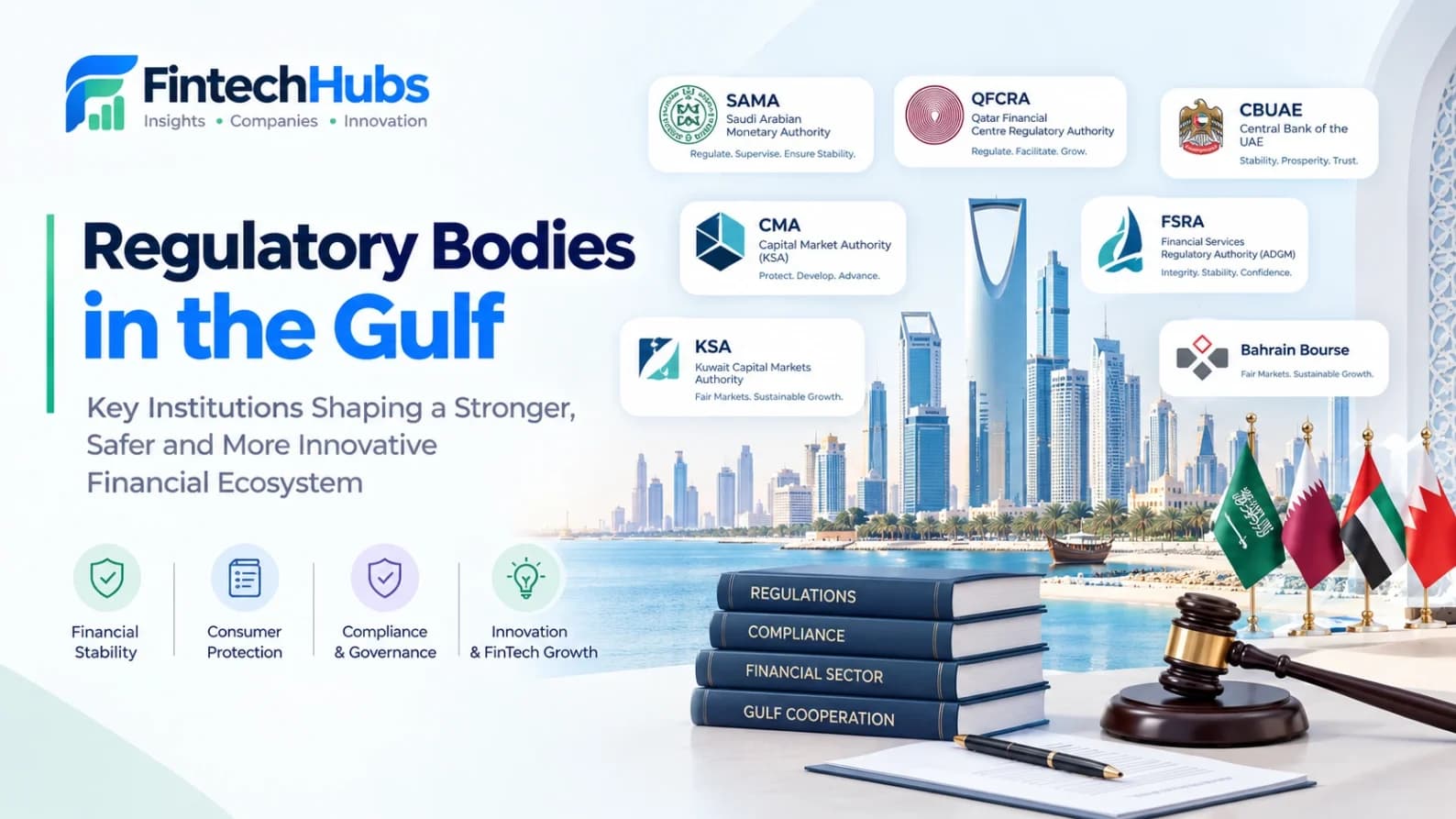
FinTech Regulatory Authorities in the Gulf: What You Need to Know
An in-depth professional overview of the authorities, laws and frameworks that govern finance and financial technology across the Gulf Cooperation Council (GCC) region
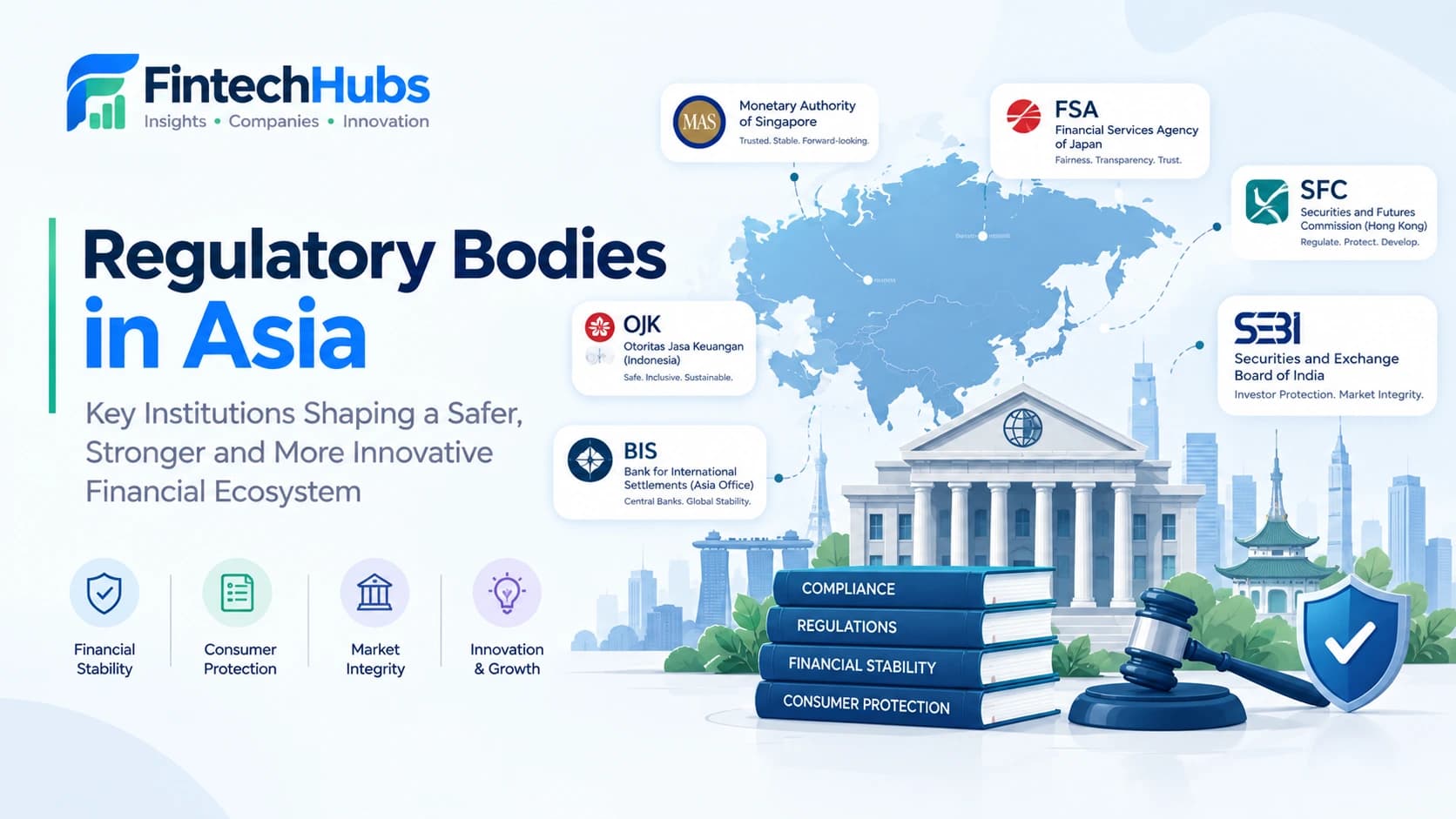
Regulatory Bodies in Asia: Financial & FinTech Guide
A complete guide to Asia's financial and fintech regulators key bodies in Singapore, China, India, Japan and more, regulatory sandboxes, and 10 FAQs.