
AI-Powered Investment Research: ML in Financial Analysis
See how AI and machine learning are transforming investment research from sentiment analysis to alternative data, automating financial analysis at scale.
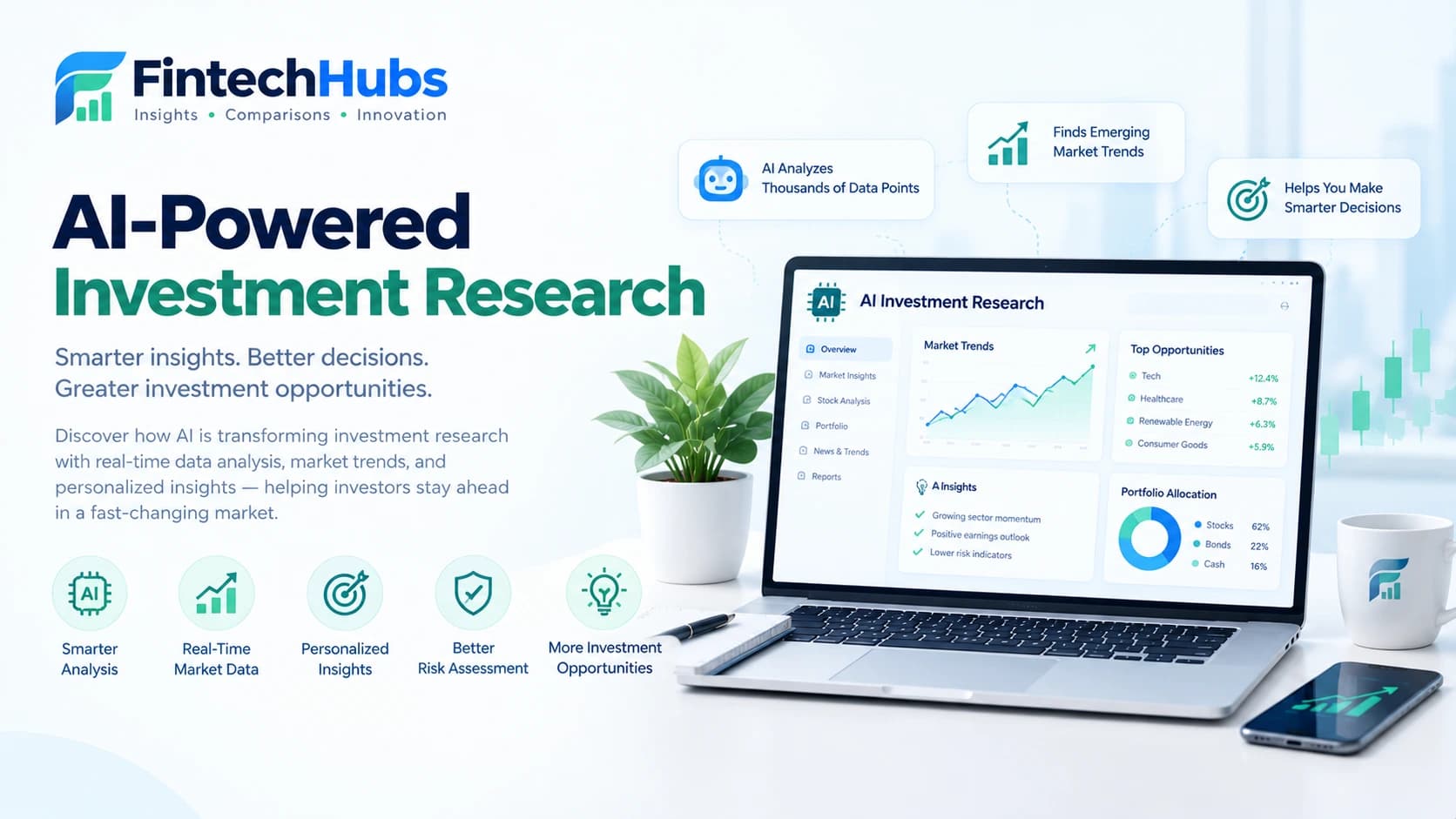
AI-Powered Investment Research: How Machine Learning Is Changing Financial Analysis and Market Intelligence
Investment research has traditionally relied on human analysts poring over financial statements, earnings calls, economic reports, and news coverage to form a view on a security's value and prospects. That process, while deeply skilled, is inherently limited by the volume of information a person can process and the speed at which markets now move. Artificial intelligence and machine learning are changing that equation enabling systems that can read thousands of documents, parse unstructured data from news and social media, detect subtle patterns across massive datasets, and surface insights at a speed and scale no human team could match.
This guide explores how AI-powered investment research works, the specific machine learning techniques involved, the branches of this growing field, and the implications for analysts, asset managers, and individual investors navigating an increasingly data-saturated market environment.
This article is for general informational and educational purposes only and does not constitute investment, financial, or legal advice.
What Is AI-Powered Investment Research
AI-powered investment research refers to the use of machine learning, natural language processing, and related artificial intelligence techniques to analyze financial data, generate investment insights, and support decision-making in securities analysis and portfolio management. It spans a wide range of applications — from automating routine data extraction and summarization to generating predictive signals, sentiment analysis, and risk assessments that would be difficult or impossible for human analysts to produce manually at the same speed and scale.
Rather than replacing human judgment entirely, most AI-powered research tools are designed to augment analysts and portfolio managers by processing vast quantities of structured and unstructured data and surfacing patterns, anomalies, and insights for human review and decision-making.
How AI-Powered Investment Research Works
Data Ingestion: Systems collect structured data (financial statements, pricing data, economic indicators) and unstructured data (news articles, earnings call transcripts, social media, regulatory filings) from a wide range of sources.
Data Cleaning and Normalization: Raw data is processed into consistent formats, with errors, duplicates, and inconsistencies addressed before analysis.
Feature Extraction: Machine learning models identify relevant variables and signals from the processed data, such as sentiment scores, financial ratios, or textual themes.
Model Analysis: Trained models analyze the extracted features to generate outputs such as predictive signals, risk scores, anomaly flags, or summarized insights.
Validation and Backtesting: Model outputs are tested against historical data to assess accuracy and reliability before being used in live research or investment processes.
Insight Delivery: Results are presented to analysts or portfolio managers through dashboards, reports, or alerts, often integrated directly into existing research workflows.
Continuous Learning and Refinement: Models are retrained and refined as new data becomes available, improving accuracy and adapting to changing market conditions over time.
Core Machine Learning Techniques Used in Financial Analysis
4.1 Natural Language Processing (NLP)
Used to extract meaning, sentiment, and key themes from unstructured text sources such as earnings call transcripts, news articles, regulatory filings, and analyst reports.
4.2 Sentiment Analysis
A specialized application of NLP that quantifies positive, negative, or neutral sentiment expressed in text sources, often used to gauge market mood around a company, sector, or broader market event.
4.3 Predictive Modeling and Time Series Analysis
Statistical and machine learning models trained to identify patterns in historical financial data and generate forward-looking forecasts or probability estimates.
4.4 Anomaly Detection
Algorithms designed to flag unusual patterns in financial data such as unexpected trading activity, irregular financial statement items, or deviations from historical norms that may warrant further investigation.
4.5 Clustering and Classification Models
Group securities, companies, or market conditions into categories based on shared characteristics, supporting comparative analysis and thematic research.
4.6 Large Language Models (LLMs)
Advanced generative AI models capable of summarizing lengthy documents, answering research questions in natural language, and synthesizing information across multiple sources into coherent analysis.
4.7 Alternative Data Analytics
Machine learning techniques applied to non-traditional data sources such as satellite imagery, credit card transaction data, or web traffic to generate investment signals not captured by conventional financial data.
Types/Branches of AI-Powered Investment Research
5.1 Automated Equity Research Platforms
Use AI to generate company analysis, financial summaries, and comparative valuation insights, often significantly reducing the time required for initial research tasks.
5.2 Sentiment and News Analytics Platforms
Focus specifically on analyzing news, social media, and other text sources to gauge market sentiment and detect emerging narratives around specific securities or sectors.
5.3 Quantitative and Algorithmic Signal Generation
Applies machine learning to historical and real-time market data to generate systematic trading or investment signals.
5.4 Alternative Data Research Platforms
Specialize in processing non-traditional data sources to generate investment insights not readily available through conventional financial statements and market data.
5.5 Earnings Call and Transcript Analysis Tools
Use NLP to analyze management commentary during earnings calls, detecting tone shifts, key themes, and language patterns associated with future performance.
5.6 Risk Analytics and Anomaly Detection Platforms
Apply machine learning to identify emerging risks, unusual financial statement patterns, or governance red flags that warrant closer analyst review.
5.7 Conversational Research Assistants
AI-powered tools, often built on large language models, that allow analysts to query financial data and documents in natural language and receive synthesized answers.
5.8 ESG and Sustainability Analytics
Apply machine learning to assess environmental, social, and governance factors from disclosures, news, and alternative data sources, supporting ESG-integrated investment research.
Core Technologies Powering AI Investment Research
Cloud computing infrastructure: Enables the processing of massive datasets at scale.
Natural language processing frameworks for extracting meaning from unstructured text.
Large language models: Capable of summarization, question answering, and document synthesis.
Data pipelines and APIs: Connecting to financial data providers, news sources, regulatory filing databases, and alternative data vendors.
Machine learning model training and validation infrastructure: Including backtesting environments for assessing model performance.
Visualization and dashboard tools: That present AI-generated insights in accessible formats for analysts and portfolio managers.
Knowledge graphs: Used by some platforms to map relationships between companies, executives, suppliers, and other entities relevant to investment analysis.
AI vs. Traditional Investment Research
Dimension | Traditional Research | AI-Powered Research |
|---|---|---|
Data volume | Limited by analyst capacity | Processes vast structured and unstructured datasets |
Speed | Hours to days per analysis | Near real-time processing possible |
Data types | Primarily structured financial data | Structured and unstructured (text, alternative data) |
Consistency | Varies by analyst judgment and bias | Systematic and repeatable, subject to model design |
Pattern detection | Limited to human-observable patterns | Can detect subtle, high-dimensional patterns |
Scalability | Difficult to scale across many securities | Readily scalable across large universes of securities |
Judgment and context | Strong qualitative and contextual reasoning | Improving, but still generally requires human oversight for nuanced judgment |
AI and traditional research are increasingly complementary rather than competing approaches, with AI handling data-intensive processing and pattern detection while human analysts apply judgment, context, and accountability to final investment decisions.
Why It Matters
Financial markets generate an overwhelming volume of information earnings reports, regulatory filings, news coverage, and market data that continues to grow each year. Human analysts, however skilled, face hard limits on how much of this information they can process and synthesize in a timely manner. AI-powered research addresses this gap directly, enabling faster, broader, and in some cases more consistent analysis than manual processes alone can achieve.
This matters not only for large institutional investors competing on information advantage, but increasingly for individual investors as AI-powered research tools become more accessible, narrowing the information-processing gap that has historically favored well-resourced institutional research teams.
Industries and Use Cases
Asset management firms: Use AI to support equity research, risk analysis, and signal generation across large investment universes.
Hedge funds: Applying machine learning and alternative data analytics to generate differentiated trading signals.
Investment banks: Automating aspects of equity research report generation and company analysis.
Wealth management platforms: Integrating AI-generated insights into client-facing research and portfolio recommendations.
Retail investment platforms: Offering AI-powered research summaries and insights directly to individual investors.
Credit rating and risk assessment firms: Using machine learning to supplement traditional credit analysis with broader data sources.
Benefits of AI-Powered Investment Research
Processing speed and scale: Enabling analysis of far larger datasets and security universes than manual research alone.
Broader data coverage: Incorporating unstructured and alternative data sources traditional research often overlooks.
Consistency: Applying systematic, repeatable analytical frameworks across securities rather than relying solely on individual analyst judgment.
Early signal detection: Potentially identifying emerging trends or risks before they become apparent through traditional analysis.
Cost efficiency: Automating time-intensive research tasks and allowing human analysts to focus on higher-value judgment and decision-making.
Accessibility: Bringing sophisticated research capabilities to smaller firms and individual investors previously unable to afford extensive research teams.
Challenges and Limitations
Data quality dependency: AI models are only as reliable as the data they are trained and operated on; poor-quality or biased data produces unreliable outputs.
Model interpretability: Complex machine learning models, particularly deep learning approaches, can be difficult to interpret, creating challenges for analysts seeking to understand the reasoning behind a given output.
Overfitting risk: Models trained too closely to historical data may fail to generalize to new, unseen market conditions.
Hallucination risk in generative AI: Large language models can occasionally generate plausible-sounding but factually incorrect analysis, requiring careful human verification.
Market regime changes: Models trained on historical patterns may struggle during unprecedented market conditions not reflected in training data.
Over-reliance risk: Excessive dependence on AI-generated insights without adequate human oversight can introduce blind spots into investment decision-making.
Data licensing and cost: Access to high-quality alternative and unstructured data sources can be expensive, creating a resource gap between large and small research operations.
Risk Management and Regulatory Considerations
Firms using AI-powered investment research tools should consider:
Model governance and validation: Including regular testing of model accuracy and performance against live market outcomes.
Explainability requirements: Particularly for firms providing AI-generated research to clients who require transparency into how conclusions were reached.
Data sourcing and licensing compliance: Ensuring all data used in AI models is obtained and used in accordance with applicable agreements and regulations.
Disclosure obligations: Informing clients when investment research or recommendations are generated or materially influenced by AI systems.
Bias testing and mitigation: Identifying and addressing potential biases embedded in training data or model design.
Record-keeping requirements: Maintaining documentation of model methodology and decision processes for regulatory review.
Cybersecurity and data protection: Safeguarding the sensitive financial data and proprietary models underlying AI research systems.
Regulatory expectations around the use of AI in investment research and advice continue to evolve; firms should consult current regulatory guidance applicable to their jurisdiction and business model.
Best Practices for Using AI in Investment Research
Maintain human oversight: Use AI-generated insights to inform, not replace, final human judgment in investment decision-making.
Validate model outputs regularly: Continuously backtest and monitor AI models against actual market outcomes to assess ongoing accuracy.
Prioritize data quality: Invest in clean, well-sourced data, since model reliability depends directly on input data integrity.
Build explainability into workflows: Favor tools and models that provide transparency into how conclusions are reached, particularly for client-facing research.
Combine multiple data sources: Avoid over-reliance on a single data type or model, using AI-generated insights as one input among several in a broader research process.
Invest in analyst training: Ensure research teams understand both the capabilities and limitations of the AI tools they use.
Establish clear governance frameworks: Define policies for model validation, bias testing, and disclosure before deploying AI research tools in client-facing contexts.
Competitive Landscape
The AI-powered investment research space includes established financial data providers integrating AI capabilities into existing research platforms, specialized fintech startups built specifically around AI-driven research and alternative data analytics, large asset managers and hedge funds developing proprietary AI research capabilities in-house, and emerging providers of large language model-based conversational research tools. Competition increasingly centers on data breadth and quality, model accuracy and explainability, integration with existing research workflows, and the ability to deliver actionable, differentiated insights rather than generic, widely available analysis.
Future Trends
Greater use of large language models: For natural language research queries, document summarization, and synthesis across vast datasets.
Expansion of alternative data integration, incorporating increasingly diverse data sources into systematic research processes.
Improved model explainability: Driven by both regulatory expectations and practical demand from analysts seeking to trust and verify AI-generated insights.
Greater personalization: Tailoring AI-generated research and insights to individual investor profiles and portfolios.
Increased democratization: Bringing institutional-grade research capabilities to a broader range of smaller firms and individual investors.
Tighter integration between AI research tools and portfolio management systems: Streamlining the path from insight generation to investment action.
Growing regulatory focus on AI use in financial research and advice: Likely shaping disclosure, explainability, and governance standards going forward.
Frequently Asked Questions
1. What is AI-powered investment research?
It is the use of machine learning, natural language processing, and related AI techniques to analyze financial data and generate investment insights, supporting analysts and portfolio managers in their research and decision-making processes.
2. Does AI replace human investment analysts?
Generally not entirely, most AI research tools are designed to augment human analysts by processing large datasets and surfacing patterns, while final investment judgment typically remains with human decision-makers.
3. What types of data does AI-powered research analyze?
It analyzes both structured data (financial statements, pricing data) and unstructured data (news, earnings call transcripts, social media, alternative data sources such as satellite imagery or transaction data).
4. How accurate is AI-generated investment research?
Accuracy varies based on data quality, model design, and market conditions; AI models are typically validated through backtesting but, like any forecasting approach, are not guaranteed to be accurate in all market environments.
5. What is sentiment analysis in the context of investment research?
It is a machine learning technique that quantifies positive, negative, or neutral sentiment expressed in text sources such as news articles or earnings calls, often used to gauge market mood around a security or sector.
6. Are AI-powered research tools available to individual investors?
Yes a growing number of platforms offer AI-generated research summaries and insights directly to individual investors, though the sophistication and data breadth vary significantly across providers.
7. What are the main risks of relying on AI-generated investment research?
Key risks include data quality issues, model interpretability challenges, overfitting to historical patterns, and the risk of generative AI tools producing plausible but inaccurate analysis.
8. How do large language models contribute to investment research?
They can summarize lengthy documents, answer research questions in natural language, and synthesize information across multiple sources, significantly accelerating certain research tasks.
9. Is AI-powered investment research regulated?
Firms using AI in investment research are generally subject to existing securities regulations covering disclosure, suitability, and record-keeping, with regulatory expectations around AI-specific governance and explainability continuing to evolve
10. How should investors evaluate AI-generated research before acting on it?
Investors should understand the data sources and methodology behind the research, verify key claims where possible, and treat AI-generated insights as one input among several rather than a sole basis for investment decisions.
Conclusion
AI-powered investment research is reshaping how financial analysis is conducted expanding the volume and variety of data that can be processed, accelerating research timelines, and surfacing patterns that traditional, manual analysis might miss. While human judgment remains essential for interpreting context, managing risk, and making final investment decisions, machine learning and large language models are becoming deeply embedded in the research process across asset managers, hedge funds, and increasingly, individual investor platforms. As data quality, model explainability, and regulatory frameworks continue to mature, AI is likely to become an even more foundational component of how financial markets generate and act on investment intelligence.
Disclaimer: This article is provided for general informational and educational purposes only. It does not constitute investment, financial, legal, or tax advice. Readers should consult a licensed financial professional before making investment decisions.
Share this article
Related Articles
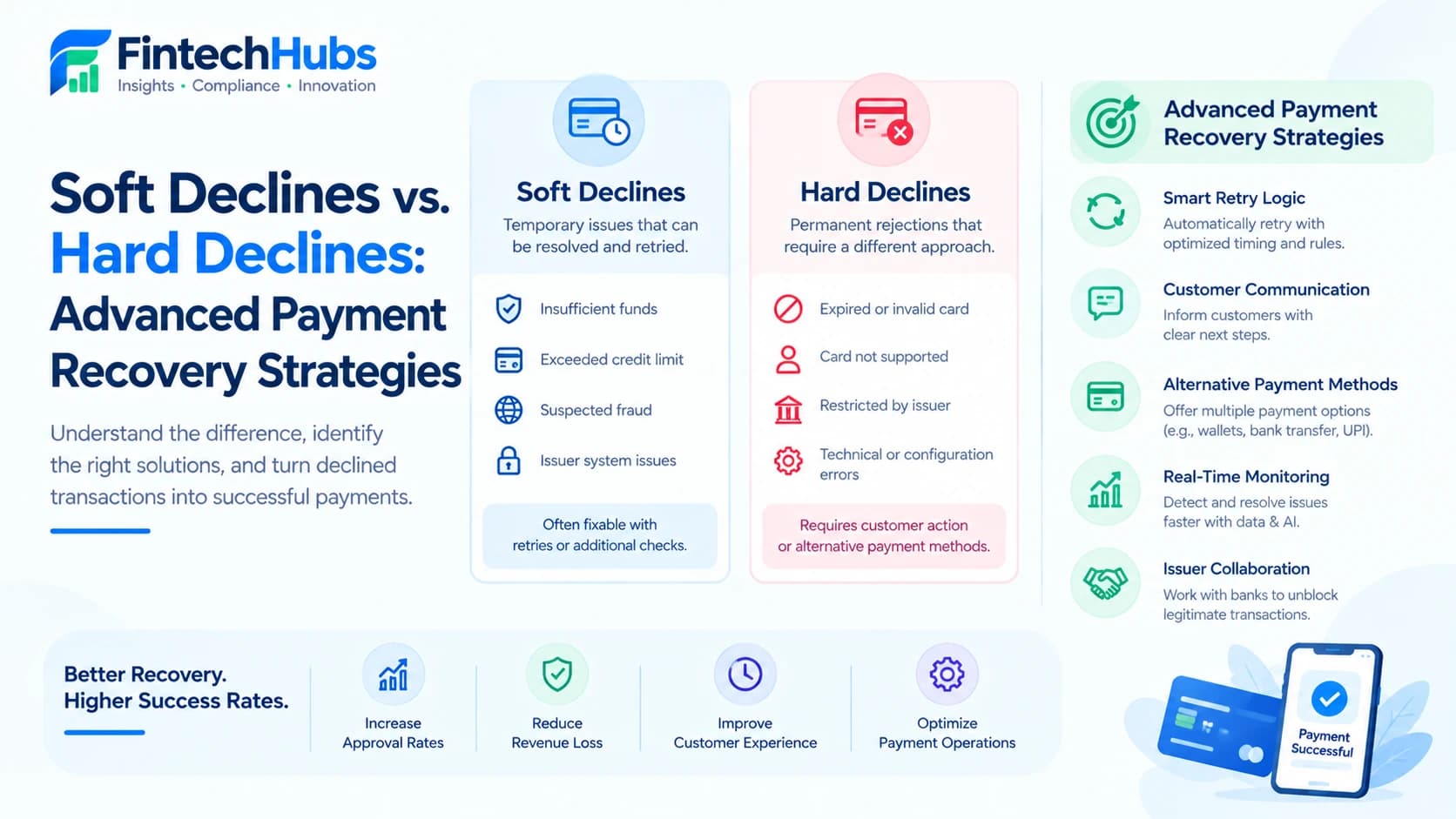
Soft vs Hard Declines: Advanced Payment Recovery Guide
Soft vs hard declines explained: Visa and Mastercard retry rules, smart retries, network tokens, 3-D Secure, dunning, recovery metrics, and 10 FAQs.
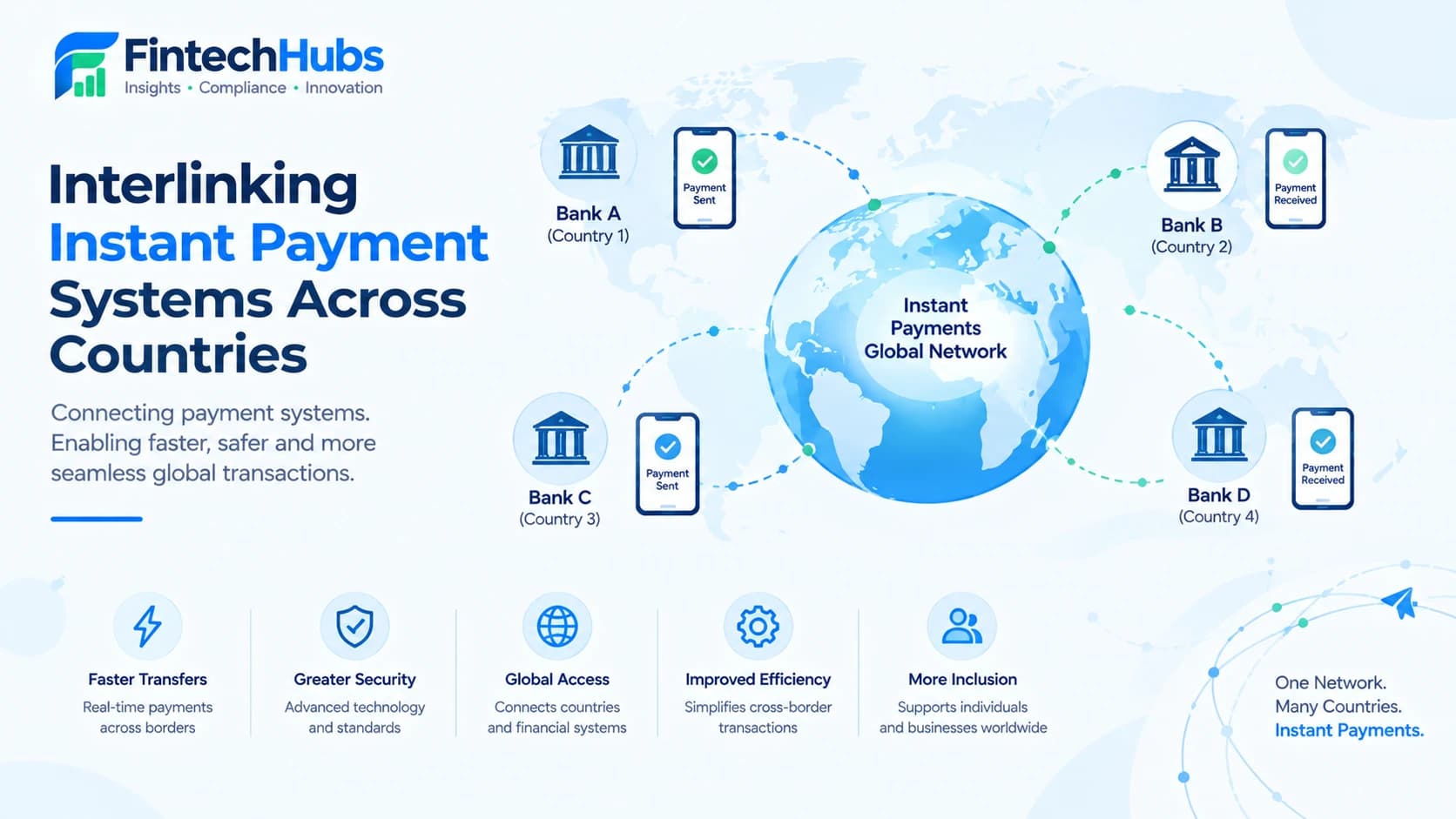
Interlinking Instant Payment Systems Across Countries
How countries link instant payment systems: bilateral links, Nexus, UPI-PayNow, risks, compliance, operations, a rollout roadmap, and 10 FAQs.
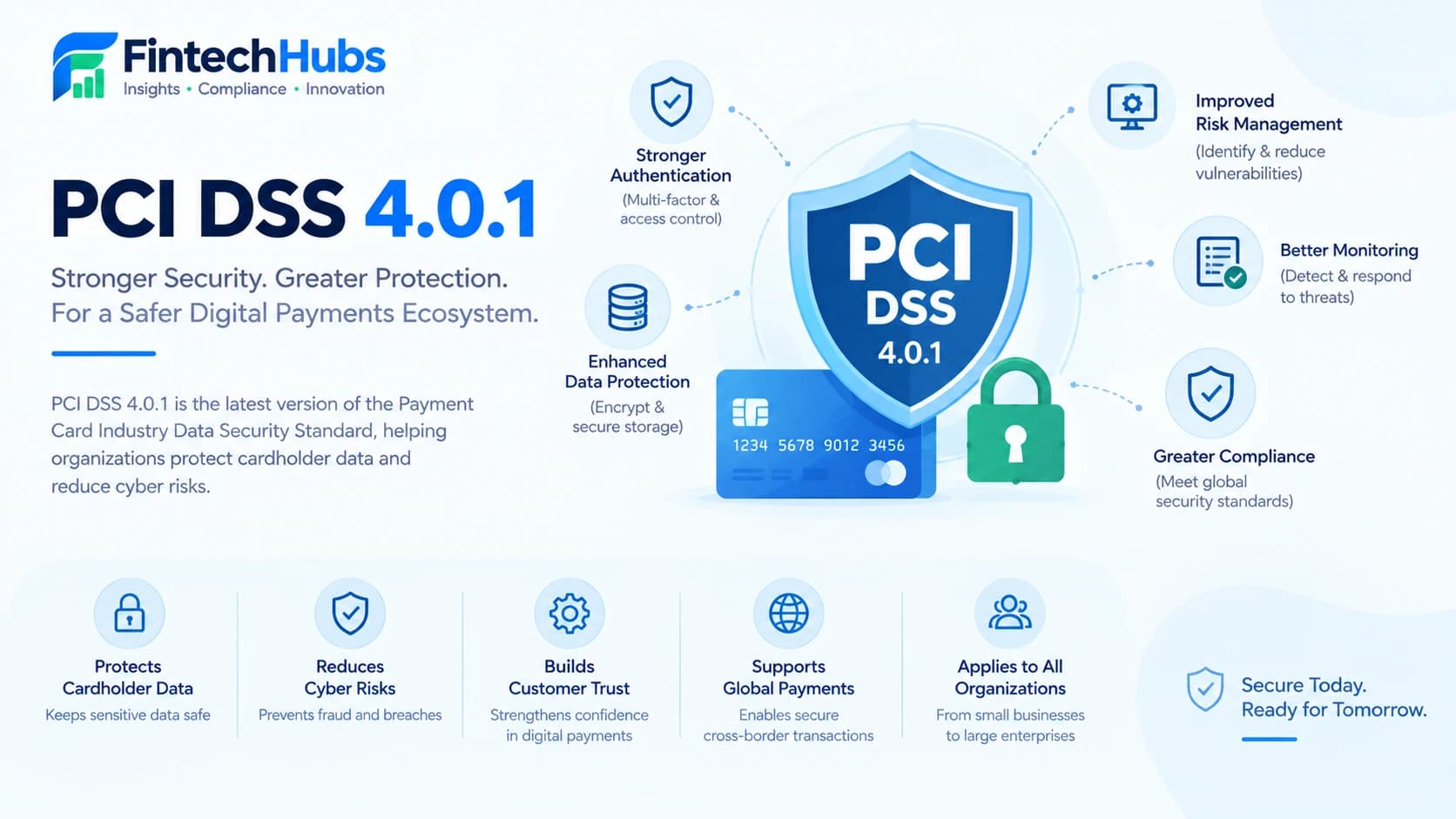
PCI DSS 4.0.1: Technical Requirements for Modern Payments
PCI DSS 4.0.1 explained: 12 requirements, MFA, payment page scripts, cloud and API compliance, scope reduction, a rollout roadmap, and 10 FAQs.